

Newsletter Articles
Slow-Growing Plants That Stay Small for SoCal Apartments, Condos, and Porches
Written by Kelsey W.
Quick answer: The best slow growing plants that stay small are African violets (8 to 16 inches wide) [3], zebra plant succulents (rosettes of just 1 to 3 inches) [12], dwarf snake plants like ‘Hahnii’ (4 to 8 inches tall) [16], and a windowsill garden of dwarf herbs. All of them can live happily in the same small pot for years, which makes them perfect for SoCal apartments, condos, and porches.
No space is too small for plants, even if you’re working with just a single desk and enough space for one potted plant. However, one plant can quickly turn into a monster that needs repotting and a giant place to live, which can complicate matters when you don’t have anywhere else to put your plant.
While you can always become a serial plant adopter and simply rehome your bigger plants with friends once they become too large for your space, it can feel quite difficult to give up a plant that you’ve been growing for a few years.
A better option might be selecting a plant that won’t grow out of control too quickly and will give you years of enjoyment without ever needing a new pot. Or, if it does need a new pot, that moment shouldn’t come for quite a while.
Let’s learn about some slow-growing plants that you can grow in your yard, on your balcony or patio, or on your desk for years to come without worrying about whether they’ll eventually get too big for your home.
Can You Just Keep a Plant in a Small Pot?
There are some types of plants that don’t mind feeling crowded in a pot that’s a little too small. Cactuses really don’t mind getting a bit tight in their pots, and they may even respond favorably to a pot that wraps rather tightly around them.
However, most plants will become something called “root-bound” (you’ll also hear “pot-bound”) if you leave them in a pot for too long without increasing the size of the pot. Root-bound essentially means that the pot has become too small and the plant has grown far too many roots, creating very crowded conditions.
If you take a root-bound plant out of its pot, you’ll usually see a ton of tangled roots wrapped around in the shape of the pot, with hardly any dirt remaining. Some plants are fairly forgiving even when you let them become root-bound, but most will generally benefit from a larger pot. According to the University of Illinois Extension, the telltale signs that a plant needs a bigger home are [1]:
- Roots growing out of the drainage holes or appearing on the soil surface
- A soil mass so full of roots that hardly any soil is left
- New leaves coming in smaller than normal
- A plant that wilts between normal waterings
When it is time, the repot itself is a quick four step job:
- Wait for spring or early summer, while the plant is actively growing [1].
- Choose a pot about two inches larger in diameter [2].
- Gently loosen any circling roots [2].
- Settle everything in with fresh potting soil and amendments.
Some plants need this every year, while others can wait many years [1].
However, that’s where we run into problems when we’re dealing with small spaces. One of the best ways to avoid the whole root-bound question is to select plants that grow very slowly or that simply don’t mind living in the same pot for many years.
What Plants Can Literally Live in the Same Pot Forever?
African Violets
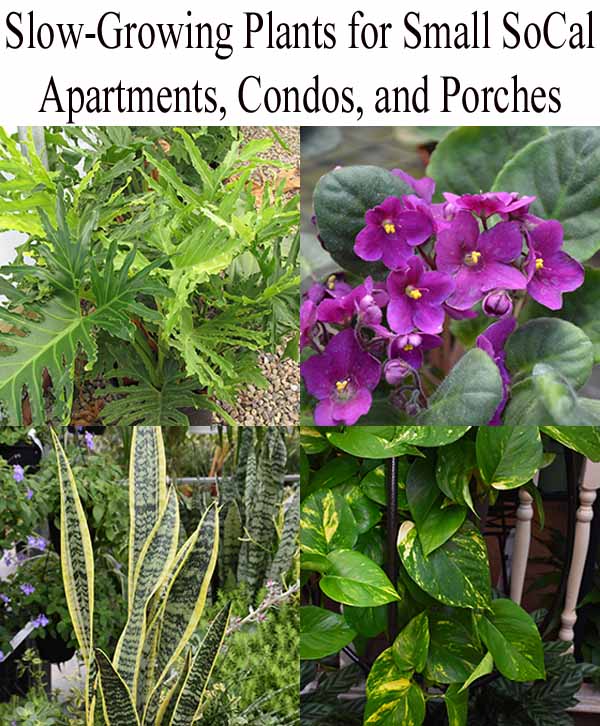
While rare, there are some plants that you can put in a pot and will only rarely need to remove them from the pot. One of the best and most beautiful options is the African violet. Standard African violets stay between 8 and 16 inches wide at maturity [3], so you can purchase a beautiful pot for it and never worry that the plant will outgrow it. Even better, African violets actually bloom best when they stay slightly root-bound in a snug pot [4], which makes them the rare houseplant that rewards you for skipping the pot upgrade.
You have only two things to learn about African violets if you want to keep them happy. The first thing to remember is that they don’t like cold water on their leaves, which causes white blotches and ring-shaped spots [5]. Use room temperature water and only water the soil, or water them from the bottom up by letting the pot sit in about an inch of water (some pots have a feature where you add water at the bottom) [5].
The second thing to remember is that older plants occasionally form more than one crown, and it’s worth taking the plant out of its pot to divide the crowns, keeping the parent plant in the original pot and placing the new baby plant in a new pot [6]. Over time, you may find yourself with a few additional African violets, but you can always gift them to friends and family. Beyond that, a quick yearly refresh into the same size pot with fresh soil is all the repotting they really ask for [7].
Pothos and Philodendron
Another plant that you can put in one pot and usually leave for several years, even a decade, is the pothos plant. This plant is a vining plant and is routinely confused with philodendrons (also a vining plant), and in point of fact you can choose either one as your small space vining friend.
Full honesty from your nursery friends, though: neither one is technically a slow grower. NC State Extension rates pothos as a medium speed grower whose vines can eventually trail 13 to 40 feet if nobody ever trims them [8], and heartleaf philodendron as an outright rapid grower [9]. The reason they still belong on every small space plant list, including ours, is that both are famously easy to KEEP small. In a small pot with an occasional trim, either one stays apartment sized for years, and both can survive long periods in low light [8] [9].
For the most part, plants in low light conditions grow slowly, even if they send out a stalk or two to find a brighter area. If yours starts looking long and sparse, that’s a stretch for light, and our guide on what to do when your indoor plants get too leggy can help.
The main difference in the growing style of pothos versus philodendron is that pothos will usually send out more new stalks from the base of the plant, but philodendron will wander with its tendrils rather than create new stalks. Generally speaking, of course.
Zebra Plant (Haworthiopsis attenuata)
Also known as the zebra plant or zebra succulent, this tiny, spikey little plant is a genuine slow grower that does wonderfully in bright, indirect light [10]. Here’s some fun nursery trivia: most plants sold as “Haworthia fasciata” are actually Haworthiopsis attenuata. Botanists moved these succulents into the genus Haworthiopsis, and the true fasciata is rare in cultivation, with smooth upper leaf surfaces instead of bumpy white stripes on both sides [11]. Whatever the tag at the store says, the care is the same.
Individual rosettes often measure just 1 to 3 inches across, the whole plant stays under about a foot tall, and a little clump can live in the same 4 or 5 inch pot for years [12]. Other than being susceptible to root rot when overwatered, these plants are easy to grow and will often look like they don’t grow at all unless you take comparison pictures over time, so let the soil dry out between waterings [10].
Every once in a while, you may see the plant grow a new, smaller version of itself to the side, but they’re very slow-growing, so you don’t need to worry about removing them until they look big enough to survive on their own in a new pot. Tiny zebra plants make excellent gifts!
While they do like bright light, they don’t fare too well in strong direct sunlight, so try to make sure they don’t get too much direct sun during the day. An east or west facing window with a few hours of gentle morning or late afternoon sun is just about perfect [12]. A little direct sun won’t hurt, but several hours’ worth may burn the leaves and make life a little tough for the tiny plant.
No, Snake Plants Aren’t Always Slow Growers
A really popular indoor plant and shade plant in Southern California is the snake plant, which you’ll see frequently as an adornment in outdoor gardens under tree canopies, as well as in pots inside homes and offices.
Somehow, snake plants have gained the reputation of being slow growers, but that’s frequently not the case in SoCal, especially when the plants are exposed to bright, indirect sunlight. The plant databases agree with us: NC State Extension rates the snake plant (botanists now call it Dracaena trifasciata, though it spent decades as Sansevieria trifasciata) as a medium speed grower, not a slow one [13]. Indoors it often reaches about 2 feet tall, and it spreads from thick underground rhizomes that keep sending up new shoots [14]. They will not only grow quite tall, but they’ll spread rather quickly, making new shoots as fast as the sun will let them.
The only way to (mostly) guarantee that your snake plant will remain small enough for your small space is to make sure it’s not near a bright source of sunlight. Snake plants will grow in anything from a dim interior corner to full sun [15], so it might sound harsh, but try to place your snake plant in the dimmest corner of your room, and you’ll be able to keep it smaller longer.
Better yet, choose a dwarf variety. The bird’s nest snake plant ‘Hahnii’ tops out at just 4 to 8 inches tall [16], which gives you all of the snake plant’s good looks with none of the space anxiety. Ask for it in the indoor plants section at your local Green Thumb.
Make a Tiny Windowsill Herb Garden With Miniature Herb Plants
If you let some herbs grow with wild abandon, they’ll just grow and grow until they fill one space and creep into another. Mint spreads like wildfire if you let it, and even basil plants will give you a good run for your money in the size department if you let them.
However, you can selectively choose certain herb plants and put them in tiny pots on a kitchen windowsill to create a tiny windowsill herb garden. Not only will the tiny herbs keep your kitchen smelling lovely, but you’ll be able to use the leaves in your cooking.
Give your windowsill herb garden the sunniest spot you have. Most herbs want around eight hours of direct light a day indoors, though some will tolerate as little as six, and a south facing window is prime real estate (a bright east or west window can work well too) [17]. Pick small pots with good drainage holes, and skip oversized containers, which hold soggy soil longer than small herbs can tolerate [17].
You’ll want to look for dwarf varieties of herbs, so as to keep your garden as small as possible. Oregano and rosemary are both offered in dwarf varieties and make great options if you like using herbs in cooking. Other herbs grown in dwarf form include basil, parsley, sage, and thyme. And if you ever graduate to a yard with room to spare, a spiral herb garden is the fun size upgrade.
Stay Small Cheat Sheet: Sizes and Growth Rates
Here’s a quick reference for how big these small space favorites actually get and how fast they grow, straight from the university plant databases.
| Plant | Typical indoor size | Growth rate | Light |
|---|---|---|---|
| African violet (standard) | 8 to 16 inches wide | Stays small for life | Bright, indirect |
| Zebra plant (Haworthiopsis attenuata) | Rosettes 1 to 3 inches; under 1 foot tall | Slow | Bright, indirect; east or west window |
| Snake plant ‘Hahnii’ | 4 to 8 inches tall | Stays tiny | Dim corner to full sun |
| Snake plant (standard) | Often about 2 feet indoors | Medium | Dim corner to full sun |
| Pothos | Vines 13 to 40 feet if never trimmed | Medium | Tolerates low light |
| Heartleaf philodendron | Trailing stems 4 feet and longer | Rapid | Tolerates low light |
| Dwarf windowsill herbs | Small pots, kept trimmed | Varies | 6 to 8+ hours direct sun |
Size and growth rate data: UMN Extension [3], NC State Extension Plant Toolbox [8] [13], Wisconsin Horticulture [12], Illinois Extension [16], Iowa State Extension [17].
Don’t Underestimate Your Space
If you’re worried about having enough space for your plants, try to focus on just one plant at a time rather than starting with a group of plants that could get out of hand. With a single plant, you will usually have some options to move it around if it happens to get a little larger. It’s also much easier to keep one indoor potted plant bug free than a whole jungle.
And don’t forget the porch itself. In SoCal’s mild climate, slow growers like zebra plants and dwarf potted herbs are happy outdoors on a bright covered porch or balcony for most of the year, while African violets prefer to stay inside near a window. Snake plants split the difference and handle shady outdoor porch corners just fine.
You can also ensure your plant remains small enough for your space by finding it when it’s very small. As the small plant grows, you can keep it trimmed in a shape and size you prefer, ensuring it remains the right size for your space for as long as possible.
Choose Your Next Plant with Help from Green Thumb Nursery
Green Thumb Nursery has all the plants, materials, and knowledge you need to create a plant paradise in your home, whether you’re interested in creating a garden escape in your backyard or finding some new plants for your shady condo balcony. Not sure which plant suits which room? Our guide to the best indoor plants for each room is a great place to start. Visit one of our Southern California locations today for expert plant advice and friendly gardening information.
Slow Growing Plant FAQs
What indoor plants stay small?
African violets (8 to 16 inches wide for standard varieties), zebra plant succulents (rosettes of 1 to 3 inches), dwarf snake plants like ‘Hahnii’ (4 to 8 inches tall), and potted dwarf herbs all stay small for years [3] [12] [16]. Slow growers in small pots are the secret to a plant collection that never outgrows a SoCal apartment.
How do you know if a plant is root bound?
A plant is root bound when roots grow out of the drainage holes, appear on the soil surface, or fill the pot so completely that hardly any soil is left [1]. Other signs include new leaves coming in smaller than normal and a plant that wilts between normal waterings [1].
When should you repot a houseplant?
Repot in spring or early summer while the plant is actively growing, and move up to a pot about two inches larger in diameter [1] [2]. Some fast growers need repotting every year, while slow growing plants can stay put for many years [1].
Can a plant stay in the same pot forever?
Some can, or close to it. Haworthias are so slow growing they can stay in the same pot for years [12], and African violets actually bloom best when they stay slightly root bound in a snug pot [4]. Most other houseplants eventually want a pot about two inches larger once roots fill the container [2].
How fast do snake plants grow?
Snake plants grow at a medium rate, not a slow one, according to NC State Extension [13]. Indoors they often reach about 2 feet tall and spread by underground rhizomes that send up new shoots [14]. For a snake plant that truly stays small, choose the dwarf ‘Hahnii’, which stays 4 to 8 inches tall [16].
How fast does pothos grow?
Pothos grows at a medium rate, and untrimmed vines can eventually reach 13 to 40 feet long [8]. In a small pot with an occasional trim it stays compact for years, and it can survive long periods in low light [8].
How do you water African violets?
Water African violets with room temperature water and keep water off the leaves, because cold water on the foliage causes white blotches and ring-shaped spots [5]. Bottom watering works well: set the pot in about an inch of water and let the soil soak it up [5].
How do you care for a zebra plant succulent?
Give a zebra plant (Haworthiopsis attenuata) bright, indirect light and let the soil dry out between waterings, because too much water causes root rot [10]. It’s a slow grower that stays under about a foot tall, so it can live in the same small pot for years [10] [12].
Sources
- [1] University of Illinois Extension, Repotting Houseplants
- [2] Illinois Extension, Tips for Repotting Houseplants
- [3] University of Minnesota Extension, African Violets
- [4] Penn State Extension, Why Isn’t My African Violet Flowering?
- [5] Clemson University HGIC, African Violet
- [6] University of Georgia Extension, Growing African Violets
- [7] UF/IFAS Gardening Solutions, African Violets
- [8] NC State Extension Plant Toolbox, Epipremnum aureum (Pothos)
- [9] NC State Extension Plant Toolbox, Philodendron hederaceum
- [10] NC State Extension Plant Toolbox, Haworthiopsis attenuata (Zebra Plant)
- [11] NC State Extension Plant Toolbox, Haworthiopsis fasciata
- [12] Wisconsin Horticulture Extension, Haworthias: Super Succulents for Small Spaces
- [13] NC State Extension Plant Toolbox, Dracaena trifasciata (Snake Plant)
- [14] UF/IFAS Extension, Fact Sheet: Sansevieria trifasciata
- [15] Illinois Extension, Mother-in-Law Tongue
- [16] Illinois Extension, A Houseplant Anyone Can Grow
- [17] Iowa State University Extension, Growing Herbs Indoors
Do you like what you see? Sign up for our weekly newsletter to get content like this every week!