

Newsletter Articles
Easy and Fun Plants to Get Kids Into Gardening
Written by Kelsey W.
The best plants for getting kids into gardening are the fast, big, and rewarding ones: quick crops like radishes and lettuce for near-instant results, big easy-to-handle seeds like beans, peas, sunflowers, and pumpkins, and tasty, touchable picks like cherry tomatoes, strawberries, and herbs. Give each child their own small patch or container and kid-sized tools, pick a sunny spot, and let them do the watering and harvesting. Southern California’s mild climate means they can grow something in every season. The one rule that matters most: keep toxic plants like oleander and foxglove out of their garden, and teach them never to eat anything without asking an adult first.
Quick answer: Start kids with fast, satisfying plants: radishes, lettuce, and green onions for quick results; beans, peas, sunflowers, and pumpkins for big seeds little hands can plant; and cherry tomatoes, strawberries, and herbs to taste and smell. Give each child a small space of their own (a 4-by-4 bed or a big container works), kid-sized tools, and a sunny spot with 6 to 8 hours of sun. Use transplants for a head start on slower crops, and let kids water and harvest themselves. Keep known-toxic plants like oleander, foxglove, daffodil bulbs, castor bean, and sago palm out of their patch, teach them to ask a grown-up before eating anything, and keep Poison Control (1-800-222-1222) handy.
| Plant | Why kids love it | Payoff |
|---|---|---|
| Radishes | Sprout quickly, teach how roots grow underground | Fast, among the quickest crops |
| Lettuce and greens | Quick to mature, easy to snip and eat | Fast |
| Beans and peas | Big seeds for little fingers; bush beans stay short and easy to pick | Easy to plant, high yield |
| Sunflowers | Big seeds, grow fast, end in giant dramatic flowers | Tall and showy |
| Pumpkins and gourds | Fun sizes and shapes; mini varieties suit small hands | A big payoff to harvest |
| Cherry tomatoes and strawberries | Sweet, snackable, rewarding to pick and eat | Tasty reward |
| Herbs and lamb’s ear | Smell and touch: a leaf to sniff or a soft fuzzy leaf to pet | Sensory fun |
The Best Easy Plants for Kids to Grow
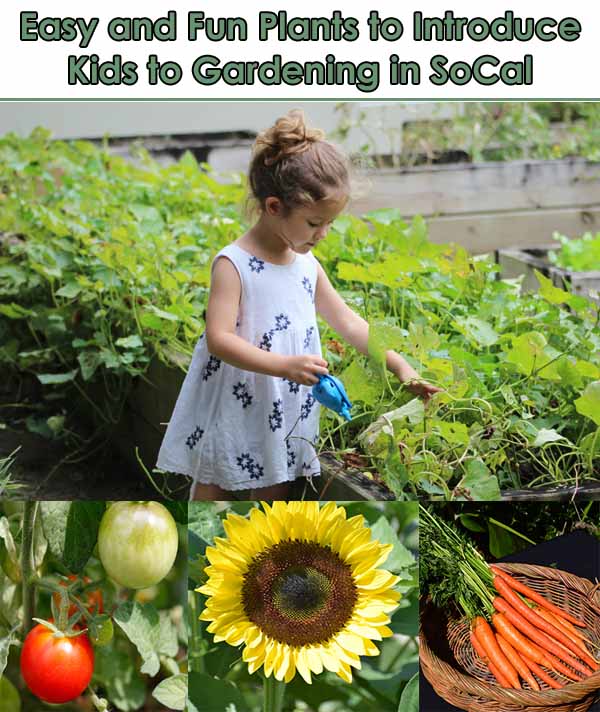
The trick with kids is to play to short attention spans: choose plants that come up fast, are easy to handle, and give a reward they can see, taste, or touch. Sunflowers are a classic for exactly this reason, growing quickly into giant, dramatic flowers that delight young children.[1] For fast results, University of Illinois Extension points to quick-maturing crops like radishes, lettuce, and green onions, and notes that slow-from-seed plants such as corn, peppers, and tomatoes tend to frustrate kids, so those are better started from transplants.[2]
Big seeds are a gift to small hands, which is why beans, peas, pumpkins, and gourds are such good picks; bush beans in particular stay short and stocky so kids can reach and harvest them, and mini pumpkins suit little fingers.[2] A children’s garden should also engage all the senses, so UC Master Gardeners suggest sensory and edible picks like cherry tomatoes, strawberries, peas, nasturtiums (whose leaves and flowers are edible), and fragrant herbs the kids can smell and taste.[3] Penn State’s child-friendly list rounds it out with cherry tomatoes, strawberries, beans, radishes, lettuce, herbs, and lamb’s ear, prized for its soft, pettable leaves.[4]
How to Set Kids Up for Gardening Success
Give each child a space of their own so they feel ownership and are not overwhelmed. A small bed, a corner of yours, or a large container all work, and UC Master Gardeners suggest keeping a raised bed no larger than about 4 feet by 4 feet so a child can reach the middle from any side, in a spot with at least six hours of sun.[3] Most vegetables and flowers want 6 to 8 hours of full sun a day, so pick the sunny spot first.[4]
Hand them kid-sized tools, a small trowel and lightweight rake and gloves that fit, and let them take on the jobs they love most: planting seeds, watering, and harvesting.[4] For the slower crops, set out young transplants instead of seed so there is something to show for the effort sooner. And keep it low-pressure and fun: let kids choose what goes where, add a little hand-painted sign with their name on their plot, and let the garden be theirs.[3] Washing hands after digging in the soil is a good habit to build from day one.
Growing With Kids Year-Round in Southern California
One of the best things about gardening with kids here is that our mild climate lets them grow something in every season. UC Master Gardeners split crops into cool-season types that do best around 55 to 75 degrees F and warm-season types that want roughly 65 to 95 degrees F.[5] In practice, that means kids can sow cool-season radishes, lettuce, peas, and other greens in fall and winter, then switch to warm-season beans, sunflowers, tomatoes, squash, and pumpkins in spring and summer, so there is almost always something sprouting or ready to pick.[5] For a couple of fast, kid-pleasing crops to start with, see our guides to growing microgreens indoors and growing cherry and other tomatoes.
Keep Kids Safe: Plants to Avoid and Garden Safety
A kids’ garden should be planned around one simple rule: nothing goes in the mouth without a grown-up’s okay. The National Capital Poison Center advises watching children closely outdoors, teaching them to ask an adult before eating or drinking anything, and keeping only non-toxic plants in the spaces where they play.[6] That is doubly important because several common garden plants are genuinely dangerous and should simply be kept out of a child’s patch.
The ones worth knowing by name: oleander, a very common Southern California hedge, is poisonous in all its parts;[6] foxglove is poisonous and possibly deadly if swallowed, and the Poison Center flatly advises not planting it where children play;[7] daffodil and other bulbs are toxic, especially the bulb itself, and should be kept out of reach;[8] and castor bean seeds contain ricin, one of the most toxic substances known, so they have no place in a kids’ garden.[9] Sago palm is another well-known toxic ornamental, listed by the ASPCA as highly toxic and capable of causing liver failure, so keep cycads away from children and pets alike.[10] Teach kids, too, that pretty berries are not snacks, since lily-of-the-valley, pokeweed, and ornamental nightshades all have tempting, toxic fruit.[11]
One reassuring correction while we are here: the poinsettia is not the deadly plant its reputation suggests. The Poison Center notes it is a myth, with researchers unable to find a poisonous dose even in large amounts; it may cause mild mouth or stomach upset and its sap can irritate skin, but it is not fatal.[12] Whatever you grow, keep the free, 24-hour Poison Control line handy at 1-800-222-1222.[6] For a gentle next step once the bug bites, see our guide to introducing kids to gardening.
Want help picking kid-safe, fast, fun plants for a little gardener in your life? Stop by any Green Thumb Nursery and our team can set you up with the right seeds, transplants, and kid-sized gear.
Kids Gardening FAQ
What are the best plants for kids to grow?
Fast, easy, rewarding ones: radishes and lettuce for quick results, beans, peas, sunflowers, and pumpkins for big easy-to-handle seeds, and cherry tomatoes, strawberries, and herbs for something to taste and smell. Lamb’s ear is a fun soft one to touch.[4]
What is the fastest plant for kids to grow?
Radishes are the classic fast pick, sprouting quickly and maturing sooner than almost anything else, which makes them great for short attention spans. Lettuce and green onions are also quick to mature.[2]
What is the best vegetable for kids to grow?
Cherry tomatoes and bush beans are hard to beat: cherry tomatoes give a sweet, snackable reward, and bush beans stay short with big seeds that are easy for little hands to plant and pick. Start tomatoes from transplants, since they are slow from seed.[4]
How do you get kids interested in gardening?
Give them ownership: their own small bed or container, kid-sized tools, and the fun jobs like planting, watering, and harvesting. Keep it low-pressure, let them choose what to grow, pick plants with fast or tasty payoffs, and add a sign with their name on their plot.[3]
What garden plants are poisonous to children?
Keep oleander, foxglove, daffodil and other bulbs, lily-of-the-valley, castor bean, sago palm, pokeweed, and ornamental nightshade berries out of a kids’ garden. Teach children never to eat anything from the garden without an adult, and keep Poison Control (1-800-222-1222) handy.[6]
Sources
- [1] Penn State Extension, Top Five Plants for Kids: extension.psu.edu
- [2] University of Illinois Extension, Youth Gardening: extension.illinois.edu
- [3] UC Master Gardeners, Placer County, A Children’s Garden to Plan, Plant and Play In: ucanr.edu
- [4] Penn State Extension, The Child-Friendly Garden: extension.psu.edu
- [5] UC Master Gardener Program, Vegetable Classifications: ucanr.edu
- [6] National Capital Poison Center, Poisonous and Non-Poisonous Plants (and Poison Control 1-800-222-1222): poison.org
- [7] National Capital Poison Center, Foxglove: Toxic to the Heart: poison.org
- [8] National Capital Poison Center, Daffodils: Beautiful but Potentially Toxic: poison.org
- [9] National Capital Poison Center, What Happens If I Eat Castor Beans: poison.org
- [10] ASPCA Animal Poison Control, Sago Palm: aspca.org
- [11] National Capital Poison Center, Fall Berries Only Look Edible: poison.org
- [12] National Capital Poison Center, Are Poinsettias Poisonous: poison.org
Sign up for the Green Thumb Nursery newsletter for seasonal Southern California gardening tips.