

Newsletter Articles
The Best Climbing Plants to Cover a Fence or Wall
Written by Kelsey W.
A fence does important work: it keeps the yard secure and the family dogs where they belong. But a fence that is doing its job can still look tired, and replacing one is a big expense for a purely cosmetic problem. One of the best and most affordable fixes is to cover it with a climbing plant. The right vine turns a plain or aging fence, or a bare wall, into a green, often flowering, backdrop that your neighbors enjoy too.
Quick answer: The best plants to cover a fence or wall in Southern California include bougainvillea (bold color, drought-tough, tie it to a support), star jasmine (fragrant, evergreen, excellent for privacy), lavender trumpet vine, creeping fig (dense cover for sturdy masonry, not wood), and Boston ivy for walls. The key is to match the plant to your structure: twining and tendril vines like star jasmine and bougainvillea are gentlest on a wood fence when grown on wires or a trellis, while self-clinging vines like ivy and creeping fig attach directly to walls but can damage wood, paint, and stucco, so save those for sturdy masonry.
Best Climbing Plants to Cover a Fence or Wall
Here are reliable fence covering plants for a Southern California fence or wall, with how each one climbs so you can match it to your structure.
| Plant | Type | Evergreen? | Sun | How it climbs | Best for / note |
|---|---|---|---|---|---|
| Bougainvillea | Woody scrambler | Evergreen in mild areas | Full sun | Scrambles; must be tied to a support | Bold color, drought-tough; has thorns |
| Star jasmine | Twining vine | Evergreen | Sun to part shade | Twines; needs wires or a trellis | Fragrant privacy screen; gentle on fences |
| Lavender trumpet vine | Twining vine | Evergreen in mild areas | Sun to part shade | Twines; needs a support | Lavender flowers; a common California fence vine |
| Potato vine | Twining vine | Evergreen in mild areas | Sun to part shade | Twines; needs a support | Fast cover and flowers; grows exuberantly, keep it trimmed |
| Creeping fig | Clinging vine | Evergreen | Shade to part sun | Clings by aerial rootlets | Dense wall cover; sturdy masonry only, can cement to and damage surfaces |
| Boston ivy | Clinging vine | Deciduous | Sun to shade | Clings by adhesive holdfasts | Classic wall look; masonry only, not wood or paint |
| Pole beans, peas, cucumbers | Annual edible vines | Seasonal | Full sun | Tendrils and twining on a trellis | Edible, temporary cover; easy to remove |
How Climbing Plants Attach (and How to Match One to Your Fence)
Vines do not all climb the same way, and choosing the wrong type for your structure is the most common mistake. There are a few main methods (University of Illinois Extension):
- Twining vines wrap their stems around a support. Star jasmine and lavender trumpet vine twine, so they want wires, lattice, or a trellis to wind through.
- Tendril vines grab with thin coiling tendrils. Peas and cucumbers climb this way and do well on netting or a trellis.
- Clinging vines attach directly to flat surfaces with aerial rootlets (creeping fig) or adhesive holdfasts (Boston ivy). They cover masonry without a trellis but can damage other surfaces.
- Scramblers like bougainvillea have no grabbing parts at all; they sprawl and must be tied to the fence or trellis.
The rule of thumb is to match the climbing method to the structure: twining and tendril vines belong on wires or a trellis, and clinging vines belong on rough, sturdy masonry. For a wood or stucco fence, the gentlest approach is to run a twining vine up wires or a trellis rather than letting a heavy self-clinger attach to the boards.
Bougainvillea: Bold Color for Full Sun
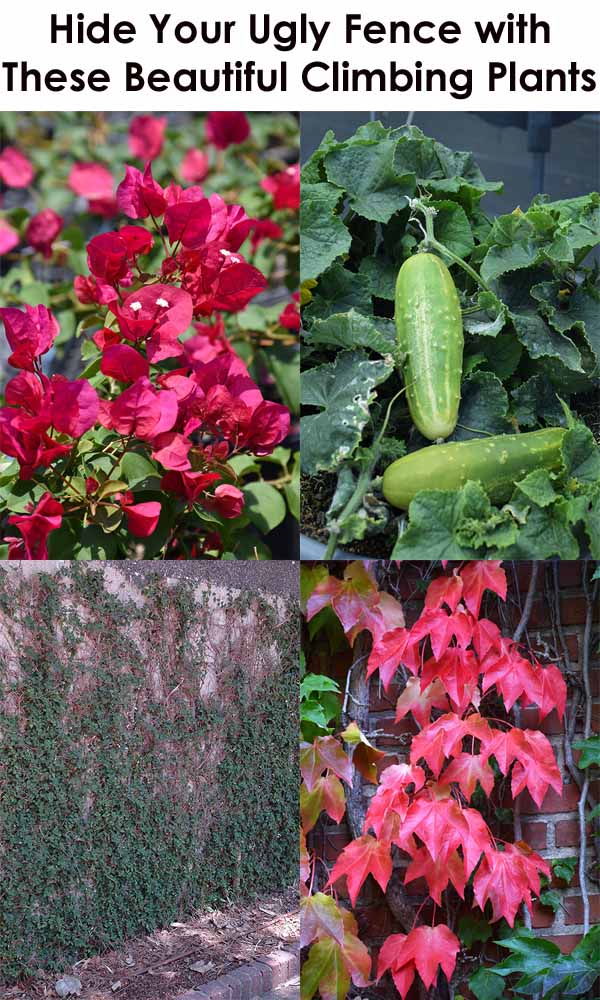
Bougainvillea is a common sight across Southern California, and for good reason. It flowers in vivid color, shrugs off harsh conditions, and forms one of the thickest coverings of any climber, from the high desert to the coast. It is important to know that bougainvillea is a woody scrambler with curved thorns that does not cling on its own: it needs to be tied to, or woven onto, a fence, wall, or pergola for support (NC State Extension). Once established it is drought resistant, and it wants full sun, which also encourages the best flowering.
You can start a bougainvillea in a large pot and grow it into a puffy bush for a few seasons, or train it in a container up a trellis to mask a drab balcony wall. The one thing to remember is the thorns, which get pokey at pruning time. Shape the plant at the end of winter before it blooms, and lightly trim through the other seasons to keep it tidy.
Star Jasmine and Other Twining Vines for Privacy
If privacy is the goal, a neat evergreen twining vine is hard to beat. Star jasmine (Trachelospermum jasminoides) is a favorite for Southern California fences: it is evergreen, sweetly fragrant in spring, and fills in to a dense green screen when grown on wires or a trellis. It is named among the vines California gardeners reach for to cover a fence, along with lavender trumpet vine and potato vine (UC ANR). Potato vine grows fast but can grow exuberantly, so give it room and plan to keep it in check.
Because these are twining vines, they are gentle on a wood fence as long as you give them something to wind around. Run galvanized wire or attach a trellis and guide the young stems onto it, and they will do the rest.
Creeping Fig for Dense Wall Cover
For a tight, formal carpet of small leaves on a wall, the creeping fig (Ficus pumila) is a classic. It is an evergreen woody climber that, like English ivy, attaches itself to walls through clusters of short roots, grows vigorously, and can cement itself to porous surfaces and cover them quickly (NC State Extension). That cling is the catch: because it grips the surface directly, creeping fig is best on sturdy masonry, not on wood fences or painted or stucco walls, where clinging vines can cause damage (University of Illinois Extension). It also matures into heavier, woodier growth, so plan on cutting it back during its spring and summer growing season to keep it flat and well behaved.
Ivy on Walls: What to Know First
A wall of ivy brings to mind an English garden, and ivy will certainly grow in Southern California. The problem is which ivy. True ivies in the genus Hedera are a poor choice here: English ivy (Hedera helix) is rated a High-impact invasive plant in California that outcompetes native vegetation (Cal-IPC), and Algerian ivy (Hedera canariensis) carries the same High rating (Cal-IPC). Watch out for the name “California ivy” as well: it is simply another common name for invasive English ivy, not a safe alternative (NC State Extension).
If you want that ivy look on a wall, Boston ivy (Parthenocissus tricuspidata) is a better-behaved, deciduous option and is not a true ivy. It still clings with adhesive holdfasts and grows with real vigor, so keep it on sturdy masonry, keep it trimmed, and keep it off wood and painted surfaces, which its holdfasts can mark and damage.
Grow a Vertical Vegetable Garden on a Fence or Wall
You can also cover a wall or fence with something you can eat. Many vegetables climb happily on a trellis, and growing “up” rather than “across” lets you harvest more in a small footprint. Peas (which grow right through a mild California winter), pole beans, cucumbers, and even melons all take to a trellis. Guide the young tendrils onto the support as they grow, and for heavy fruit like cantaloupe, make slings from strips of fabric tied to the trellis to hold the fruit as it sizes up (University of Minnesota Extension, Penn State Extension).
A vertical vegetable garden is ideal when you rent or have little space, because the plants are easy to remove and take with you when you move. For more quick, easy crops, see our guide to the best vegetables to grow in Southern California.
Do Climbing Plants Damage Fences and Walls?
They can, which is why the way you grow them matters. Self-clinging vines such as English ivy, Boston ivy, and creeping fig grip a surface with roots or adhesive pads that can mark paint, work into stucco and mortar, and contribute to wood decay, and growing a vine flat against a surface reduces airflow and traps moisture against it. The safer approach is to grow vines on a trellis or wires held about four to six inches off the fence or wall, which keeps air moving behind the foliage and lets you take the trellis down for repairs or painting (University of Illinois Extension). On a wood fence especially, favor a twining vine on an offset trellis over a heavy clinger attached to the boards.
Frequently Asked Questions
What is the best plant to cover a fence?
For most Southern California fences, bougainvillea (for bold color and drought tolerance) and star jasmine (for fragrant, evergreen privacy) are the best all-around choices. Grow them on wires or a trellis so the fence stays easy to maintain. For a dense look on sturdy masonry, creeping fig works well.
What plants grow on walls?
Self-clinging plants like creeping fig and Boston ivy attach directly to walls with aerial rootlets or adhesive pads, so they cover masonry without a trellis. On wood or painted walls, grow a twining vine like star jasmine on wires held slightly off the surface instead, because self-clingers can damage those materials.
What is the fastest plant to cover a fence for privacy?
Bougainvillea is among the fastest for bold privacy cover in Southern California, and star jasmine fills in quickly as a neat evergreen screen. Lavender trumpet vine and potato vine also cover quickly, though potato vine can grow exuberantly and needs regular trimming.
Do climbing plants damage fences or walls?
They can. Self-clinging vines such as English ivy, Boston ivy, and creeping fig grip with roots or pads that can pull on paint, work into stucco and mortar, and trap moisture against the surface. The safe approach is to grow vines on a trellis or wires held a few inches off the fence or wall rather than letting heavy clingers attach directly, especially on wood.
Sources
- University of Illinois Extension, How Vines Climb (Attachment Methods)
- University of Illinois Extension, Caring for Vines (surface damage and trellis spacing)
- California Invasive Plant Council, English Ivy (Hedera helix)
- California Invasive Plant Council, Algerian Ivy (Hedera canariensis)
- NC State Extension, Hedera helix (English / “California” ivy)
- NC State Extension, Creeping Fig (Ficus pumila)
- NC State Extension, Bougainvillea
- UC ANR, vines for covering a California fence
These are just a few of the climbers and wall coverings that do well here, and the experts at Green Thumb Nursery can help you match the right vine to your fence, wall, and sun. Drop by one of our five Southern California garden centers and we will help you turn a plain fence into the best-looking part of the yard.
Do you like what you see? Sign up for our weekly gardening newsletter to get content like this every week.