

Newsletter Articles
Silver Carpet (Dymondia margaretae): Ground Cover Care Guide
By Richard Flowers, ACCNP, Green Thumb Nursery, Ventura
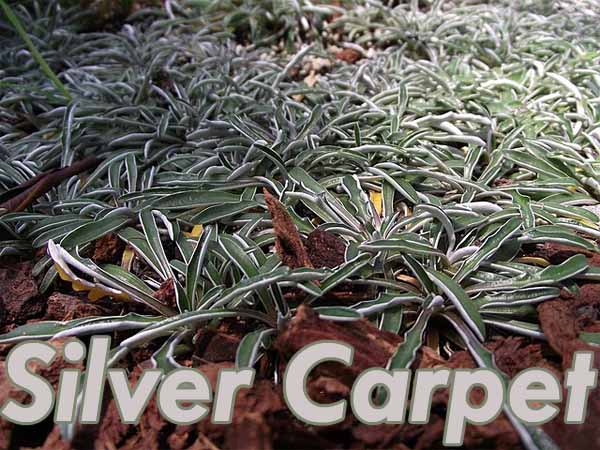
Silver carpet is the perfect ground cover for planting between stepping stones. With its tight, very flat, mat-forming growth, it reaches only a few inches tall and knits into a dense silvery carpet underfoot. Its narrow leaves, about 1 to 2 inches long, are gray-green on top with white woolly hairs (tomentose) underneath, and that pale, felted backing is what gives the plant its shimmering, almost variegated silver look, and its common name.
What Is Silver Carpet?
Silver carpet is botanically known as Dymondia margaretae, and it is the only species in its genus. It is related to such familiar plants as the chrysanthemum, the sunflower, and gazania, because all of them belong to the daisy family, Asteraceae. The plant was named for the noted South African horticulturist Margaret Elizabeth Dryden-Dymond, and it is endemic to the Western Cape of South Africa, where it grows in lean, fast-draining ground. That South African heritage is exactly why it feels so at home in our dry, Mediterranean Southern California climate.
- Botanical name: Dymondia margaretae
- Family: Asteraceae (the daisy and sunflower family)
- Origin: Western Cape of South Africa
- Hardiness: about 25 to 30 degrees F (USDA zones 9 to 11)
- Best use: between pavers and as a low-water lawn substitute
Is Silver Carpet a Grass or an Herb?
No. Even though people often search for “silver carpet grass” and use the plant the way they would use a lawn, silver carpet is not a true grass, and it is not a culinary herb either. As a member of the daisy family, it is a low, broadleaf perennial ground cover, botanically far closer to a daisy than to turfgrass. The confusion is understandable, because a solid planting of silver carpet looks and functions like a soft, silvery lawn. But that distinction matters for care: you treat it like a drought-tolerant perennial, not like a thirsty lawn grass.
How to Use Silver Carpet in the Garden
Silver carpet is wonderfully versatile. Its best-known job is filling the gaps between stepping stones and pavers, where its flat mat spreads to soften the hardscape and you can still walk across it. It also makes an excellent low-water lawn substitute: because the growth is so dense, over time it forms a tight, weed-suppressing mat. To use it that way, plant it like sod, setting individual plants close enough that they touch and completely cover the area. Beyond paths and lawns, it is lovely in a rock garden among succulents, creeping over a rock wall and spilling down the stones in a tapestry of tight foliage, or filling a low, shallow container with solid growth, perhaps with a characterful bonsai rising from the center.
Silver Carpet Care: Sun, Soil, and Water
For best performance, silver carpet wants full sun to light shade and, above all, a well-draining soil. In hot inland locations it appreciates a little afternoon shade. The one thing it will not forgive is heavy, soggy, or poorly draining ground, so plant it in dry, rocky, fast-draining soil. It is remarkably tough once it settles in: it tolerates poor soils and even salt spray, and its deep, somewhat succulent roots make it genuinely drought tolerant.
Watering is simple if you remember that the goal is strong, deep roots. With regular irrigation silver carpet grows quickly, but during dry spells it slows down and spreads by offshoots more gradually. For the first year or two I recommend watering about once a week, letting the soil dry out between waterings to encourage full, vigorous growth. Once the planting is established it needs far less, often just an occasional deep soak during dry spells, since overwatering does more harm than drought.
Here is the whole routine at a glance.
| Need | What silver carpet wants |
|---|---|
| Light | Full sun to light shade (some afternoon shade in hot inland areas) |
| Soil | Fast-draining, even poor or rocky; will not tolerate heavy, wet soil |
| Water | Weekly while establishing (let soil dry between), then only occasional deep soaks once established |
| Mature size | A couple of inches tall, spreading into a dense mat |
| Foot traffic | Light foot traffic; fine to walk on barefoot between pavers |
| Hardiness | Winter hardy to about 25 to 30 degrees F (roughly USDA zones 9 to 11) |
| Wildlife | Deer tend to avoid it; watch for gophers |
| Flowers | Small yellow daisy-like flowers in summer |
Hardiness, Foot Traffic, and Pests
Silver carpet is winter hardy to about 25 to 30 degrees F (roughly USDA zones 9 to 11), which makes it well suited to most of coastal and inland Southern California. It takes light foot traffic nicely, so it is a pleasure to walk on, even barefoot, between pavers, though it is not meant for a heavy, high-traffic play lawn. Deer tend to avoid it, which makes it a useful choice in neighborhoods where browsing is a problem. Its real weaknesses are few: heavy or non-draining soil, as mentioned, and gophers, which find it more tempting than a grass lawn. It thrives along the coast, while inland its growth slows to a crawl during the heat of summer and then springs back to life when the cooler days of fall arrive.
How to Plant Silver Carpet
Plant silver carpet in full sun in dry, rocky, well-draining soil. If you are covering an area as a lawn substitute or a path filler, set the plants close together, the way you would lay sod, so the individual plants touch and knit into a solid mat. In Southern California, as a general rule for our mild climate, the cooler months from fall into spring are a good time to plant, because that timing lets the roots establish before summer heat sets in. Water about weekly through the first year or two while the planting fills in, then taper off as described above. Be patient during that first summer, especially inland, because silver carpet establishes slowly and does most of its spreading when the weather is mild.
Frequently Asked Questions
Is silver carpet a grass?
No. Silver carpet (Dymondia margaretae) is a low perennial ground cover in the daisy family, Asteraceae, not a true grass. People call it “silver carpet grass” because it is used like a lawn, but it is a broadleaf mat-former and is cared for like a drought-tolerant perennial, not like turf.
Can you walk on silver carpet, and is it barefoot-friendly?
Yes. Silver carpet tolerates light foot traffic and is soft and pleasant to walk on barefoot, which is why it is so popular between stepping stones and pavers. It is not, however, built for a heavy, high-traffic play lawn.
Do deer eat silver carpet?
Deer tend to avoid silver carpet, so it is considered a deer-resistant ground cover, a real advantage in areas where deer browse other plantings.
How much and how often should you water silver carpet?
Water about once a week while it is establishing, letting the soil dry out between waterings to build deep roots. Once established, silver carpet needs far less, often just an occasional deep soak during dry spells, because it is drought tolerant. Overwatering is more likely to harm it than drought.
When should you plant silver carpet?
In Southern California, the cooler months from fall into spring are generally the best time to plant, so the roots can establish before summer heat. Give it full sun and fast-draining soil, and space the plants to knit together.
How long does silver carpet take to fill in?
Silver carpet is a slow spreader. It fills in faster with regular water and mild weather and more slowly when it is dry or during inland summer heat, so planting close together and watering well in the first couple of years speeds up coverage into a dense silvery mat a couple of inches tall.
Where can you buy silver carpet?
You can find silver carpet at Green Thumb Nursery locations and other Southern California nurseries, usually sold in flats or small pots so you can plant it like sod to cover an area.
Sources
- San Marcos Growers, Dymondia margaretae
- University of California ANR, the ground cover you can step on
- Waterwise Garden Planner, Dymondia margaretae
- Annie’s Annuals and Perennials, Dymondia margaretae
- OC Water Smart Gardens, Dymondia margaretae
Silver carpet is a neat, tidy, low-care ground cover that asks very little and gives back a soft silver mat and a scattering of cheerful summer flowers. Try your hand with this popular ground cover, and find the right fast-draining soil to go with it, at your favorite Green Thumb Nursery location.
Do you like what you see? Sign up for our weekly newsletter to get content like this every week!
Sign up for the Green Thumb Nursery newsletter