

Newsletter Articles
Tropical Plants for Southern California: What Grows in a Dry Climate
Written by Kelsey W.
Spend a week somewhere like Puerto Vallarta or Oahu and it is easy to come home wanting that same lush, green paradise in your own Southern California yard. The good news is you can have it. The catch most people worry about, our dry climate and hot, windy stretches, turns out to be far less of a barrier than you would think, as long as you choose the right plants.
Quick answer: Yes, you can grow tropical plants in Southern California, even though our climate is dry. The trick is to choose true tropicals that take dry heat once established, such as plumeria, hibiscus, and bird of paradise, along with tropical-looking but drought-tolerant plants like Bismarck and other palms, bougainvillea, and clivia for shade. Give any tropical plant a little extra water its first year or two while it settles in, then most need far less. One caution: the popular sago palm is severely toxic to dogs and cats, so keep it away from pets.
Can You Grow Tropical Plants in Southern California?
Yes. While a few tropical plants would sulk in full sun on a hot California afternoon, a surprising number adapt easily to our climate. The secret is to pick two kinds of plants: true tropicals that tolerate dry heat once established, and tropical-looking plants that are naturally drought tolerant. Give both a little extra water while they are young and settling in, and most will need far less once their roots are established. You do not have to choose between a water bill and a paradise.
Best Tropical Plants for Southern California
Here are reliable tropical and tropical-looking plants for a Southern California yard, with how much sun and water each one wants.
| Plant | Tropical or tropical-look | Light | Water once established | Notes |
|---|---|---|---|---|
| Plumeria | True tropical | Full sun | Low | Hawaiian-look blooms; frost-tender; needs well-drained soil |
| Hibiscus | True tropical | Full sun to part shade | Moderate | Bold flowers to 6 inches; protect from wind and frost |
| Bird of paradise (Strelitzia) | True tropical | Sun to part shade | Moderate | Bold focal point; giant form is very tall |
| Canna | Subtropical | Full sun to part shade | Higher (likes moisture) | Big bold leaves; can spread fast |
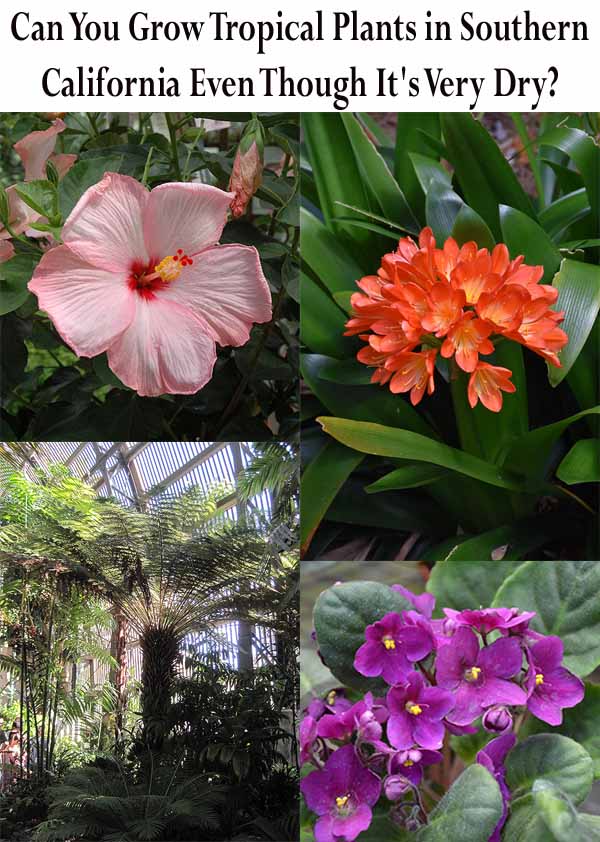
| Clivia (bush lily) | Tropical | Shade to dappled shade | Low | Great for shade; scarlet-orange blooms; drought tolerant |
| Soft tree fern | Tropical | Shade | Moderate | Lush fern to about 15 feet; shady spots |
| Sago palm | Tropical-look (cycad) | Sun to part shade | Low | Severely toxic to pets; keep away from dogs and cats |
| Bismarck palm | Tropical-look | Full sun | Low once established | Huge blue fans to 60 feet; frost-tender |
| Bougainvillea | Tropical-look | Full sun | Low to moderate | Vivid color; fast; frost-tender; needs trimming |
| Star jasmine | Tropical-look vine | Sun to part shade | Moderate | Fragrant, fast screen |
True Tropicals That Take the Heat
Some genuine tropicals are perfectly happy in Southern California. The canna lily is a standout: native to the subtropical Americas, it loves full sun and throws up big, bold leaves that look instantly tropical. Cannas take full sun or part shade and tolerate moist, even occasionally wet, soil, so give them a good drink on the hottest summer days (NC State Extension). They can spread quickly, so give them room.
A few more true tropicals that thrive here once established:
- Hibiscus: a tropical evergreen with bold flowers up to 6 inches across; give it full sun to part shade, good drainage, and protection from wind and frost (NC State Extension).
- Giant bird of paradise (Strelitzia): a dramatic, tall focal point for a tropical yard; a moderate water user inland that can get by on even less near the coast or in shade (UC Master Gardeners).
- Soft tree fern: fills shady areas with lush greenery and can reach about 15 feet tall.
- Clivia (bush lily, Clivia miniata): a shade-lover with scarlet-orange blooms that is drought tolerant once established, perfect for the dappled shade under trees (NC State Extension).
Tropical-Looking Plants That Shrug Off Drought
If you want the look without the water bill, lean on plants that read as tropical but are built for dry conditions. Palms are the obvious choice, and several give a bold tropical silhouette on very little water once established.
The Bismarck palm is a showstopper: a native of Madagascar with massive silver-blue fans, growing 30 to 60 feet tall, and it is highly drought tolerant once established (UF/IFAS Extension). It needs regular water while young, then very little. Caution: the Bismarck palm is very frost-tender, hardy only to about 30 degrees, so protect it from cold snaps.
The sago palm gives one of the best compact tropical silhouettes and is happy in a pot or in the ground. One important warning, though: despite the name, the sago palm is a cycad, not a true palm, and all parts, especially the seeds, are severely toxic to dogs, cats, and horses, causing liver damage, liver failure, and even death if eaten (ASPCA, Pet Poison Helpline). Keep it well out of reach of pets and small children, or choose a safer tropical-look plant.
For flowers, few plants say “tropical” like the plumeria. It looks like it was plucked from a Hawaiian forest, yet it thrives in sunny, arid Southern California: plant it in full sun with well-drained soil, and once established it is fairly drought and salt tolerant (UF/IFAS Extension). Like palms, plumerias want attention while young and then mostly fend for themselves. Drive through older neighborhoods of Los Angeles and you will see them blooming in yard after yard.
For a shadier spot, the Western azalea offers glossy leaves and wispy flowers with a tropical feel. It is actually a shrub native to the West Coast, and it does best with part sun, morning or afternoon but not both, which makes it a good choice along a north-facing wall or fence.
Tropical Vines for a Lush, Layered Look
Part of what makes a tropical landscape feel so lush is the sense of greenery spilling over every surface. Vines deliver that look without taking up much ground. Star jasmine is an excellent slim-profile climber that smells wonderful and grows fast, wanting more water in summer and little in winter.
And of course there is bougainvillea, the quintessential Southern California tropical vine, with vivid papery color and fast growth. It prefers full sun and moderate water, and it is frost-tender, so protect it where freezes occur (UC IPM). Give it a trim now and then, because left unchecked it will happily take over every inch it can reach. For more ways to use climbers, see our guide to climbing plants to cover a fence or wall.
How to Keep Tropical Plants Happy in a Dry Climate
A few simple habits make all the difference:
- Water young plants more. Almost every plant here needs regular water its first year or two to establish deep roots; after that, the drought-tolerant ones coast on far less.
- Give them good drainage. Tropicals hate wet feet. Plant in well-drained soil, and amend heavy clay with organic matter.
- Match light to the plant. Put sun-lovers like plumeria, canna, and bougainvillea in full sun, and tuck shade-lovers like clivia and tree ferns where the afternoon sun does not reach.
- Protect the frost-tender ones. Bougainvillea, Bismarck palm, hibiscus, and plumeria all dislike freezing temperatures, so cover or move them during cold snaps.
- Mulch. A layer of mulch holds soil moisture and keeps roots cooler during heat waves.
Frequently Asked Questions
Can you grow tropical plants in Southern California?
Yes. Southern California’s warm, dry climate suits many tropical and tropical-looking plants, especially drought-tolerant ones like plumeria, bird of paradise, bougainvillea, and palms. Give them extra water their first year or two, then most get by on far less.
What tropical plants are drought tolerant?
Plumeria, Bismarck and many other palms, bougainvillea, and clivia all give a tropical look and tolerate dry conditions once established. Canna and hibiscus are more water-loving but still thrive here with regular watering.
What tropical plants grow in full sun in Southern California?
Plumeria, hibiscus, canna, bougainvillea, and most palms love full sun here. Bird of paradise takes full sun to part shade, and for deeper shade, choose clivia or a soft tree fern instead.
Are sago palms safe around pets?
No. The sago palm is severely toxic to dogs, cats, and horses if any part is eaten, especially the seeds, and can cause liver failure and death. Keep it out of reach of pets and small children, or choose a safer tropical-look plant.
Do tropical plants need a lot of water in Southern California?
Not necessarily. Most need extra water while young and establishing, but many tropical-look plants such as plumeria, palms, and bougainvillea become quite drought tolerant once settled in. Water-lovers like canna are the exception.
Sources
- UC Master Gardeners, Tropical-Style Plants for Summer-Dry Climates
- UC IPM, Bougainvillea
- UF/IFAS Extension, Plumeria
- UF/IFAS Extension, Bismarck Palm (Bismarckia nobilis)
- NC State Extension, Canna
- NC State Extension, Tropical Hibiscus
- NC State Extension, Clivia (Bush Lily)
- ASPCA, Sago Palm (toxic to pets)
- Pet Poison Helpline, Sago Palm
Ready to add some tropical splendor to your yard? Stop by Green Thumb Nursery for the plants, materials, and advice to pull it off, whether you want a single plumeria by the door or a full backyard paradise. Visit one of our five Southern California locations and we will help you grow your ideas.
Do you like what you see? Sign up for our weekly gardening newsletter to get content like this every week.