

Newsletter Articles
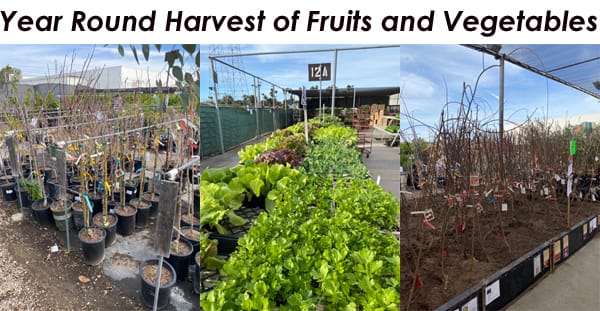
Year-Round Harvest of Fruits and Vegetables in Southern California
By Richard Flowers, ACCNP-Green Thumb Nursery-Ventura
Richard is an Advanced California Certified Nursery Professional (ACCNP), a credential of the California Association of Nurseries and Garden Centers.
Quick answer: Yes, a Southern California garden really can hand you something to pick every single day of the year. No single crop does it alone. Cool season vegetables like broccoli, lettuce, and peas carry winter and spring, stone fruit and summer vegetables cover late spring through fall, and everbearing plants like Meyer and Eureka lemons, rosemary, and coastal strawberries fill the gaps in between. The trick is combining plants whose harvest windows follow one after another, what I call a consecutive harvest.
In a recent article I mentioned a very important factor in determining what you should know before buying fruit trees. It is called consecutive harvest, or fruit harvesting one after another over an extended period of time. Today I want to expand on that principle in great detail, because with the right combination of fruits, vegetables, and herbs there is no reason why you should not have something harvested from your garden that you can consume every day of the year.
Having something healthy you can pick from your own garden has mountains of benefits and rewards. The satisfaction and pride one gets when harvesting an ever-bearing Meyer or Eureka Lemon almost any time of the year puts a smile on your face. Persimmons in the market are outrageously expensive, so the joy of picking your own Fuyu (Jiro) Persimmon in the fall is awesome. Collecting a juicy Tomato right off the vine in the summer is an old favorite pastime. Harvesting Lettuce, Cauliflower, and Cabbage in the late winter or spring is great for salads. In spring you can harvest an early Peach or Apricot. Summer through fall are your Figs, and for those who enjoy barbecue, Rosemary and culinary lavenders can be snipped just about any time of the year.
Can All Crops and Fruits Be Harvested in the Same Season?
No, and that is actually good news for your garden plan. Vegetables divide into cool season crops (broccoli, cabbage, lettuce, peas) that mature during the cooler months and warm season crops (tomatoes, corn, peppers) that need summer heat to ripen (Penn State Extension). Fruit trees work the same way. Every variety has its own harvest window, from an Earlitreat Peach in May to a Fuyu Persimmon in November. Because no single season can give you everything, the way to eat from your garden all year is to combine plants whose harvest windows overlap and follow one another. Below I want to provide you with several winning combinations you can try in your own landscape, where you can harvest healthy, delicious edibles every day of the year.
What Can You Harvest Year-Round in Southern California?
A few remarkable plants barely take a day off. Meyer and Eureka Lemons seem to really never stop producing a crop, especially in the mild coastal areas. The University of California, Riverside citrus collection notes that both bear fruit throughout the year, with the Improved Meyer heaviest in winter and the Eureka strongest from late winter through early summer (UCR Improved Meyer; UCR Eureka). Rosemary is an evergreen herb in our climate, so you can cut tender tips any day you fire up the barbecue (University of Illinois Extension).
Start with the wonderful and ever popular Avocado. Across all of its different varieties, it is possible to pick avocados nearly year-round with the right mix of trees. Hass carries you from spring into fall, while Fuerte and Bacon cover the winter months, and UC Cooperative Extension in Ventura County points out that the fruit will even hold on the tree until you are ready for it (UCCE Ventura County). For those of you who love Strawberries, these refreshing fruits can be harvested from about February to October in coastal gardens (California Strawberry Commission). And with staggered plantings, coastal gardeners can cut Celery most of the year; Ventura County farms grow both winter and summer celery crops for good reason (CDFA).
If you are choosing fruit trees so that something ripens every month of the calendar, our companion guide to growing 12 months of fruit in Southern California walks through it tree by tree.
A Southern California Harvest Calendar
Here is the season guide I share with customers. Please note the harvest times are approximate and are to be used as a guide only; your exact dates will shift with your variety choices and your microclimate.
| Crop | Approximate SoCal harvest | Notes |
|---|---|---|
| Meyer and Eureka Lemons | Year-round | Everbearing, heaviest winter into spring |
| Rosemary | Year-round | Evergreen herb, snip as needed |
| Avocados | Nearly year-round | Hass spring to fall; Fuerte and Bacon in winter |
| Strawberries | February to October | Coastal gardens |
| Navel Oranges | November to April | Fruit holds on the tree |
| Tangelos (Minneola) | January to March | Winter citrus treat |
| Broccoli | January to June | Cool season |
| Cabbage | Winter to April | Cool season |
| Lettuce | October to May | Most of the year near the coast |
| Peas | January to April | Cool season |
| Peaches and Nectarines | May to September | Earlitreat starts in early May |
| Apricots and Apriums | May to July | Katy, Gold Kist, Royal Blenheim |
| Plums | June to August | Santa Rosa first, then Burgundy |
| Figs | July to first frost | Small early breba crop in some varieties |
| Tomatoes | May to December | Longest in mild coastal areas |
| Corn | May to October | Warm season |
| Peppers | June to December | Longest in mild coastal areas |
| Basil | May to December | Until nights turn cold |
| Apples | August to October | Low chill Anna ripens in early summer |
| Pomegranates | September to November | Fruit stores well into December |
| Persimmons | October to December | Peak November and December |
| Valencia Oranges | Spring through summer | Often hangs into fall |
Winter and Early Spring: Cool Season Harvests
Fall and winter are the perfect time to plant the cool season crops, and soon to harvest are Cabbage and Broccoli. With Broccoli you can have a crop from about January to June, and Cabbage in second place, harvested until April. Another cool season crop is Lettuce. You can harvest the different selections from roughly October through May, and in the immediate coastal zone you can plant it most of the year and pick a few weeks after planting. Loose-leaf varieties and Romaine can be trimmed down multiple times for repeated harvesting. To extend the harvest, pick the outer leaves first and allow the center leaves to enlarge; the plant keeps producing new leaves from the crown (Nebraska Extension). Peas planted in fall can be picked off the vine from about January to April. If you want to see what else earns its keep in the cool months, our guide to fall and winter vegetables in SoCal covers the full lineup.
While on the subject of citrus, winter is when the orchard shines. Navel Oranges are harvested November to April, and the fruit will hold on the tree for months beyond maturity, so there is no rush (UCR Citrus Variety Collection). Tangelos like the Minneola are a winter into early spring treat, ripening about January to March (UCR Citrus Variety Collection). Valencias take over in spring and carry through summer, often hanging into fall (UCR Citrus Variety Collection).
Late Spring and Summer: Stone Fruit and Warm Season Vegetables
During the bare-root season in winter, you can plant dormant fruit trees that will reward you with some amazing stone fruit. Very early Peaches start as early as May with great tasting selections such as Earlitreat, and toward later in the same month you have the Flordaprince Peach (Dave Wilson Nursery). One of the earliest Plums is Methley, ready to pick in early to mid June, along with the truly delicious Flavor Delight Aprium. In May into June you also have Katy Apricot and Gold Kist, touted as one of the best low chill apricots (Dave Wilson Nursery). Late June into early July brings the super low chill and reliable Tropic Gold Apricot, which was discovered in Camarillo, right here in Ventura County, and the all time favorite Royal (Blenheim) Apricot about the same time (Dave Wilson Nursery). The delicious and super sweet Cot-N-Candy Aprium is harvested from late June to mid July (Dave Wilson Nursery).
The heart of the Peach and Nectarine season in California runs from May through September, with the latest varieties stretching into early fall (UC Agriculture and Natural Resources). Take your pick with Figs; there are so many varieties, which gives you a crop from July to first frost, and some varieties add a small early breba crop in late spring (California Figs).
Moving into warm season vegetables, with all their different selections and varieties, Corn can be harvested May through October, Peppers from June to December, and Tomatoes from May through December in the mildest areas. Everyone loves Basil, and you can pick and use this tantalizing herb from May to December as well. For the full summer garden game plan, see our summer vegetable guide for Southern California.
When Are Plums in Season, and How Do You Ripen Them?
Plum season in Southern California runs from about June through August, with early and late varieties stretching it on both ends. The most popular and noted Plum, Santa Rosa, is usually harvested late June into early July, while my favorite, Burgundy, which is sweet and self-fruitful, comes in from mid July to mid August (Dave Wilson Nursery).
To ripen plums quickly, let firm fruit sit on the counter at room temperature; a loosely closed paper bag traps the ethylene the fruit gives off and speeds the process. Once a plum yields to gentle pressure, move it to the refrigerator and enjoy it within one to three days (NDSU Extension).
Fall Into Winter: Apples, Pomegranates, and Persimmons
Apple season in Southern California runs from August to October for standard varieties. You cannot forget the remarkable Anna Apple, a very low chill selection (around 200 hours) that ripens in early summer; it is self-fruitful, and planting it near Dorsett Golden gives you noticeably bigger crops (Dave Wilson Nursery). Pomegranate season is in full swing from September through November, and the fruit stores so well that you can enjoy it into December (Clemson Cooperative Extension). Persimmon season follows from October into winter, with the peak in November and December (Persimmons.org), and California Rare Fruit Growers lists most backyard varieties ripening from late September through November (CRFG). If you want to grow that outrageously expensive market fruit yourself, our persimmon growing guide covers Fuyu and Hachiya from planting to picking.
How to Plan a Consecutive Harvest
The previously mentioned fruit trees become available to plant during the bare-root or dormant season in winter, which is the smart time to add them. Please note, particular varieties may have limited availability. Picking the right rootstock matters as much as the variety, and our guide to rootstocks for fruit trees explains how to match one to your soil.
Here is how the windows chain together in one landscape:
- An Earlitreat Peach starts you in May.
- Santa Rosa Plums and Royal Blenheim Apricots carry early summer.
- Figs and Burgundy Plums take late summer.
- Apples arrive in early fall.
- Pomegranates and Persimmons cover fall into early winter.
- Navel Oranges, Broccoli, Cabbage, Lettuce, and Peas keep the kitchen stocked until the stone fruit returns.
Dave Wilson Nursery calls this same approach successive ripening, building a long fruit season from several varieties that each ripen at a different time (Dave Wilson Nursery). Stagger a few plantings of lettuce and celery, keep a Meyer Lemon and a pot of Rosemary near the kitchen door, and there is a harvest waiting every day of the year. If avocados are on your wish list, our guide to growing avocados in your own backyard will help you pick varieties that spread the season.
Year-Round Harvest FAQs
Can all crops and fruits be harvested in the same season?
No. Vegetables divide into cool season crops like broccoli, cabbage, lettuce, and peas that mature in the cooler months, and warm season crops like tomatoes, corn, and peppers that need summer heat (Penn State Extension). Fruit varieties ripen in staggered windows too, so a year-round harvest comes from combining plants with overlapping windows, not from one season of everything at once.
What can you harvest year-round in Southern California?
Meyer and Eureka lemons, rosemary, and avocados (with a mix of varieties) can be picked essentially year-round in mild Southern California gardens. An everbearing lemon is the closest thing to a fruit that grows all year round in a home garden. Coastal strawberries bear from about February through October, and staggered plantings of lettuce and celery near the coast fill in the rest of the calendar.
When are plums in season?
In Southern California, plums are in season from roughly June through August. Early varieties like Methley ripen in early June, the famous red Santa Rosa peaks in late June into early July, and Burgundy carries mid July into mid August.
How do you ripen plums quickly?
Let firm plums sit at room temperature on the counter, and place them in a loosely closed paper bag to trap ethylene and speed ripening. Once the fruit yields to gentle pressure, refrigerate it and eat it within one to three days (NDSU Extension).
When do plum trees produce fruit?
Backyard plum trees in Southern California ripen their crop between June and August, depending on the variety. A newly planted bare-root tree usually needs a few seasons in the ground before it bears its first full crop.
What vegetables can you harvest in winter in Southern California?
Cool season crops planted in fall carry the winter garden: broccoli from about January into spring, cabbage through April, lettuce from October to May, and peas from January to April. Winter is also peak citrus season, with navel oranges at their best from November to April.
What is a consecutive harvest?
A consecutive harvest means choosing fruit varieties and vegetables whose harvest windows follow one after another, so as one crop finishes the next is ready. For example, Earlitreat peaches in May, Santa Rosa plums in July, figs in late summer, apples in early fall, then persimmons and navel oranges into winter.
Find Your Next Edible at Green Thumb Nursery
Of course, this is just a sample of what can be done with edibles so you can actually have something to eat from your own garden space year-round. So go ahead and make your landscape useful, bountiful, enjoyable, and healthy all at the same time. Your favorite Green Thumb Nursery has a wide range of edibles that can be planted throughout the year, so you can enjoy the fruits of your labor and good health. Stop by any of our five Southern California locations and our garden experts will help you build your own consecutive harvest; find your nearest store on our store locations page.
Do you like what you see? Sign up for our weekly newsletter to get articles like this one, plus store coupons, every week.
Sources
- UC Cooperative Extension Ventura County: When to Pick Avocados
- UC Riverside Citrus Variety Collection: Improved Meyer Lemon
- UC Riverside Citrus Variety Collection: Washington Navel Orange
- UC Riverside Citrus Variety Collection: Valencia Orange
- Dave Wilson Nursery: Santa Rosa Plum
- Dave Wilson Nursery: Anna Apple
- Penn State Extension: Cool-Season vs. Warm-Season Vegetables
- UC Master Gardeners of San Diego County: Vegetable Planting Guide
- California Strawberry Commission: Where Strawberries Are Grown
- California Figs: FAQ
- Clemson Cooperative Extension: Pomegranate
- NDSU Extension: How to Select and Store Fruit
- Nebraska Extension: Harvesting Greens
- University of Illinois Extension: Rosemary
- UC Riverside Citrus Variety Collection: Eureka Lemon
- UC Riverside Citrus Variety Collection: Minneola Tangelo
- California Agriculture: June 2026 Peach and Nectarine Market Report
- CDFA: Celery Fertilization Guidelines
- California Rare Fruit Growers: Persimmon
- Persimmons.org: When Are Persimmons in Season?
- Dave Wilson Nursery: Backyard Orchard Culture