

Newsletter Articles
Urban Gardening in Southern California: Small Spaces
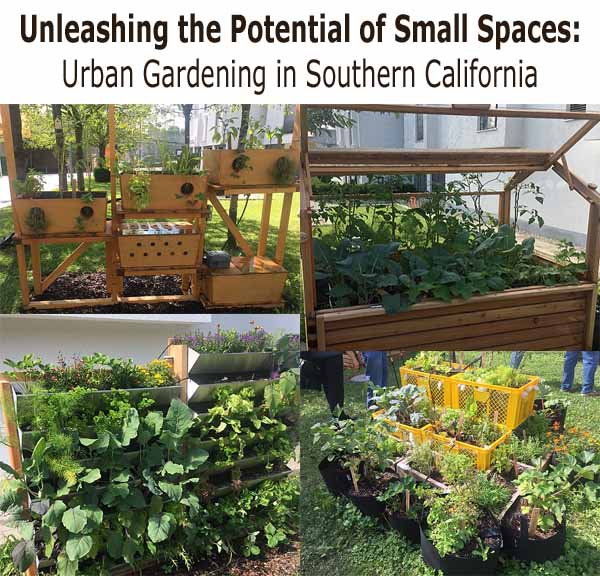
You can grow a surprisingly productive urban garden in a small Southern California space by matching your plants to the sunlight you actually have, growing in well-drained containers of light potting mix, watering often because pots dry out fast, and going vertical with trellises and shelves to multiply your room. Start with high-value, compact crops like leafy greens, herbs, and bush tomatoes, and take advantage of our mild year-round climate. Just be realistic: containers need more frequent watering and attention than an in-ground bed, not less, and a shady balcony will only grow shade-tolerant greens.
Quick answer: To start an urban garden, first check how much direct sun your space gets: fruiting vegetables like tomatoes and peppers need about 6 to 8 hours, while leafy greens and root crops get by with less. Plant in the largest containers you can fit, each with drainage holes, filled with a light soilless potting mix (never heavy garden soil). Water whenever the top of the soil feels dry, which in our heat can mean daily, and mulch and group your pots to save water. Use trellises and shelves to grow up and multiply your space, and start with easy, high-value crops: lettuce, herbs, radishes, bush tomatoes, and peppers.
| Space and light | Good crops | Note |
|---|---|---|
| Full sun (6 to 8+ hours) | Tomatoes, peppers, eggplant, beans, squash, cucumbers | Bush or dwarf varieties for pots; go vertical for vining crops |
| Part shade / lower light | Lettuce, spinach, kale, chard, arugula, beets, radishes, herbs | Leafy and root crops tolerate less sun than fruiting ones |
| Indoors (bright window) | Microgreens, herbs | A sunny window or a grow light; harvest microgreens in 2 to 3 weeks |
Start by Reading Your Space (Sun, Wind, Weight)
Before you buy a single pot, spend a day watching your space, because sunlight is the one thing you cannot fake. Most vegetables want a lot of it: fruiting crops like tomatoes, peppers, and beans need roughly 6 to 8 hours of direct sun, while leafy greens and root crops such as lettuce, beets, and mustard greens will tolerate some shade.[1] Match the crop to the light you actually have, and a dim balcony becomes a salad garden rather than a failed tomato experiment.
Containers also live a harsher life than a garden bed, with more exposure to sun, wind, and reflected heat off walls and pavement, and overheated soil is one of the most common reasons a container garden fails.[2] On a windy balcony or rooftop, pick pots with a base wider than they are tall so they do not tip, and take weight seriously: a large pot full of moist mix and a plant can get very heavy, so check your building’s limits before loading up a balcony, and lean on lightweight soilless mixes and a rolling plant caddy.[3]
Containers and Soil for Small Spaces
The two non-negotiables for any container are a drainage hole and the right mix. Every pot must drain, or the soil stays waterlogged and the roots rot.[4] Beyond that, go as big as your space allows: the larger the container, the easier the plant is to grow, since bigger volumes of soil hold moisture longer and dry out more slowly.[5] Match the pot to the plant, with deeper containers for carrots, beets, and tomatoes, and the largest practical size to cut down on watering.[4]
Fill those pots with a quality potting or soilless mix, never garden soil or topsoil, which is too heavy for containers, holds too much water, and can bring in weeds, insects, and disease.[1] One SoCal-specific tip: a light-colored pot reflects sun and keeps the root zone from overheating and drying as fast as a dark pot will in our strong light.[6]
Watering an Urban Garden (and Keeping It Water-Wise)
Here is the honest trade-off of container growing: pots need watering far more often than an in-ground bed, and the amount changes with the season, the pot, the mix, and how much sun and wind the spot gets.[4] In the heat of summer, on a windy day, or during a heat wave, containers can need water once or even twice a day. The simple rule is to water when the top of the soil feels dry, soaking until water runs from the drainage holes, keeping the mix moist but never soggy.[1]
Because we garden in a drought-prone climate, water wisely rather than constantly. A few inches of mulch on the soil surface cuts evaporation substantially, grouping pots with similar needs makes watering efficient, and a simple drip or self-watering setup keeps things even while you are away.[6] Watering deeply and a little less often encourages deeper, tougher roots, which is the water-thrifty habit to build.[7]
What to Grow and How to Grow Up
In a small space, grow what gives you the most for the room: high-value, fast, compact crops. Lettuce, herbs, radishes, kale, chard, bush tomatoes, peppers, and beans are all strong container performers, and dwarf or patio varieties are bred to stay small.[1] If your light is limited, lean into the leafy greens and root crops that tolerate shade rather than fighting to ripen tomatoes.[4] And when a windowsill is all you have, microgreens are the ultimate small-space crop, as covered in our guide to growing microgreens.
The real trick to a small garden is to grow up, not just out. Trellises, nets, cages, and poles let vining crops like cucumbers, pole beans, peas, and even melons climb, which uses far less ground and gives you much more harvest per square foot, and the space beneath a trellis can still hold low crops like lettuce and herbs. Keep tall supports on the north side so they do not shade everything else.[8] One more Southern California advantage worth leaning on: our mild climate lets you grow something nearly year-round, with warm-season crops in spring and summer and cool-season greens and roots in fall and winter.[9] For a few more ornamental ideas when you have a patio to fill, see our guide to balcony and patio plants, and our container garden tips for fruit and vegetables.
Not sure which pots, mix, or plants fit your space and light? Stop by any Green Thumb Nursery and our team can help you build an urban garden that works with the sun, wind, and room you actually have.
Urban Gardening FAQ
How do you start an urban garden?
Start by checking your sunlight, then plant in the largest well-drained containers you can fit, filled with light potting mix. Match crops to your light, water whenever the top of the soil is dry, and use trellises and shelves to grow vertically. Begin with easy crops like lettuce, herbs, and bush tomatoes.[1]
What can you grow in a small urban garden?
Plenty: leafy greens, herbs, radishes, kale, chard, bush tomatoes, peppers, beans, and dwarf or patio varieties all do well in containers. Vining crops like cucumbers and pole beans can climb a trellis, and microgreens grow on an indoor windowsill.[4]
How much sun does an urban garden need?
It depends on the crop. Fruiting vegetables like tomatoes, peppers, and beans need about 6 to 8 hours of direct sun a day, while leafy greens and root crops tolerate less. Read your space honestly and pick crops to match, rather than forcing sun-lovers into a shady spot.[1]
How often do you water container plants?
More often than you would water a garden bed, because pots dry out fast. Water whenever the top of the soil feels dry, soaking until it drains from the bottom; in summer heat or wind that can mean once or twice a day. Mulch and group your pots to stretch the water.[4]
Can you garden in an apartment or on a balcony?
Yes, with containers. They are the renter-friendly, no-permanent-changes way to grow, and they suit balconies, patios, and doorsteps. Just check your building’s weight limits before placing large, heavy pots, and match what you grow to the light the space gets.[3]
Sources
- [1] Oregon State University Extension, Container Gardening: Grow Vegetables Even Without Yard Space: extension.oregonstate.edu
- [2] Colorado State University Extension, Vegetable Gardening in Containers: extension.colostate.edu
- [3] Colorado State University Extension, Container Gardens: extension.colostate.edu
- [4] UC Master Gardeners of Orange County, Container Gardening: ucanr.edu
- [5] NC State Extension, Vegetable Gardening in Small Spaces: content.ces.ncsu.edu
- [6] UC Master Gardener Program, Riverside County, Water-Wise Gardening: ucanr.edu
- [7] UC IPM, Conserve Water in Landscapes: ipm.ucanr.edu
- [8] NC State Extension, Extension Gardener Handbook, Vegetable Gardening: content.ces.ncsu.edu
- [9] UC Master Gardener Program, Alameda County, Cool-Weather Vegetable Gardening: ucanr.edu
Sign up for the Green Thumb Nursery newsletter for seasonal Southern California gardening tips.