

Newsletter Articles
Plants With Big Flowers: Giant Blooms for SoCal
Written by Kelsey W.
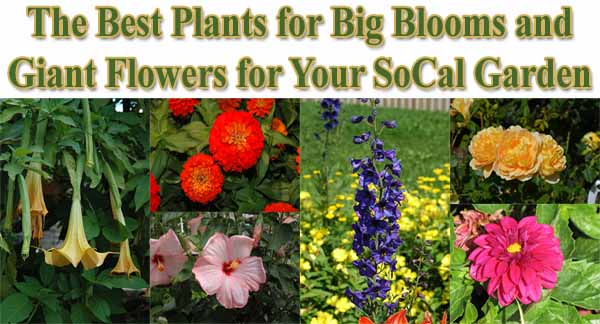
The best plants for big, showy flowers in a Southern California garden include dinnerplate dahlias, hardy hibiscus, king protea, giant sunflowers, angel’s trumpet, English roses, giant zinnias, bird of paradise, and Pacific Giant delphinium. The largest single blooms belong to dinnerplate dahlias and hardy hibiscus, each reaching about 10 to 12 inches across, and to the king protea, whose flower head can span roughly a foot.
Quick answer: For the biggest flowers in SoCal, grow dinnerplate dahlias and hardy hibiscus (up to about 10 to 12 inches), king protea (a flower head up to about 12 inches), and giant sunflowers (heads up to 16 to 18 inches on the largest cultivars). English roses, giant zinnias, bird of paradise, and Pacific Giant delphinium add more big-bloom drama. One caution: angel’s trumpet has gorgeous foot-long flowers but every part is highly poisonous, so site it carefully around children and pets.
Big-Flower Plants at a Glance
Here are some of the biggest, most eye-catching blooms you can grow in a Southern California garden, with typical flower sizes:
| Plant | Typical flower size | SoCal notes |
|---|---|---|
| Dinnerplate dahlia | Up to 10 to 12 in. | Warm-season tuber, plant in spring |
| Hardy hibiscus (rose mallow) | 6 to 10 in. | Perennial, wants steady moisture |
| King protea | 6 to 12 in. head | Loves sun and sharp drainage |
| Giant sunflower | 12 to 18 in. head | Warm-season annual, plant in spring |
| Angel’s trumpet (toxic) | 6 to 12 in. long | Highly poisonous, site with care |
| Tropical hibiscus | Up to 6 in. | Evergreen, a SoCal favorite |
| English (shrub) rose | 3.5 to 5 in. | Sun plus summer water |
| Giant zinnia | About 5 in. | Heat lover, plant in spring |
| Bird of paradise | 6 in. plus | Signature subtropical SoCal plant |
| Pacific Giant delphinium | Tall spikes, 3 to 7 ft. | Cool-season, grown as an annual here |
Dinnerplate Dahlias
Dahlias range widely, from pompoms a couple of inches wide up to the giant decorative “dinnerplate” types. The whole genus spans about 2 to 12 inches, and the largest dinnerplate cultivars (such as ‘Cafe au Lait’ and ‘Thomas Edison’) sit at the top of that range, roughly 10 to 12 inches across.[1] Plants grow 1 to 6 feet tall. Dahlias are warm-season, frost-tender tubers, so plant them in spring once the soil has warmed, not in fall. They also appear in our roundup of begonias, dahlias, zinnias, and fuchsias.
Hibiscus: Tropical vs. Hardy
Two very different plants share the hibiscus name. Tropical hibiscus (Hibiscus rosa-sinensis) is the glossy-leaved, evergreen shrub most SoCal gardeners know, with blooms up to about 6 inches across on a 4 to 10 foot plant; it thrives in our mild, nearly frost-free climate.[2] Hardy hibiscus, or rose mallow (Hibiscus moscheutos), is a cold-tough perennial with the truly enormous “dinnerplate” flowers, reaching about 6 to 10 inches across.[3] Clemson puts the hardy hibiscus bloom closer to 6 to 8 inches, still a showstopper.[4] For everyday SoCal gardens the tropical type is the easier evergreen performer; grow the hardy kind for the biggest blooms, giving it consistent moisture.
King Protea: The Biggest Flower Head
If you want one jaw-dropping flower, the king protea (Protea cynaroides) delivers a bowl-shaped flower head about 6 to 12 inches across, the largest in the entire protea genus.[5] On a compact 3 to 5 foot shrub, it is a natural fit for Southern California’s Mediterranean climate: give it full sun, sharply well-drained acidic-to-neutral soil, and frost-free shelter, and it rewards you with a drought-tolerant centerpiece. For another big, architectural bloom in the same style, see the related cone bush (Leucadendron).
Giant Sunflowers
Common sunflowers (Helianthus annuus) open 3 to 6 inch faces, but the giant cultivars are in another league. ‘Mammoth’ types commonly reach about a foot across, and ‘Mongolian Giant’ is listed at a remarkable 16 to 18 inches on plants 12 to 14 feet tall.[6] Sunflowers are warm-season annuals that love heat and full sun, so sow them in spring; they will not overwinter.
Angel’s Trumpet: Beautiful but Highly Toxic
Angel’s trumpet (Brugmansia) hangs out pendulous trumpet flowers more than 6 inches and up to roughly a foot long on a large 6 to 15 foot shrub. It is spectacular, but it comes with a serious safety warning: the flowers, leaves, and seeds are all highly poisonous, containing tropane alkaloids (atropine, scopolamine, and hyoscyamine), and it is dangerous by ingestion or even inhalation.[7] Serious poisoning, from hallucinations to paralysis, can follow if parts are eaten, so keep it well away from children and pets, and wear gloves when you handle or prune it. (Brugmansia carries its trumpets facing down; the similar upward-facing Datura is likewise toxic.)
English Roses
For classic big, fragrant blooms, David Austin English shrub roses are hard to beat. Their large-bloom varieties measure about 3.5 to 5 inches across, packed with petals, a favorite like ‘Golden Celebration’ carries around 75.[8] Roses are a Southern California staple; give them full sun and regular summer water. Looking for something lower-maintenance? Compare them with the easy-care, repeat-blooming Drift roses.
Giant Zinnias
Zinnias (Zinnia elegans) are the easiest big-flower annual for a hot SoCal summer. Giant strains like Benary’s Giant open fully double blooms about 5 inches across on 3 to 4 foot plants, and ‘State Fair’ types run roughly 4 to 6 inches.[9] Zinnias thrive in hot, dry conditions, so plant them in spring once the soil is warm and enjoy blooms all summer.
Bird of Paradise
No plant says Southern California quite like bird of paradise (Strelitzia reginae). Each flower is more than 6 inches of brilliant orange sepals and blue petals emerging from a boat-shaped bract, resembling an exotic bird in flight, on a 3 to 4 foot clump.[10] It is a subtropical signature plant for our frost-free zones. Its seeds and fruit are mildly toxic to pets, so discourage nibbling. For more on growing it, see our guide to growing bird of paradise.
Pacific Giant Delphinium
Delphiniums bring tall drama rather than one giant bloom: Pacific Giant strains send up 3 to 7 foot spikes lined with up to a hundred florets each, though any single floret is under an inch.[11] They are short-lived perennials that want cool, moist conditions, so in hot SoCal gardens they are usually grown as cool-season annuals, planted in fall for a spring show. Note that delphinium (also called larkspur) is toxic to people and pets and can cause skin irritation, so handle it with the same care.[11]
What Big-Flower Plants Can You Plant Now in SoCal?
In Southern California, fall is the time to plant cool-season flowers that will bloom next spring, not the warm-season giants. In October you can plant snapdragons and delphiniums along with cool-season bulbs such as freesia, watsonia, oxalis, sparaxis, and paperwhite narcissus, and you can buy ranunculus and anemones now to plant in November once the soil cools.[12] The biggest warm-season showstoppers, dahlias, zinnias, and giant sunflowers, wait for spring, since they need warm soil and will not survive a cold snap. A big-bloom favorite you can also add now is the hydrangea, whose flower clusters put on a long show in a partly shaded spot.
Ready to fill your garden with giant flowers? Visit any Green Thumb Nursery location and our team will help you match big-bloom plants to your sun, soil, and season.
Big-Flower Plants FAQ
What plants have big flowers?
Standout big-flower plants for Southern California include dinnerplate dahlias and hardy hibiscus (up to about 10 to 12 inches), king protea (a flower head up to about 12 inches), giant sunflowers (heads up to 16 to 18 inches), plus English roses, giant zinnias, bird of paradise, and Pacific Giant delphinium.
What are the big flowers called?
The plants most often grown for very large blooms are dahlias (especially dinnerplate types), hibiscus (hardy rose mallow has the biggest flowers), protea (king protea), sunflowers, angel’s trumpet, and peony-style English roses.
How big do these flowers get?
The largest single blooms are the king protea’s flower head and the biggest dinnerplate dahlias and hardy hibiscus, each roughly 10 to 12 inches. Giant sunflower heads can reach 16 to 18 inches on the largest cultivars, while tropical hibiscus and bird of paradise run about 6 inches.
Are black-eyed Susans a perennial?
It depends on the species. Rudbeckia fulgida is a reliable perennial that returns every year.[13] Rudbeckia hirta (the common gloriosa daisy or ‘Indian Summer’ type) is a short-lived perennial or biennial that is often grown as an annual because it blooms the first year.[14]
What big flowers can you plant now in Southern California?
In fall, plant snapdragons, delphiniums, and cool-season bulbs like freesia and paperwhites now, and buy ranunculus and anemones to plant in November. Save dahlias, zinnias, and giant sunflowers for spring.[12]
Sources
- [1] NC State Extension Gardener, Dahlia: plants.ces.ncsu.edu
- [2] NC State Extension Gardener, Hibiscus rosa-sinensis: plants.ces.ncsu.edu
- [3] NC State Extension Gardener, Dinner Plate Hibiscus: plants.ces.ncsu.edu
- [4] Clemson HGIC, Hardy Hibiscus: hgic.clemson.edu
- [5] Royal Horticultural Society, Protea cynaroides: rhs.org.uk
- [6] NC State Extension Gardener, Helianthus annuus: plants.ces.ncsu.edu
- [7] NC State Extension Gardener, Brugmansia: plants.ces.ncsu.edu
- [8] David Austin Roses, Golden Celebration: davidaustinroses.com
- [9] UW-Madison Horticulture Extension, Zinnias: hort.extension.wisc.edu
- [10] NC State Extension Gardener, Strelitzia reginae: plants.ces.ncsu.edu
- [11] NC State Extension Gardener, Delphinium elatum: plants.ces.ncsu.edu
- [12] UC Master Gardeners of Orange County, October Garden Guide: ucanr.edu
- [13] NC State Extension Gardener, Rudbeckia fulgida: plants.ces.ncsu.edu
- [14] NC State Extension Gardener, Rudbeckia hirta: plants.ces.ncsu.edu
Sign up for the Green Thumb Nursery newsletter for seasonal Southern California gardening tips.