
Newsletter Articles
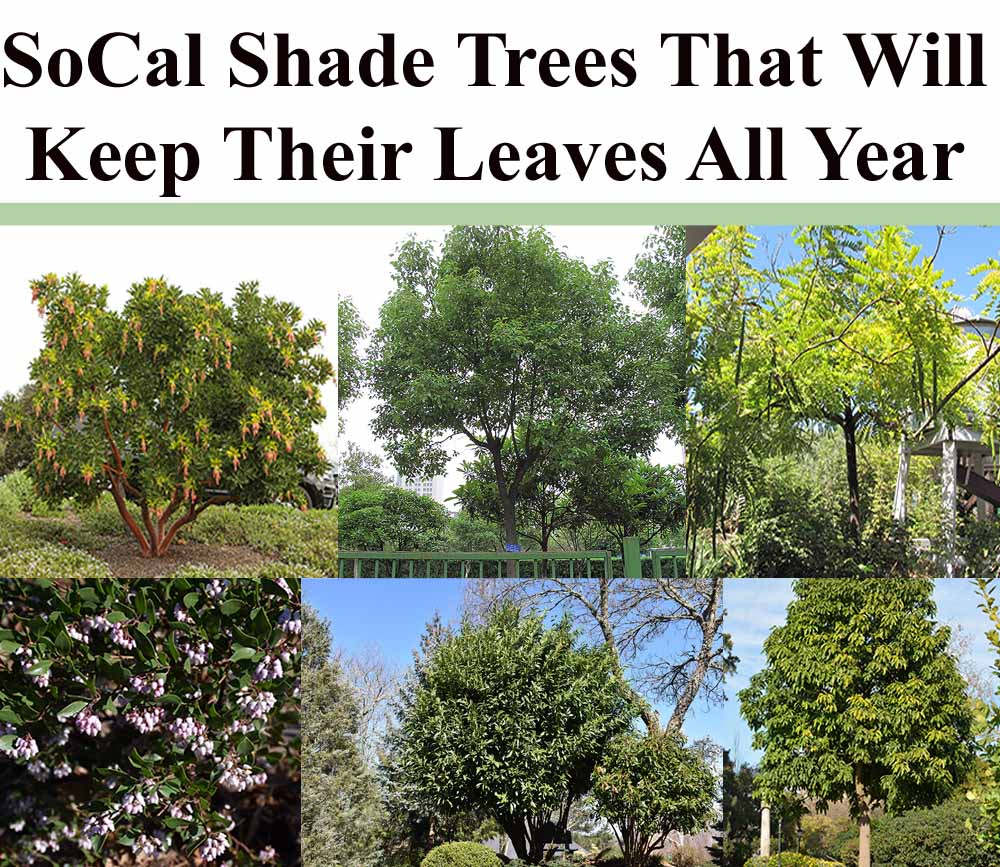
SoCal Shade Trees That Will Keep Their Leaves All Year
Written by Kelsey W.
Shade trees are ubiquitous throughout Southern California, offering shady streets for summer strolls and comfortable canopies for relaxing on a hot day. However, not all trees keep their leaves throughout the year, even in Southern California, meaning your summer shade tree could leave your yard bare in the winter during its yearly leaf drop.
Fortunately, there are a slew of beautiful shade trees out there that are absolutely perfect for creating year-round beauty and shade for your Southern California home. Let’s discuss a few shade tree options that will allow you to enjoy an evergreen canopy all year long without the yearly leaf drop of a deciduous tree.
Indian Laurel Columns
Also known as the Hollywood hedge, the Indian Laurel Columns are appropriately named as they’re capable of growing into the classically tall hedges you might see on a winding street in Beverly Hills, where all the houses are obscured by huge bushes.
One of the neat features of these trees is that they aren’t just bushes but plants that can grow into big, gorgeous trees, too, for nice, shady yards. If you want them to exist as hedges, they do need trimming, but just letting them grow into their natural shape will result in a classic tree.
As far as keeping their leaves, Hollywood hedges do shed some leaves throughout the year, but not enough to make it noticeable in any particular season. They simply shed a little here and there throughout the year, always keeping their green appearance.
For care, as long as they get a good amount of water during their youthful years, they’ll become drought-resistant when they’re older. The one caveat of the trees is that they do have pretty aggressive roots, so they shouldn’t sit right next to a plumbing system or the foundation of a house.
Coast Live Oaks
One of the grandest trees in Southern California is the coast live oak or Quercus agrifolia, which is a lover of the region’s mild Mediterranean climate. One of the most notable features of these amazing trees is that they can live for centuries, so the tree you plant today may be around for many generations.
Coast live oaks aren’t a deciduous tree, so technically they keep the bulk of their leaves all year, but they do tend to shed some leaves in the spring as they go through a period of renewal. Just like the Indian laurel columns, they need some mild raking of leaves throughout the year.
The trees are most at home near the coast – hence their name – but they can grow somewhat inland as long as they have a solid source of groundwater in reach. They grow natively around 60 miles inland from the coast, but you can grow them further inland in the right conditions.
The coast live oak is truly one of the best shade trees in all of Southern California because it creates an amazingly large canopy when the tree is full-grown. Imagine an unseasonably warm winter day where you get to enjoy the shade of this year-round shade tree with all its lovely leaves overhead.
Fern Trees
A tree you’ve probably seen lining some Southern California streets is the fern tree or Podocarpus gracilior. Just like the Indian laurel columns, it’s possible to turn fern trees into privacy hedges with some careful pruning, but they’re also a naturally bulbous shade tree when left to grow naturally.
A few reasons they’re popular trees are their low maintenance requirements and their resistance to common diseases. Once these trees start maturing, they tend to grow and survive without much intervention, which makes them an excellent choice if you have a busy lifestyle.
They do appreciate regular watering, particularly while they’re young, so it’s helpful to have a drip line placed near them so you can water them efficiently overnight. If they start dropping leaves at a noticeable rate, that’s a sign you might actually be watering too much!
If you live more than about 50 or 60 miles from the coast, you’ll need to give your fern tree a little extra attention, as the hot summers of Southern California may stress the tree somewhat. Simply providing it with adequate water and well-draining soil is often enough when you’re a few miles inland from their traditional coastal growing areas.
Desert Ironwood
If you have a home in the high desert or Inland Empire and feel a little nervous about planting one of the trees that tends to live closer to the coast, you might want to try the Desert Ironwood or Olneya tesota, which is quite at home in the hotter regions of Southern California.
The tree actually grows natively in the desert, so it will feel right at home if you have an inland home or live somewhere that the temperatures reach scorching levels for a substantial number of months. Although they’re not as grand as trees like the coast live oak, they do grow up to 33 feet tall, which is plenty for a shade tree.
This tree produces flowers, but only when it gets a lot of sun, which makes it a wonderful option for desert and inland homes. It’s also very drought-resistant and enjoys rocky soil, which is common in the deserts of Southern California.
To ensure the greatest number of leaves on this tree, avoid giving it too much nitrogen when you fertilize it, and ensure it gets a nice, big drink every so often during the summer. Soaking it once a month in the summer is a great way to encourage extra leaf growth for bountiful shade.
Camphor Trees
If you live along the coast in an area that feels more humid on the regular, you might consider a camphor tree or Cinnamomum camphora, which is not native to Southern California but is a popular tree in some areas throughout the Southland.
The tree can grow up to 50 or 60 feet tall, which makes it a beautiful and towering option for a shade tree in your lawn. They don’t actually require a lot of water, but they tend to do better when they’re in a less arid place than the desert, like the coastal forests around Santa Barbara or any of the coastal cities of Los Angeles.
The Camphor tree does take a little longer to grow than other species, but the wait is worth it because it can become such a grand and full tree for your shady lawn. If you’re particularly impatient and want a shade tree sooner, you can always plant a larger tree to get a head start.
To ensure the tree gives you plenty of leaves, make sure it receives consistent watering while it’s young or in the first few years of its life. Watering it frequently in the first few years will encourage big, healthy roots that will help the tree become self-sufficient and able to take advantage of groundwater when it’s older.
California Laurel
The California laurel or Umbellularia californica is an excellent tree when you live in a pocket of Southern California that experiences frost a few times a year. Many trees that would otherwise be at home in the desert would be stressed by frost conditions, but not the California laurel.
The California laurel is quite hardy and can grow in full sun or partial shade, but growing it in shady conditions will result in slower growth. When established, the tree is quite drought resistant and capable of growing on its own without a lot of maintenance unless you’re intent on pruning it into a specific shape.
The only difficult part of growing this tree is that it likes its soil slightly moist but not too moist because it’s susceptible to root rot. Therefore, it’s important to find that happy medium of moist soil that’s not too soggy for the tree to handle.
Providing consistent watering is key when it comes to encouraging leaf growth and healthy overall growth of the California laurel. The tree is happiest when in a balanced environment – not too dry and not too wet – and once you get that balance right, the tree will reward you with a beautiful, shady canopy.
Get Shade Tree Help from Green Thumb Nursery
Planting a tree is a project that requires some thought, as a tree may stand in your yard for decades or even centuries. If you’d love to spend the next several years enjoying a shady tree in your front yard or somewhere around your home, you can get advice on the best tree options at Green Thumb Nursery. Come by a Southern California location for a chat about shade trees, growing trees in Southern California, and creating a beautiful environment around your home.
Do you like what you see? Sign up for our newsletter to get content like this every week!
CLICK HERE TO SIGN UP!