

Newsletter Articles
When to Plant and Harvest Winter Vegetables in Southern California
Written by Kelsey W.
Short answer: In Southern California, plant winter vegetables from September through fall, and many crops can still go in the ground well into winter. Most winter vegetables are ready to pick in about 45 to 80 days. The vegetable itself shows you when it’s ready: tight broccoli buds, carrot shoulders peeking up at the soil line, and onion tops falling over.
If ever there was a better place to get acquainted with your New Year’s resolution of eating healthy, it’s your winter vegetable garden. Some of the happiest and most beautiful winter vegetables you can grow are the big leafy greens that always grace the top ten lists of “most healthy” foods out there.
But simply putting your spinach, chard, and kale into the ground some time in the fall isn’t enough to get your garden growing to its peak level. It’s essential to understand when to plant each vegetable, how long it takes your plants to mature, and the signs that tell you it’s finally time to start harvesting.
Even if you live in a pocket of Southern California where the temperatures dip low into near freezing territory, you can still get acquainted with several of these winter vegetables, but you may want to containerize them, just in case you need to move them inside for a few nights during a frost.
But without further ado, let’s talk about when you should be putting plants into the ground for your winter garden and how to know when it’s time to harvest all those healthy leafy greens and your cool weather plants like carrots, broccoli, and onions.
When Should You Plant Winter Vegetables in Southern California?
September through November is the sweet spot for getting most winter vegetables into the ground here, but the windows are far wider than most new gardeners expect. According to the UC Master Gardeners of San Diego County, broccoli, cauliflower, and cabbage transplants can go in from September all the way through February. Lettuce plants from September through March. Spinach, kale, and carrots stretch from September through April, and beets and radishes run September through May along the coast. Peas get planted September through March on the coast (January through March inland), and short-day bulb onions go in from October through December.
If you’re reading this in October or November and worrying you’ve missed your chance, you haven’t. The UC Master Gardeners of Orange County specifically call out October as a fine month to plant cool-season vegetables. The weather in Southern California is so incredibly accommodating that it’s not a deal breaker if you don’t get around to putting your carrots into the ground until December. In fact, carrots love the spring, too, so you might want to put them in the ground as one of your last gardening activities of the winter season.
If you get your seedlings into the ground in October and November, you should get to enjoy the new year with some harvests, whether you’re growing spinach and kale or onions and carrots. Mind you, the onions take longer to grow, but they’re an incredibly satisfying plant to dig out of the ground once they’re mature!
If you’re not keen on keeping a spreadsheet with a bunch of dates and numbers in it, that’s okay! It’s fine to use very general estimates. Sometimes, it’s more about knowing the signs of when a plant is ready to harvest rather than getting the timing exactly right.
And if you’re still deciding what to plant in the first place, we’ve put together a whole guide to the winter vegetables you can grow in SoCal, so this article can focus on the timing side of things.
How Long Do Winter Vegetables Take to Grow?
Most winter vegetables need about 45 to 80 days from planting to harvest. Radishes are the sprinters of the group and can be ready in under a month, while bulb onions run the marathon at 100 days or more. The timelines below come from harvest guides published by Iowa State University Extension and the Clemson Home and Garden Information Center.
| Vegetable | Days to maturity | Ready to pick when… |
|---|---|---|
| Radishes | 25-40 | Roots are about 1 inch across; pull before they turn pithy |
| Leaf lettuce | 45-60 | Cut outer leaves as soon as they’re a usable size |
| Spinach | 45-60 | Leaves are 3-6 inches long; pick the outer leaves |
| Kale | 50-55 | Leaves reach full size; strip the outer leaves first |
| Broccoli | 50-65 | Head is 3-6 inches across with buds still tight |
| Beets | 50-70 | Roots are about 1.5-3 inches across |
| Cauliflower | 55-80 | Head is firm and 6-7 inches across, before the curds separate |
| Peas | 55-70 | Pods are plump (snap peas) or still flat (snow peas) |
| Carrots | 60-80 | Shoulders about 3/4 to 1 inch wide push through the soil |
| Cabbage | 60-90 | Head feels solid and firm when you squeeze it |
| Brussels sprouts | 90-110 | Sprouts are firm at 1-1.5 inches; pick from the bottom up |
| Bulb onions | 100-120 | Most of the tops have fallen over |
One thing worth knowing before you shop: those numbers generally assume you’re starting from seed. For crops you’d otherwise sow directly, starting with seedlings from your garden center can shave a week or two off the wait (for transplant crops like broccoli and cabbage, the count usually starts from transplant day), which brings us to the next big decision.
Seeds or Seedlings? What It Does to Your Timeline
The short version: seedlings get you to harvest one to two weeks sooner than seeds for most direct-sown winter vegetables, and they take a lot of the guesswork out of unpredictable fall weather.
Planting from seed is certainly an adventure when you’re a first-time backyard gardener in Southern California in the fall and winter. You never know what the temperature is going to be, and the overall weather can get fairly unpredictable, especially as we march toward the new year.
Therefore, it’s often helpful to create a container garden if you’re keen on growing your garden from seeds rather than using seedlings from your Southern California garden center. If you plant seeds, you may need to wait anywhere from two to three months for your seeds to mature and get to the point where you can harvest.
For example, let’s say you want a big load of spinach for your homemade lasagna and ravioli. You’ll need to care for your seeds and eventual seedlings for about 45 to 60 days before you can start harvesting leaves. If we get some warmer temperatures, however, you’ll land at the faster end of that range; it just depends on the weather.
On the other hand, if you choose to plant some seedlings that have already been sprouted, you can cut anywhere from one to two weeks off your harvest timeline. So, instead of waiting the better part of two months, you could be harvesting just a month or so after putting your little spinach friends into the ground.
And if a quick turnaround is the whole point of your garden, take a peek at the fastest growing vegetables for your SoCal garden and stack your beds with the sprinters.
When to Pluck Your Winter Carrots, Onions, and Beets from the Ground
Growing your winter below-ground vegetables takes a bit of a closer eye than the easy above-ground plants like spinach and broccoli, but don’t worry, you just need to look for specific signs to know when to harvest your root vegetables.
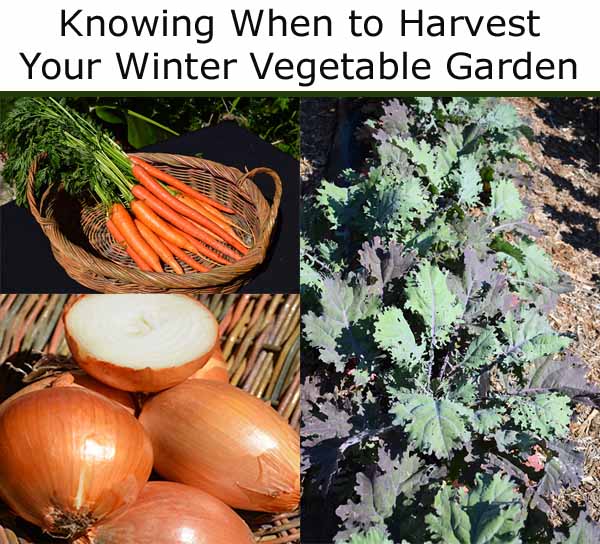
For your carrots, you’ll spend about 60 to 80 days caring for them before they’re ready for harvesting (that range comes straight from Iowa State University Extension’s harvest guide), and you’ll know they’re ready to pick when you see the tops of the carrot roots start to emerge from the soil.
If you don’t see the top of the carrot start to pop out of the ground after a few months, feel free to dig around and take a look at the carrot. Sometimes, they don’t pop out in an obvious way, and they’re already ready to go without letting you know!
For your winter onions, you’ll notice their leafy tops starting to fall over when they’re ready to harvest. Once about three quarters of the tops have flopped over, and the part of the leaves that meets up with the onion at ground level feels dry and papery, it’s time to pull them. The leaves may also turn yellow.
If you’re going for expert level onion growing, you’re supposed to stop watering the onions anywhere from one to two weeks before harvesting, and you’re also supposed to dry your onions if they’re a pungent variety.
Honestly, you can take these steps if you want, but they won’t make or break your ability to grow onions. They’re pretty forgiving plants overall. The same is true for beets, especially in Southern California and when you’re not in danger of a frost. Beets are very forgiving and very easy to grow.
Beets take around two months to mature and become ready for harvesting, but a warm spell throughout December can definitely shorten your timeline. Just like your carrots, the beets will let you know they’re ready to come out of the ground by showing a little bit of themselves from the ground.
When to Harvest Broccoli, Cauliflower, and the Other Cool-Season Classics
We promised you broccoli back in the intro, so let’s deliver. Your broccoli is ready when the main head reaches about 3 to 6 inches across and the little buds are still tight and green. Cut it before any of those buds loosen up or show yellow flower petals, because once broccoli starts to bloom, the flavor goes downhill fast. And don’t yank the plant out after that first harvest! Most broccoli keeps sending up smaller side shoots for weeks after you cut the main head, which feels like getting free vegetables.
Cauliflower plays by similar rules. You’re looking for a firm head about 6 to 7 inches across, and you want to cut it before the curds (those tight little florets) start to separate and get a grainy, ricey look.
Cabbage is wonderfully low-tech: give the head a squeeze. If it feels solid and firm all the way through, it’s ready to come inside and become coleslaw. If it still feels loose and leafy, give it more time.
Brussels sprouts ask for a little patience, but the harvest rule is simple. Pick the sprouts when they’re firm and about 1 to 1.5 inches across, and work from the bottom of the stalk up, since the lower sprouts mature first, according to Utah State University Extension.
And then there are peas, which depend entirely on which kind you planted. Snow peas get picked while the pods are still flat, snap peas when the pods are plump and crisp, and shelling peas when the pods are plump but before they start to yellow. If you wait too long on any of them, they turn starchy, so when in doubt, pick a pod and taste it. Quality control is one of the great perks of being the gardener.
Harvesting Timelines on Leafy Greens Change Depending on Your Personal Taste
So, the general rule of thumb for harvesting your winter leafy greens is that you should never take more than you need for a particular meal. If you’re cutting your kale plant for a salad, don’t take all the leaves you can just because they look “ripe.”
Instead, just choose some of the biggest leaves, always making sure to leave the terminal bud, so the plant continues to grow throughout the season. The terminal bud is right in the center of the plant at the top, and the plant will continue to produce leaves for quite a long time as long as you don’t take all the leaves at once or accidentally chop off the terminal bud.
If you’re absolutely keen on getting a sweeter taste, however, you’ll want to pluck a few smaller leaves. For leafy greens, smaller leaves (from kale plants especially) mean sweeter tastes.
Here’s one more bit of good news for flavor chasers: a light frost is actually a gift. Cool temperatures prompt kale, carrots, and Brussels sprouts to convert their starches into sugars, so the chilliest mornings of a SoCal winter often produce the sweetest harvests, according to Penn State Extension.
Here are a few pieces of general wisdom you can apply to virtually any leafy green plant you want to harvest:
- Choose the biggest and oldest leaves for the first harvest.
- Harvest (older) leaves from near the bottom of the plant, not the (younger) leaves at the top.
- Try to avoid harvesting more than a handful of leaves from any single plant.
- Remove dying leaves no matter their size.
- Cover your plants if you’re in the hills and temperatures dip to freezing.
- Try to eat your leafy greens within a week of harvesting.
- Always fully wash your leafy greens, just as you would greens from the store.
For the full care routine from planting to picking, we’ve also got a guide to growing leafy greens in your Southern California garden.
What About Harvesting Microgreens?
You’ve probably seen those little plastic containers labeled as “microgreens” in the grocery store and wondered where those greens grow. They’re actually just young leaves from vegetable plants like kale. The young leaves have a different taste and nutritional profile, and they’re a popular ingredient in modern cooking.
You can harvest your own microgreens from your leafy green plants by taking the small, young leaves when you harvest, but make sure you’re not taking all the small leaves. If you strip off too many young leaves at once, you’ll weaken the plant and it can stall out on producing new growth. If you’d rather raise a dedicated tray of them on a sunny windowsill, we’ve written up how to grow microgreens step by step.
Help Your Winter Garden Thrive at Green Thumb Nursery
Growing vegetables can turn into an amazingly fun and rewarding project, but the fun doesn’t have to stop when the summer fades. Let’s get your winter garden growing with some new vegetables and plants. Stop by one of our Southern California garden centers today. The experts at Green Thumb Nursery are ready to help you get the most out of your gardening projects.
Do you like what you see? Sign up for our weekly newsletter to get content like this every week!
Winter Vegetable Timing: FAQs
When do you plant winter vegetables in Southern California?
September through November is the sweet spot for most winter vegetables in Southern California, and many crops can go in even later. The UC Master Gardeners of San Diego County list September through February for broccoli, cauliflower, and cabbage transplants, September through April for spinach, kale, and carrots, September through May (coastal) for beets and radishes, and October through December for short-day bulb onions.
When is it too late to start a winter garden in SoCal?
Much later than you’d think. October is absolutely fine for starting a winter garden here, most cool-season crops can still be planted straight through the winter months, and carrots, beets, and radishes can go into the ground as late as spring, especially near the coast.
How long do winter vegetables take to grow?
Most winter vegetables are ready to harvest about 45 to 80 days after planting. Radishes are the fastest at under a month, bulb onions are the slowest at 100 days or more, and for crops you’d otherwise start from seed, seedlings shave one to two weeks off the timeline.
How do you know when winter vegetables are ready to harvest?
The plant itself shows you when it’s ready. Broccoli is ready when the head reaches 3 to 6 inches across with the buds still tight, carrots are ready when their shoulders start pushing up through the soil, and onions are ready when most of their tops have flopped over and the necks feel dry and papery.
What should you do with your vegetable garden in winter?
In Southern California, keep growing! Winter here is prime time for planting and harvesting cool-season vegetables like lettuce, kale, broccoli, carrots, and peas, unlike cold climates where the beds get put to rest until spring.
Do winter vegetables taste sweeter after a frost?
Yes, several of them do. Cool temperatures cause kale, carrots, and Brussels sprouts to convert starches into sugars, so a light frost often makes them noticeably sweeter, according to Penn State Extension.
Sources:
- UC Master Gardeners of San Diego County
- UC Master Gardeners of Orange County
- Iowa State University Extension
- Clemson Home and Garden Information Center
- Utah State University Extension
- Penn State Extension