

Newsletter Articles
Fire-Resistant Plants and Landscaping in California
Written by Kelsey W.
No plant is fireproof, so fire-safe landscaping in Southern California is mostly about defensible space, not plant choice: keep the first five feet around your home noncombustible, space and maintain your plants, and use fire-resistant, high-moisture, low-resin plants as a second layer of protection. Fire-resistant plants are less likely to ignite and add less fuel, but they still burn if they are dead, dry, or crowded against the house. Because rules and fire risk vary by location, always confirm the current requirements with your local fire authority.
Quick answer: The most important fire-safe step is defensible space, especially Zone 0, the first 0 to 5 feet around your home, which should be noncombustible (no wood mulch, dead leaves, or combustibles against the house). Space plants apart, remove dead material, and keep plants watered. Fire-smart plant choices for SoCal include succulents (agave, aloe, dudleya), low groundcovers, and many well-maintained California natives. Avoid pampas grass, juniper, and other high-oil or fuel-heavy plants near the house. No plant is fireproof, and maintenance matters more than the plant list, so follow your local fire department and California defensible-space law.
| Zone | Distance from home | What to do |
|---|---|---|
| Zone 0 (Ember-Resistant) | 0 to 5 feet | Keep noncombustible: no wood or bark mulch, dead leaves, woodpiles, or combustibles; use gravel or pavers |
| Zone 1 (Lean, Clean, Green) | 0 to 30 feet | Remove dead plants and leaf litter, space plants, keep them watered |
| Zone 2 (Reduced Fuel) | 30 to 100 feet | Thin vegetation, cut grass low, remove ladder fuels, space trees and shrubs |
What Makes a Plant Fire-Resistant?
Start with the honest part: no plant is fireproof. Under extreme wildfire conditions any plant can burn, so “fire-resistant” means a plant is less likely to ignite and adds less fuel, not that it cannot catch fire.[1] In fact, a well-watered, well-maintained plant that is often called flammable can be a lower fire risk than a neglected, dried-out plant from a fire-resistant list, which is why care matters more than the label.[1] The traits that make a plant more fire-resistant are high moisture content in the leaves, low sap or resin content, little buildup of dead or woody material, and an open, low-growing shape; moisture is the single biggest factor, though high-resin plants can still ignite even when watered.[2]
Defensible Space Zones Matter Most
CAL FIRE organizes the first 100 feet around a home into defensible-space zones, and getting these right protects your house far more than any plant list.[3] The newest and most critical is Zone 0, the ember-resistant zone from 0 to 5 feet around the structure: it should be noncombustible, with no wood or bark mulch, dead leaves, woodpiles, or combustible furniture against the home, using gravel, pavers, or hardscape instead.[4] Zone 1, out to 30 feet, is kept lean, clean, and green: remove dead plants and leaf litter year-round, space plants apart, and keep them watered. Zone 2, from 30 to 100 feet, is the reduced-fuel zone, where California law sets specifics such as cutting annual grasses low and keeping surface litter under a few inches deep.[5] Spacing is the other half of the job: separate shrubs and trees so fire cannot climb plant to plant, and remove ladder fuels (low branches and shrubs under trees) that carry flames from the ground into the canopy, with wider spacing on steeper hillsides because fire moves faster uphill.[3] Because the Zone 0 rule is still being phased in and requirements vary by area, confirm the current rules with your local fire authority.[4]
Fire-Smart Plants for Southern California
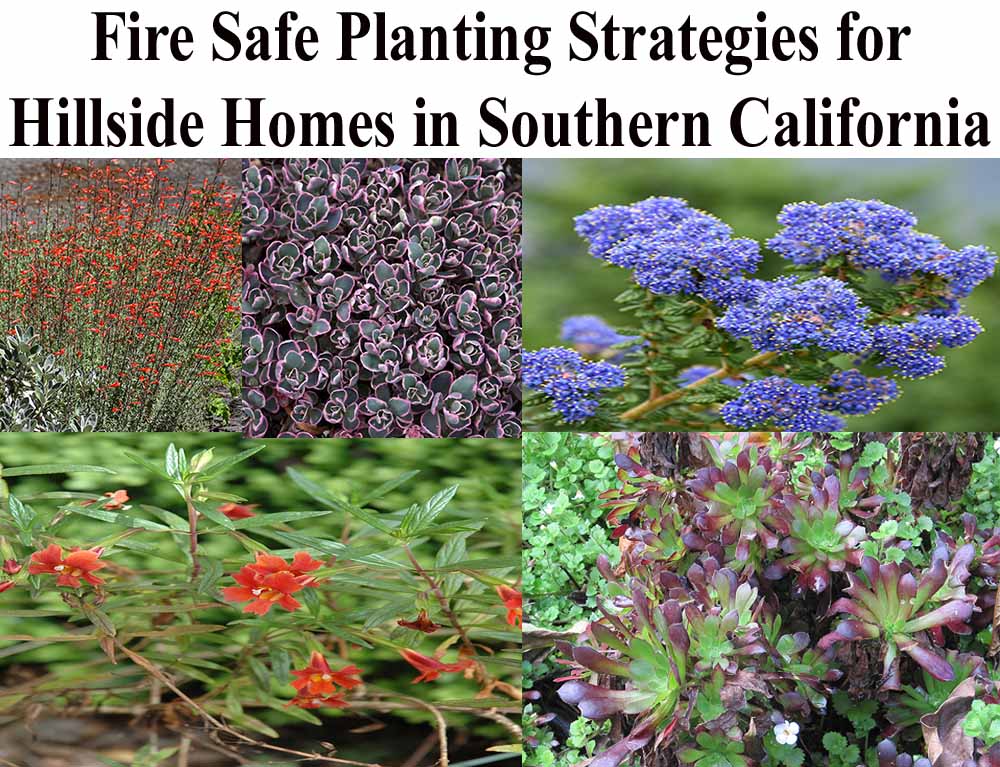
With defensible space handled, fire-smart plant choices add a second layer. Succulents are a favorite in SoCal because their high moisture content makes them slow to ignite: agave, aloe, dudleya, and sedum are good examples, and they double as drought-tolerant.[6] Low groundcovers like creeping thyme and wild strawberry, and many well-maintained California natives such as yarrow, deer grass, coyote brush, penstemon, and salvia, are also commonly listed as fire-resistant.[6] Keep two things in mind: these are examples, not guarantees, since lists vary by source and placement and maintenance matter more than the species; and a few popular groundcovers such as ice plant can be invasive in California, so choose non-invasive options. For more regionally adapted picks, see our guides to the best native plants for SoCal yards and native Southern California trees.
Plants and Practices to Avoid
Some common landscape plants are high-hazard near a home because they hold a lot of dead material or oils and burn readily. Pampas grass is a clear one to avoid: it builds up dry thatch, ignites explosively, and is also an invasive species in California, so it is a plant to remove rather than plant.[7] Fire authorities also commonly list juniper, eucalyptus, Italian cypress, arborvitae and other conifers, and overgrown woody shrubs like old rosemary among the high-hazard plants to keep away from the house, especially in the near-home zones.[8] Just as important, avoid combustible wood or bark mulch in Zone 0; use gravel or stone in that first five feet instead.[3]
Maintaining a Fire-Safe Landscape
Maintenance is what keeps any fire-smart landscape working. Prune shrubs and remove dead stems and leaf litter, reduce thatch in grasses, keep plants irrigated so they do not dry out, and clean leaves off the roof and out of gutters.[1] A fire-resistant plant that is allowed to die back or dry out simply becomes more fuel, so year-round upkeep matters more than which plants you chose.[3] Defensible space is also California law, and the specifics and enforcement vary by jurisdiction, so check the current requirements with your local fire department before you plant or rebuild.
Planning a fire-smart landscape for a hillside home? Visit any Green Thumb Nursery location and our team will help you choose fire-resistant, regionally adapted plants and lay them out with the right spacing for your site.
Fire-Resistant Landscaping FAQ
Are any plants fireproof?
No. No plant is fireproof, and any plant can burn under extreme conditions. Fire-resistant plants are less likely to ignite and add less fuel, but they still need spacing and maintenance to reduce risk.[1]
What plants are fire-resistant in California?
High-moisture succulents (agave, aloe, dudleya, sedum), low groundcovers, and many well-maintained California natives like yarrow, deer grass, and salvia are commonly listed as fire-resistant. Placement and maintenance matter more than the species.[6]
How far from the house should plants be?
Keep the first 0 to 5 feet (Zone 0) noncombustible with no plants or wood mulch against the home, keep 0 to 30 feet lean, clean, and green, and reduce fuel out to 100 feet, with wider plant spacing on steeper slopes.[3]
Is pampas grass flammable?
Yes. Pampas grass builds up dry thatch and ignites easily, and it is also invasive in California, so fire authorities recommend removing it rather than planting it.[7]
Do succulents help with fire safety?
Succulents hold a lot of water, which makes them slow to ignite, so they are a popular fire-smart and drought-tolerant choice. They still need to be placed and maintained as part of good defensible space.[6]
Sources
- [1] UC ANR, Defensible Space, Fire Resistant Landscaping, and Fire Hazard Reduction: ucanr.edu
- [2] UC ANR, Plants for a Fire-resistant Landscape: my.ucanr.edu
- [3] CAL FIRE Ready for Wildfire, Defensible Space: readyforwildfire.org
- [4] California Board of Forestry, Defensible Space Zones 0, 1, and 2: bof.fire.ca.gov
- [5] California Code of Regulations Title 14 Section 1299.03: law.cornell.edu
- [6] UC ANR, Firewise: Fire Resistant Plants: ucanr.edu
- [7] UC ANR / UC IPM, Invasive Pest Spotlight: Pampasgrass and Jubatagrass: ucanr.edu
- [8] Los Angeles County Fire Department, Plant Selection Guidelines by Zone: fire.lacounty.gov
Sign up for the Green Thumb Nursery newsletter for seasonal Southern California gardening tips.