Newsletter Articles
Best Native Plants for Southern California Yards
Written by Kelsey W.
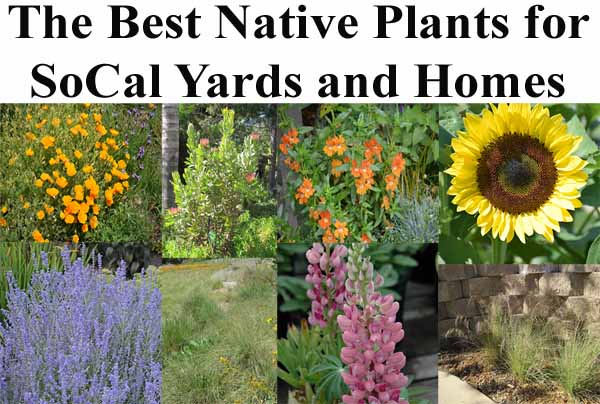
The best native plants for a Southern California yard are drought-tolerant California natives matched to your space: evergreen shrubs like toyon, lemonade berry, and native sages; flowers like California poppy, buckwheat, and yarrow; and bunchgrasses like deergrass. They are adapted to our wet-winter, dry-summer climate, so once established they need little water, they feed local birds and pollinators, and fall is the best time to plant them.
Quick answer: For a low-water Southern California garden, plant California natives: shrubs such as toyon, lemonade berry, Cleveland and white sage, and coffeeberry; flowers like California poppy, California buckwheat, yarrow, and monkeyflower; and grasses like deergrass and purple needlegrass. Plant in fall so roots establish over the cool, rainy season, water regularly the first year or two, and then water sparingly, since established natives can rot if their soil stays wet all summer.
| Type | Native picks | Why |
|---|---|---|
| Shrubs | Toyon, lemonade berry, Cleveland and white sage, coffeeberry | Evergreen structure, with berries and flowers for birds and bees |
| Flowers and perennials | California poppy, California buckwheat, yarrow, monkeyflower | Color and nectar for native pollinators |
| Grasses | Deergrass, purple needlegrass | Low-water texture and lawn alternatives |
| Also ask about | California lilac (Ceanothus), manzanita (Arctostaphylos) | Iconic native shrub genera; pick a species suited to your area |
Why Plant California Natives?
Because they evolved in California’s summer-dry climate, most natives prefer little or no supplemental water once established, which makes them a natural fit for our water-conscious region.[1] They also do real ecological work: native plants support the insects, birds, and other wildlife that co-evolved with them and depend on them, so a native garden becomes habitat, not just landscaping.[1] And because they are suited to the local climate, soil, and insects, established natives generally need less maintenance than thirstier exotics.[1] For the bigger picture, see our guide to what California native plants are and why to plant them.
When and How to Plant Natives
Timing matters. Late fall, after the first rains and once the air has cooled, is generally the best time to plant California natives, because their roots establish over the cool, wet season before facing summer.[2] Give most natives full sun and well-drained soil.[1] Watering is the step people get wrong in both directions: even drought-tolerant natives need regular water through their first year or two while they root in,[2] but once established, keeping the soil wet all summer can backfire, because prolonged soil saturation promotes Phytophthora root and crown rot in many natives, so avoid constant summer irrigation and standing water around the base of the plant.[3] For timing help, see our guide on why now is the best time to plant California natives.
Native Shrubs for Southern California
Shrubs give a native garden its year-round structure. Toyon (Heteromeles arbutifolia) is an evergreen California native with white summer flowers and bright scarlet winter berries that feed mockingbirds, robins, and cedar waxwings.[4] Lemonade berry (Rhus integrifolia) is a tough evergreen native to the Southern California coast and a valuable bird plant, making it a strong choice within about ten miles of the ocean.[5] Native sages are pollinator magnets: Cleveland sage (Salvia clevelandii), native to Southern California chaparral, offers fragrant foliage and whorls of purple flowers that draw hummingbirds, bees, and butterflies, and white sage (Salvia apiana) is one of the best bee plants you can grow.[6] California coffeeberry (Frangula californica) rounds out the group with berries that ripen red to black and attract a variety of birds.[7] Two other iconic native shrubs worth asking about are California lilac (Ceanothus) and manzanita (Arctostaphylos); both are native genera with many species, so choose one suited to your local area and conditions.
Native Flowers and Perennials
For color and nectar, start with the California poppy (Eschscholzia californica), the state flower, whose orange blooms light up spring and summer and draw dozens of native bees.[8] California buckwheat (Eriogonum fasciculatum) is a keystone plant for local scrub ecosystems and a top choice for butterfly and wildlife gardens, with flower clusters that age from pink to a rusty red.[9] Common yarrow (Achillea millefolium) is a staple of native pollinator gardens, with flat white flower heads that support a long list of bees and butterflies.[10] For a shrubbier splash of color, monkeyflower (Diplacus aurantiacus) carries red-to-yellow flowers that hummingbirds and bees love, and native penstemons are another reliable hummingbird draw.[11] For more, see our guide to native flowering plants for your SoCal garden.
Native Grasses
Native bunchgrasses add movement and texture and make excellent low-water lawn alternatives. Deergrass (Muhlenbergia rigens) forms a soft fountain of foliage up to four or five feet, with tall flowering spikes that feed birds, and it is a popular groundcover and meadow grass.[12] Purple needlegrass (Stipa pulchra) is the California state grass, a deeply rooted perennial bunchgrass that is well adapted to drought once established.[13]
Ready to go native? Visit any Green Thumb Nursery location and our team will help you choose California natives suited to your yard, your light, and your corner of Southern California, and the right planting season to get them started.
California Native Plants FAQ
What plants are native to Southern California?
SoCal natives include shrubs like toyon, lemonade berry, and sages; flowers like California poppy, California buckwheat, and yarrow; and grasses like deergrass and purple needlegrass. All are adapted to our dry-summer climate.[4]
What are the best native plants for a SoCal yard?
For most yards, start with a few evergreen native shrubs for structure (toyon, lemonade berry, Cleveland sage), add native flowers for pollinators (California poppy, buckwheat, yarrow), and use a native bunchgrass like deergrass as a low-water accent or lawn alternative.[6]
When is the best time to plant California natives?
Fall, after the first rains and once the weather cools, is the best time. Planting then lets roots establish over the cool, rainy season before summer heat arrives.[2]
Do native plants need less water?
Yes, once established. Most California natives need little or no summer water after their first year or two, though they do need regular water while establishing, and established natives should not be kept constantly wet in summer.[1]
What native shrubs grow in Southern California?
Toyon, lemonade berry, Cleveland and white sage, and coffeeberry are all reliable Southern California native shrubs, along with native genera like California lilac (Ceanothus) and manzanita (Arctostaphylos) when you pick a locally suited species.[5]
Sources
- [1] UC Marin Master Gardeners, California Native Plants: ucanr.edu
- [2] Calscape (California Native Plant Society), Planting Your Native Garden: calscape.org
- [3] UC Statewide IPM Program, Phytophthora Root and Crown Rot: ipm.ucanr.edu
- [4] Calscape (CNPS), Toyon (Heteromeles arbutifolia): calscape.org
- [5] Calscape (CNPS), Lemonade Berry (Rhus integrifolia): calscape.org
- [6] Calscape (CNPS), Cleveland Sage (Salvia clevelandii): calscape.org
- [7] Calscape (CNPS), California Coffeeberry (Frangula californica): calscape.org
- [8] Calscape (CNPS), California Poppy (Eschscholzia californica): calscape.org
- [9] Calscape (CNPS), California Buckwheat (Eriogonum fasciculatum): calscape.org
- [10] Calscape (CNPS), Common Yarrow (Achillea millefolium): calscape.org
- [11] Calscape (CNPS), Sticky Monkeyflower (Diplacus aurantiacus): calscape.org
- [12] Calscape (CNPS), Deergrass (Muhlenbergia rigens): calscape.org
- [13] Calscape (CNPS), Purple Needlegrass (Stipa pulchra): calscape.org
Sign up for the Green Thumb Nursery newsletter for seasonal Southern California gardening tips.