

Newsletter Articles
What Is a Rose? The Rose Family (Rosaceae) Explained
By Richard Flowers, ACCNP-Green Thumb Nursery-Ventura
Updated October 2026
Quick answer: A rose is a woody flowering shrub or climbing plant in the genus Rosa, part of the larger rose family, Rosaceae. That same family includes apples, peaches, plums, cherries, strawberries, and almonds, which is why a botanist can honestly say an apple blossom is a kind of rose. Not every plant with rose in its name qualifies, though: rose of Sharon is a hibiscus, and moss rose is a portulaca.
What Is a Rose?
A true rose is any plant in the genus Rosa: woody, usually prickly shrubs and climbers with showy wild flowers, loved for their fragrance and color (NC State Extension). Botanists count roughly 150 wild rose species across the Northern Hemisphere (University of Illinois Extension), and breeders have turned them into thousands of named garden varieties, from hybrid teas and floribundas to climbers and tree roses (Iowa State Extension).
Roses are dicots, flowering plants that sprout with two seed leaves (NC State Extension Gardener Handbook). They are ancient, too: fossil evidence puts roses at some 35 million years old, gardeners have cultivated them for about 5,000 years, and the rose has been the official national floral emblem of the United States since 1986 (Reagan Library).
The Rose Family: Why an Apple Is a Rose
Robert Frost had fun with this very idea in his short poem “The Rose Family”:
The rose is a rose,
And was always a rose.
But the theory now goes
That the apple’s a rose,
And the pear is, and so’s
The plum, I suppose.
The dear only knows
What will next prove a rose.
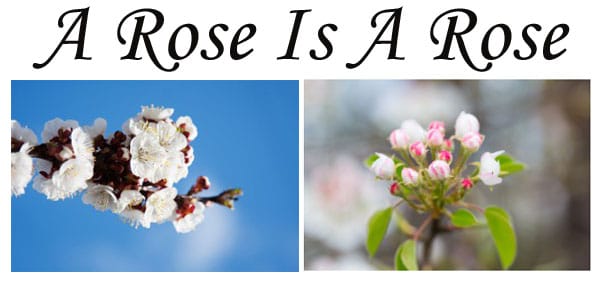
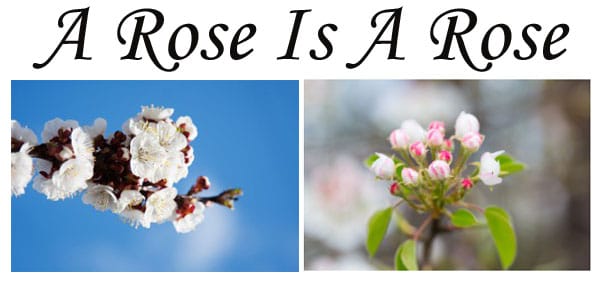
You could also add that an apricot is a rose, a blackberry is a rose, a nectarine is, and so forth. A rose may not be what you think of as just being the regular rose; an enormous number of common plants actually have rose family flowers and are in fact related to the rose. The family the rose belongs to is called the Rosaceae family, and this tremendous group of plants may surprise you. Rosaceae spans thousands of species, including not only the ever popular rose you see everywhere but many of the most important fruit crops of the temperate world: apples, pears, peaches, plums, cherries, apricots, nectarines, almonds, loquats, strawberries, raspberries, and blackberries (UF/IFAS Extension).
How to Spot a Rose Family Plant: The Pattern of Fives
I encourage you to go out in your garden and analyze the flowers of your peach, apricot, plum, strawberry, or blackberry. These plants share common characteristics that can help you identify them. Most notably, the flower parts tend to occur in sets of five: count the petals and sepals on a flower and you will usually find five of each, ringing a crowd of many stamens (NC State Extension). These flowers are actually individual roses, but not exactly like the traditional roses like Mr. Lincoln, Iceberg, Double Delight, or Peace. Have you ever cut a Fuji, Anna, Pink Lady, or any variety of apple in half crosswise? Inside you will find a five-pointed star! The points are made from the seeds nestled inside five ovaries. As the seeds grow, they form a star. The five-pointed star inside an apple is another example of the pattern of fives that helps to distinguish the rose family.
Rose Family Fruits and Flowers for Your SoCal Garden
 The Rosaceae group of plants is one of the major families for fruits in the temperate world, including pears, cherries, and almonds. The many scrumptious and mouthwatering fruits like Mid-Pride Peach, Santa Rosa Plum, Panamint Nectarine, Beverly Hills Apple, and Willamette Raspberry are relatives of fragrant and showy rose bushes like Queen Elizabeth, Honor, First Prize, and the climbing Joseph’s Coat.
Most plants in the Rosaceae family provide generous amounts of early pollen and nectar for bees, and bees in turn are essential pollinators for these fruit trees and berries (Penn State Extension). Without the honeybees these blossoms attract, how else could you get delicious fruit?
Stone fruits like peaches, plums, almonds, and cherries also serve as host plants for butterflies. So when you are out in the garden, or want to add useful and highly decorative plants to your landscape, consider rosaceous plants. For perfume fragrance, use any number of our outstanding roses like Barbra Streisand, Perfume Delight, and Angel Face. You may want to add a climber to a special spot, like a Zephirine Drouhin climbing rose. Consider adding fruit to the mix with the delicious plum-apricot crosses called Pluots and Apriums, or a brambling shrub or vine that will provide tasty raspberries or blackberries. For the butterfly lover, consider anything in the rose family.
Flowers Called Rose That Are Not Roses
Plenty of famous “roses” are not roses at all. The name got attached centuries ago to showy flowers of completely unrelated families, and the labels stuck. Here are the ones gardeners ask us about most:
| Common name | What it actually is | Plant family | A true rose? |
|---|---|---|---|
| Rose of Sharon | A hardy deciduous shrub, Hibiscus syriacus | Mallow family (Malvaceae) | No |
| Desert rose | A thick-stemmed succulent, Adenium obesum | Dogbane family (Apocynaceae) | No |
| Christmas rose, Lenten rose | Winter-blooming hellebores (Helleborus) | Buttercup family (Ranunculaceae) | No |
| Moss rose | A heat-loving succulent annual, Portulaca grandiflora | Purslane family (Portulacaceae) | No |
| Primrose | Cool-season bedding favorites (Primula) | Primrose family (Primulaceae) | No |
Botanical identities compiled from the NC State Extension Plant Toolbox.
Tulips are not rose relatives either: they belong to the lily family (Liliaceae) and are monocots, a different branch of the flowering plant world entirely (NC State Extension). The same goes for tropical hibiscus, which sits with rose of Sharon in the mallow family (NC State Extension). And the rose hip, the little red-orange fruit a rose forms after its flower is pollinated, really is a rose product: the fleshy hip holds the true fruits, hard achenes, tucked inside, and vitamin C rich hips have long gone into jelly and tea (NC State Extension).
When to Plant Roses and Rose Family Fruit Trees in Southern California
The prime window to buy and plant roses and deciduous fruit trees in Southern California is winter, roughly December through February, when the plants are dormant and bare-root stock arrives at the nursery; January is the prime month, and dormant transplants settle in with far less shock (UC Master Gardeners). Fall is also a fine time to plant container fruit trees, and our guide to when to plant roses in Southern California has the full timing rundown. Each winter we stock an excellent selection of quality dormant roses and fruit trees at our five Southern California locations, while supplies last. So plant a rose, any rose, or those related to the rose; they will surely be a winner for you.
Frequently Asked Questions About Roses
What is a rose?
A rose is a woody flowering shrub or climber in the genus Rosa, part of the rose family, Rosaceae. There are roughly 150 wild species plus thousands of garden cultivars, from hybrid teas and floribundas to climbing and tree roses.
Is a rose a flower or a plant?
Both terms fit. The rose is the whole plant, a perennial woody shrub or climber, while the bloom we admire is its flower. Botanically, roses are flowering plants in the family Rosaceae.
What family are peaches in?
Peaches are in the rose family, Rosaceae. So are apples, pears, plums, cherries, apricots, almonds, strawberries, raspberries, and blackberries, which makes the rose family one of the most important fruit families in the world.
Is rose of Sharon a rose?
No. Rose of Sharon is Hibiscus syriacus, a hardy deciduous shrub in the mallow family (Malvaceae). The name is traditional rather than botanical; it is not related to true roses.
Are tulips related to roses?
No. Tulips belong to the lily family (Liliaceae) and are monocots, while roses are dicots in the family Rosaceae. The two sit on entirely different branches of the flowering plant family tree.
Is a rose a fruit?
The rose plant is not a fruit, but roses do produce one: the rose hip, the small red-orange fruit that forms after a pollinated flower fades. Hips are rich in vitamin C and have long been used for tea and jelly; in the strict botanical sense, the true fruits are the hard achenes inside the hip.
Is a rose a dicot?
Yes. Roses are dicots, flowering plants that sprout with two seed leaves, with net-veined foliage and flower parts in fives, the signature pattern of the rose family.
Sources:
- NC State Extension Plant Toolbox: Rosa
- University of Illinois Extension: Our Rose Garden
- UF/IFAS Extension: Rosaceae
- NC State Extension Gardener Handbook: Botany
- Iowa State Extension: Rose Types and Cultivars
- UC Master Gardeners: Bare Root Roses
- Penn State Extension: Home Orchard Pollination
- Reagan Presidential Library: Proclamation 5574
Do you like what you see? Sign up for the Green Thumb Nursery weekly newsletter to get content like this every week!