

Newsletter Articles
Organic Pest Control for Your Spring Garden
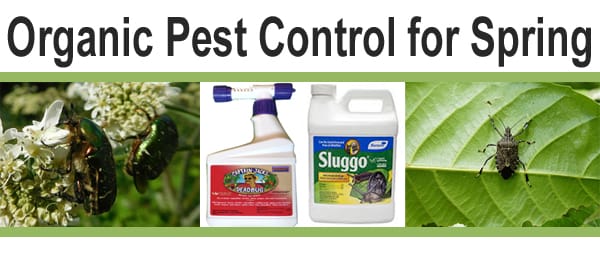
Organic pest control for spring works best when you start with prevention and beneficial insects, then reach for a targeted least-toxic product only if you need one. It also pays to know what a product actually does: the popular spinosad spray Captain Jack’s Dead Bug Brew is made for caterpillars and thrips, not aphids, and it is toxic to bees while it is wet, so it is not a one-size-fits-all answer.[1]
Quick answer: Start spring pest control by conserving natural enemies (lady beetles, lacewings) and using cultural and physical controls, and match the method to the pest: water sprays, insecticidal soap, and natural enemies for aphids; Bt for caterpillars; iron phosphate baits and hand-picking for snails. Spinosad products like Captain Jack’s suit caterpillars and thrips, not aphids, and must be kept off blooming plants to protect bees.
Here is how to approach organic pest control in spring, what spinosad does and does not do, and the best organic fix for each common pest.
Start Early: Prevention and Beneficial Insects
The foundation of organic pest control is not a spray at all. Conserving the natural enemies already in your garden, such as lady beetles, lacewings, syrphid flies, and tiny parasitic wasps, is the primary way to keep pests in check, and broad-spectrum insecticides work against you by killing those helpers for days or weeks.[2] Spring is the time to watch for the first pests, remove hiding places, and act early while populations are small, before they build up over the season.
Organic Ways to Control Spring Pests
Think of organic control as a ladder: start at the bottom and only climb as far as you must.
- Monitor and tolerate a little damage. Check plants regularly; a few pests feed the beneficial insects that keep them in balance.[2]
- Use cultural and physical controls. Hand-pick larger pests, knock others off with water, remove debris where pests hide, and use barriers or row covers.
- Protect and attract natural enemies. Grow flowers that feed beneficial insects and avoid sprays that wipe them out.
- Reach for a least-toxic product last. Insecticidal soaps, horticultural oils, Bt, iron phosphate, and spinosad are lower-risk options, but each targets specific pests.[1]
Does Captain Jack’s Dead Bug Brew (Spinosad) Work?
Captain Jack’s Dead Bug Brew is a spinosad product, and spinosad is a useful organic-listed insecticide for the right pests. UC IPM lists spinosad as a control for caterpillars, leafminers, and thrips, and it is often one of the more effective least-toxic options against thrips.[1][3] UC IPM also lists spinosad options for earwigs and for imported fire ants, so it is not just a caterpillar product.[4] It does not control everything, though: it is not effective on lawn grubs, for example.[5]
What about aphids? Spinosad is not a reliable or UC IPM-recommended aphid control. UC IPM’s aphid guidance does not use it, pointing instead to water sprays, soaps and oils, and natural enemies, so for aphids you should reach for those rather than Captain Jack’s.[6]
Is it safe for bees? Not while it is wet. UC IPM notes spinosad is toxic to bees when sprayed and for about a day afterward, and other UC guidance puts the window at up to several days, so do not apply it to blooming plants, avoid drift onto nearby blooms and weeds, and treat only when bees are not foraging.[3][5][7] Spinosad carries a UC IPM bee-precaution rating, so treat it as a product to use carefully, not casually.[8] Always follow the product label and consult UC IPM for specifics; this article does not give mixing rates.
Controlling Aphids Organically
Aphids are the classic spring pest, and they respond well to simple methods:[6]
- Blast them off. Knock populations down with a strong stream of water.
- Use soaps or oils. Insecticidal soaps and horticultural or plant-derived oils (such as neem or canola) are the best product choices for most aphid situations.
- Let natural enemies work. Lady beetles, lacewings, syrphid fly larvae, and parasitic wasps all prey on aphids; protect them.[2]
- Go easy on nitrogen. High nitrogen fertilizer fuels aphid reproduction, so use no more than necessary.
Match the Control to the Pest
The right organic tool depends on the pest:
- Caterpillars: Bacillus thuringiensis (Btk) is a microbial insecticide that kills only caterpillars and is safe to use around bees, beneficial insects, and wildlife. Caterpillars must eat treated leaves, and it works best on small, young ones.[9]
- Snails and slugs: hand-pick regularly, set board or pot traps, remove daytime hiding spots, switch from sprinklers to drip to dry out their habitat, and use iron phosphate baits, which are safer around children, pets, and wildlife, plus copper barriers around beds.[10]
- Earwigs: reduce damp daytime hiding places and trap them with rolled newspaper or a shallow can of oil; UC IPM also lists spinosad options for earwigs.[4]
- Ants: keep ants off plants with enclosed bait stations, since ants protect aphids and other pests from their natural enemies; UC IPM lists spinosad options for imported fire ants.[4]
- Aphids: water sprays, insecticidal soap or oil, and natural enemies, as above.[6]
- Caterpillars and thrips when a spray is warranted: spinosad, kept off blooming plants.[3]
For more, see our guides to beneficial bugs and organic pest control, what organic pest control is, and plants that help keep SoCal pests away, and common SoCal yard pests and how to control them.
Not sure what is eating your plants? Bring a photo or a sample to any Green Thumb Nursery location and our team will help you pick the right organic approach.
Organic Pest Control FAQ
Does Captain Jack’s Dead Bug Brew kill aphids?
Not reliably. Spinosad, its active ingredient, targets caterpillars, leafminers, and thrips, and it is not a UC IPM-recommended aphid control. For aphids, use a strong water spray, insecticidal soap or oil, and natural enemies instead.[6][1]
Is Captain Jack’s Dead Bug Brew safe for bees?
Not while it is wet. Spinosad is toxic to bees when sprayed and for about a day afterward, and potentially several days, so do not apply it to blooming plants and treat only when bees are not foraging. Follow the product label.[3][5]
What pests does spinosad control?
UC IPM lists spinosad for caterpillars, leafminers, and thrips, and it also offers options for earwigs and imported fire ants. It does not control everything, such as lawn grubs.[4]
How do you control aphids organically?
Knock them off with water, use insecticidal soap or horticultural oil, protect natural enemies like lady beetles and lacewings, and avoid excess nitrogen fertilizer.[6]
What is the best organic pest control for spring?
Start with prevention and natural enemies, then match a least-toxic product to the pest: water and soap for aphids, Bt for caterpillars, and iron phosphate baits for snails.[2]
Sources
- UC IPM, Less Toxic Insecticides: ipm.ucanr.edu
- UC IPM, Biological Control and Natural Enemies of Invertebrates: ipm.ucanr.edu
- UC IPM, Thrips: ipm.ucanr.edu
- UC IPM, Pesticide Active Ingredients Database (Spinosad): ipm.ucanr.edu
- UC IPM, Lawn Insects: ipm.ucanr.edu
- UC IPM, Aphids: ipm.ucanr.edu
- UC IPM, Best Management Practices to Protect Bees From Pesticides: ipm.ucanr.edu
- UC IPM, Bee Precaution Pesticide Ratings: ipm.ucanr.edu
- UC IPM, Leaf-Feeding Caterpillars: ipm.ucanr.edu
- UC IPM, Snails and Slugs: ipm.ucanr.edu
Written by David S.
Sign up for the Green Thumb Nursery newsletter for seasonal Southern California gardening tips.