

DIY Ideas, Newsletter Articles
Spiral Herb Garden: How to Build an Herb Spiral
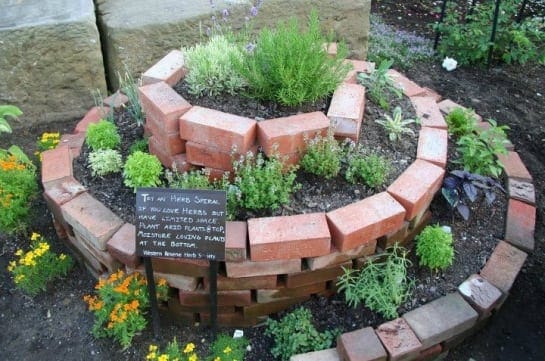
A spiral herb garden, or herb spiral, is a compact spiral-shaped raised bed, usually built of stacked stone or brick, that climbs from the ground to a peak in the center. The rise creates small microclimates, a dry sunny top and a moist shady base, so herbs with very different sun and water needs can share one small footprint.
Quick answer: To build a herb spiral, pick a level spot in full sun and stack stone, brick, or pavers into a spiral mound that rises to a peak in the middle, commonly about 6 feet across. Fill it with well-draining soil, then plant by microclimate: put drought-loving Mediterranean herbs such as rosemary, thyme, and sage at the dry, sunny top, and moisture-lovers such as parsley and mint toward the cooler, shadier base. Keep aggressive mint in a buried container so it cannot take over.
| Position | Conditions and best herbs |
|---|---|
| Dry sunny top | The top is the driest, sunniest, and best-drained spot, ideal for Mediterranean herbs like rosemary, thyme, sage, oregano, and lavender. |
| Warm east and west sides | These sides get the most direct sun, so they suit more sun-loving herbs such as marjoram and extra thyme. |
| Middle | The middle offers full sun with more even moisture, a good place for chives. |
| Shaded, moist base | The cooler, moister base suits parsley and mint, though mint is aggressive and is best grown in a buried container. |
| Optional water basin | Some herb spirals add a small pond or water basin at the base for moisture-loving plants. |
What Is a Spiral Herb Garden?
A spiral herb garden is a raised bed shaped like a coil. University of Florida IFAS Extension describes the spiral herb garden as a raised structure that creates several different growing conditions, or microclimates, in a small area, letting you plant each herb where it will thrive.[1] Instead of a flat row where every plant gets the same sun and water, the mound rises in a spiral to a peak in the center, and that single change in shape does a surprising amount of work. It is a space-saving design that packs many herbs into a footprint only a few feet wide, which is why it suits a small Southern California yard or patio. For a flat-bed alternative, see our guide to culinary herb gardens.
Why a Herb Spiral Works: Microclimates
The magic is all about water and sun moving differently across the mound. University of Florida IFAS Extension explains that when you water the spiral, moisture drains from the dry top down to the moister base, so you place drought-tolerant herbs at the top and water-loving herbs at the bottom.[1] The sides matter too: the same source notes the east and west faces get full sun, while the north and south faces stay more shaded.[1] The result is several microclimates in one small bed, from hot and dry at the peak to cool and damp at the base, so herbs that would never share a flat bed can grow side by side.
Which Herbs Go Where
Matching each herb to the right zone is what makes the spiral pay off. The top belongs to the Mediterranean herbs. Penn State Extension notes that lavender, oregano, rosemary, sage, and thyme all thrive in full sun and well-drained, dry soil,[2] and the University of California Marin Master Gardeners add that thyme is a Mediterranean native that wants light, dry, well-drained soil and full sun.[3] These are the same herbs that love Southern California, so the dry, sunny peak is a natural fit. Our guide to growing rosemary covers the top-of-the-spiral favorite in more detail.
The base is for herbs that like it moist. Clemson Cooperative Extension points out that very few herbs grow in wet soil, but mint is an exception that thrives in rich, moist soil in part shade.[4] One caution: Clemson also warns that mint is aggressive and spreads, so it is best grown in a container even within the spiral.[4] University of Illinois Extension notes parsley prefers moist, well-drained soil and grows in partial shade, making it another good base plant.[5]
How to Build a Herb Spiral
Building one is a weekend project with simple materials:
- Choose a level, open site in full sun, which University of Florida IFAS Extension lists as the key requirement.[1]
- Lay out a circle and stack stone, brick, pavers, or even repurposed material into a spiral wall that rises toward the center, a flexible approach the same source recommends.[1]
- Keep it to a workable size. Michigan State University Extension describes a herb spiral as commonly about 6 feet across and roughly 3 feet tall at the peak, small enough to reach into from the outside.[6]
- Fill the spiral with a light, well-draining soil mix so the top drains fast and the base stays a little moister.
- Plant by zone, dry-loving herbs up top and moisture-lovers at the base, and add a small water basin at the bottom if you want a spot for the thirstiest plants.
For other herb-garden ideas, see our guides to planting a cocktail herb garden and growing holiday herbs.
Ready to build one? Stop by any Green Thumb Nursery and our team can help you pick the stone, soil, and herbs to put together a spiral that thrives in Southern California.
Spiral Herb Garden FAQ
What is a spiral herb garden?
It is a compact, spiral-shaped raised bed that rises to a peak in the center. University of Florida IFAS Extension describes it as a structure that creates several microclimates in a small area so each herb can be planted where it thrives.[1]
Why does a herb spiral work?
Because water drains from the dry top down to the moist base, and the sides get different amounts of sun. University of Florida IFAS Extension notes this lets you place drought-tolerant herbs high and water-loving herbs low, giving many herbs the conditions they need in one bed.[1]
What herbs grow in a herb spiral?
Mediterranean herbs like rosemary, thyme, sage, oregano, and lavender go at the dry, sunny top, as Penn State Extension notes they want full sun and well-drained dry soil, while moisture-lovers like parsley and mint go at the base.[2]
How big should a herb spiral be?
There is no fixed rule, but Michigan State University Extension describes a herb spiral commonly built about 6 feet across and roughly 3 feet tall, small enough to reach into from all sides.[6]
Where do you plant mint versus rosemary in a herb spiral?
Put rosemary at the dry, sunny top, where Mediterranean herbs want fast drainage, and put mint at the moist base. Clemson Cooperative Extension notes mint likes moist soil but is aggressive, so grow it in a container even inside the spiral.[4]
Sources
- [1] University of Florida IFAS Extension, Spiral Herb Garden: gardeningsolutions.ifas.ufl.edu
- [2] Penn State Extension, Growing Herbs in the Garden: extension.psu.edu
- [3] University of California Marin Master Gardeners, Thyme: ucanr.edu
- [4] Clemson Cooperative Extension HGIC, Herbs: hgic.clemson.edu
- [5] University of Illinois Extension, Parsley: extension.illinois.edu
- [6] Michigan State University Extension, Herb Spiral Garden: canr.msu.edu
Sign up for the Green Thumb Nursery newsletter for seasonal Southern California gardening tips.
love it!
Great idea! Good use of vertical space.
Great idea!
MJ
Do you have limited sun, space or time to garden? Want a highly productive, energy efficient way to grow food ? Then consider a herb spiral design in your garden. Creating a Herb Spiral close to your kitchen might be your perfect solution.
I like the idea.
I wonder if you could shed some light on something that s always confused me about herb spirals given that the sun appears to move clockwise in the northern hemisphere and counterclockwise in the southern, and that ground sloping toward the western afternoon sun will dry out faster than ground sloping away from it, and that one of the benefits given for herb spirals is to provide microclimates for sensitive herbs, one would expect that designs for herb spirals would always indicate whether they are intended for the northern or southern hemisphere, but I have never found such an indication on a published design.