

Newsletter Articles
Best Privacy Hedges and Plants for Southern California
Written by Kelsey W.
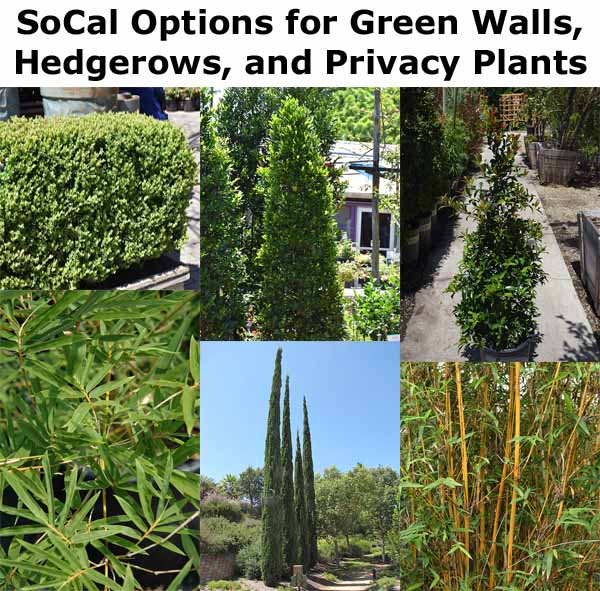
The best privacy hedges and screening plants for Southern California include podocarpus, pittosporum, eugenia (Australian brush cherry), Italian cypress, Carolina cherry, oleander, xylosma, and clumping bamboo. For a clean, low-maintenance evergreen screen, podocarpus and pittosporum are among the most reliable; for a tall, narrow column, Italian cypress; and for the fastest fill, ficus or Carolina cherry, each with trade-offs worth knowing before you plant.
Quick answer: For a reliable SoCal privacy screen, start with podocarpus or pittosporum (evergreen, drought tolerant, low drama). Choose Italian cypress for a tall narrow line, eugenia for a classic clipped hedge (but expect the eugenia psyllid), and clumping bamboo (never running) for a tropical screen. Oleander is tough and drought-proof but every part is poisonous, so keep it away from children, pets, and livestock.
Best Privacy Plants for SoCal at a Glance
Here are popular privacy and screening plants for Southern California, with the size you can expect and the main thing to know about each:
| Plant | Typical size | What to know |
|---|---|---|
| Podocarpus (yew pine) | 6 to 10 ft hedge | Clean, slow, drought and salt tolerant |
| Pittosporum (mock orange) | 8 to 13 ft | Rapid, drought tolerant, pet-safe |
| Eugenia (brush cherry) | 10 to 20 ft (to 30+ untrimmed) | Fast, but prone to eugenia psyllid |
| Italian cypress | 40 to 60 ft tall, very narrow | Columnar accent, drought tolerant |
| Carolina cherry laurel | To about 35 ft | Fast, drought tolerant; foliage and seeds toxic |
| Oleander | 8 to 12 ft | Very drought and heat tough; all parts poisonous |
| Xylosma | 4 to 6 ft hedge | Good lower hedge, slow, drought tolerant |
| Clumping bamboo | Varies by species | Choose clumping, never running |
| Ficus (Indian laurel) | 25 to 40+ ft | Fast but invasive roots and new pests |
Considerations: Height, Width, Growth Rate, and Maintenance
Before choosing a plant for its looks, match it to your space. A screen that wants to be 40 feet tall will overwhelm a small courtyard, while a slow 6-foot hedge may take years to block a second-story window. Think about mature height and width, how fast the plant grows (fast fill usually means more frequent trimming), how much water it needs, and whether it stays evergreen through our mild winters. For a broader look at using shrubs as living walls, see our guide to hedge plants and their uses.
Podocarpus: The Low-Drama Evergreen Screen
Podocarpus, especially yew pine (Podocarpus macrophyllus), is one of the cleanest, most trouble-free privacy plants for SoCal. The shrubby forms hold easily at about 6 to 10 feet (the plant can reach 50 feet as a tree), grow slowly, take shearing well, and tolerate both drought and salt once established.[1] Its slow, tidy habit and lack of serious pests make it a favorite low-maintenance alternative to faster but fussier screens.
Pittosporum: Fast, Drought Tolerant, and Pet-Safe
Pittosporum tobira (mock orange) is a broadleaf evergreen that grows 8 to 13 feet tall and 4 to 8 feet wide, fills in rapidly, and is drought, heat, and salt tolerant once established. It is also listed as non-toxic to cats, dogs, and horses, a nice bonus for pet owners.[2] Narrow upright types like ‘Silver Sheen’ make especially good slim privacy columns.
Eugenia: A Classic Hedge, With One Catch
Eugenia, or Australian brush cherry (Syzygium paniculatum), is a longtime SoCal hedge favorite, an evergreen that can reach 30 to 50 feet but is almost always sheared into a formal hedge.[3] The catch is the eugenia psyllid, an insect that feeds only on eugenia and leaves new growth reddened, pitted, and distorted. The University of California recommends shearing off tender new growth about every three weeks during active growth and relying on the introduced parasitic wasp for partial control; clippings left in place a few weeks let those beneficial insects emerge.[4] If you do not want to commit to that upkeep, podocarpus or pittosporum is an easier choice.
Italian Cypress: The Tall, Narrow Column
When you need height without width, Italian cypress (Cupressus sempervirens) is the classic answer: a dark-green column that can reach 40 to 60 feet tall while staying only a few feet wide, perfect for lining a property edge or framing an entry. It is well suited to our Mediterranean climate and rated a low-water plant for Southern California.[5] Give it full sun and good drainage, and watch for spider mites and cypress canker, the problems that most often trouble it here.[6]
Carolina Cherry Laurel: Fast and Dense (But Toxic)
Carolina cherry laurel (Prunus caroliniana) is a fast, dense broadleaf evergreen that reaches about 35 feet tall and 15 to 20 feet wide, takes heavy pruning, and is drought tolerant once established.[7] Be aware that its leaves, stems, and seeds contain cyanogenic compounds and are considered toxic to people and pets, so it is best avoided where children or animals might chew on it.[7]
Oleander: Tough and Drought-Proof, But Poisonous
Oleander (Nerium oleander) is a large evergreen shrub, roughly 8 to 12 feet tall and wide, that shrugs off heat and drought and is rated a low-water plant for SoCal, which is why you see it on freeways and hot inland lots.[5] It comes with a serious safety warning, though: every part of the plant is poisonous if ingested, and you should never burn the wood or use the stems as skewers.[8] Oleander contains cardiac glycosides and is toxic to dogs, cats, and horses, so keep it well away from children, pets, and livestock.[9]
Xylosma: A Reliable Lower Hedge
For a shorter clipped hedge, xylosma (Xylosma congestum) is a dependable evergreen-to-semi-evergreen that is slow-growing, shears cleanly, and is commonly kept at about 4 to 6 feet.[10] It is drought tolerant once established and works well where you want privacy without a towering wall.
Bamboo: Choose Clumping, Never Running
Bamboo makes a lush, fast screen, but the type matters enormously. Running bamboo (Phyllostachys) spreads by underground rhizomes that can travel more than 100 feet from the parent plant and is very hard to remove once loose, which is why some species are considered invasive.[11] Clumping bamboo (Bambusa) grows in a slowly expanding clump and is not aggressive, so no containment is needed, making it the right choice for a well-behaved privacy screen.[12] If you must plant a running type, install a deep root barrier and monitor it closely.[11]
A Word on Ficus (Indian Laurel Fig)
Ficus microcarpa, often sold as ‘Nitida’ or Indian laurel fig, is a fast, handsome evergreen that has been planted for decades as a sheared hedge or screen, but it comes with two modern drawbacks worth weighing. Its roots are widely reported to lift sidewalks, walls, and hardscape, and two invasive pests, the ficus leaf-rolling psyllid and the ficus eye-spot midge, have spread through Southern California in recent years, damaging the foliage.[13] For a similar look with far fewer headaches, podocarpus is the cleaner pick. Learn more in our overview of the ficus family.
Drought-Tolerant Privacy Options
If low water use is a priority, several of these screens are rated low-water for Southern California by UC’s WUCOLS landscape water-use guide, including Italian cypress, oleander, pittosporum, xylosma, and podocarpus.[5] Eugenia, ficus, and most bamboos prefer more regular water, so reserve those for spots you can irrigate. For more on choosing water-wise plants, see our guide to drought-tolerant plants and what that means.
Ready to build your green wall? Visit any Green Thumb Nursery location and our team will help you choose privacy plants sized to your space, sun, and water. For more ideas, browse our guide to the best plants for privacy.
Privacy Plants FAQ
What are the best privacy hedges for Southern California?
For a clean, reliable evergreen screen, podocarpus and pittosporum are top choices; eugenia makes a classic clipped hedge (if you can manage the eugenia psyllid); Italian cypress gives a tall narrow column; and clumping bamboo offers a tropical look. Match the plant’s mature size to your space and water.
What grows fastest for privacy in SoCal?
Carolina cherry laurel, pittosporum, eugenia, and ficus all fill in quickly. Keep in mind that fast growth means more frequent trimming, and ficus brings invasive roots and pest issues, so faster is not always better.
Which privacy plants are the most drought-tolerant?
Italian cypress, oleander, pittosporum, xylosma, and podocarpus are all rated low-water for Southern California once established.[5] Eugenia, ficus, and most bamboos want more regular water.
Is eugenia a good hedge in Southern California?
Yes, eugenia (Australian brush cherry) is a fast, handsome evergreen hedge, but it is attacked by the eugenia psyllid, which distorts new growth. Expect to shear it about every three weeks in the growing season, or choose podocarpus or pittosporum for less upkeep.[4]
How tall do privacy hedges get?
It depends on the plant. Most are kept at about 6 to 15 feet as a trimmed hedge, while untrimmed eugenia, Carolina cherry, ficus, and Italian cypress can all reach 30 feet or more, so choose a plant whose natural size fits the screen height you need.
Sources
- [1] NC State Extension Gardener, Podocarpus macrophyllus: plants.ces.ncsu.edu
- [2] NC State Extension Gardener, Pittosporum tobira: plants.ces.ncsu.edu
- [3] UC IPM, Eugenia: ipm.ucanr.edu
- [4] UC IPM, Pest Notes: Psyllids: ipm.ucanr.edu
- [5] UC ANR, WUCOLS landscape water-use guide: ucanr.edu
- [6] UC Master Gardeners, Italian Cypress Problems: ucanr.edu
- [7] NC State Extension Gardener, Prunus caroliniana: plants.ces.ncsu.edu
- [8] UC ANR, Plant Safely: Nerium oleander: ucanr.edu
- [9] ASPCA, Oleander: aspca.org
- [10] UC IPM, Xylosma: ipm.ucanr.edu
- [11] Clemson HGIC, Bamboo Control: hgic.clemson.edu
- [12] UC IPM, Bamboo: ipm.ucanr.edu
- [13] UC IPM, Ficus Leaf-Rolling Psyllid: ipm.ucanr.edu
Sign up for the Green Thumb Nursery newsletter for seasonal Southern California gardening tips.