

Newsletter Articles
How to Water Air Plants in Southern California
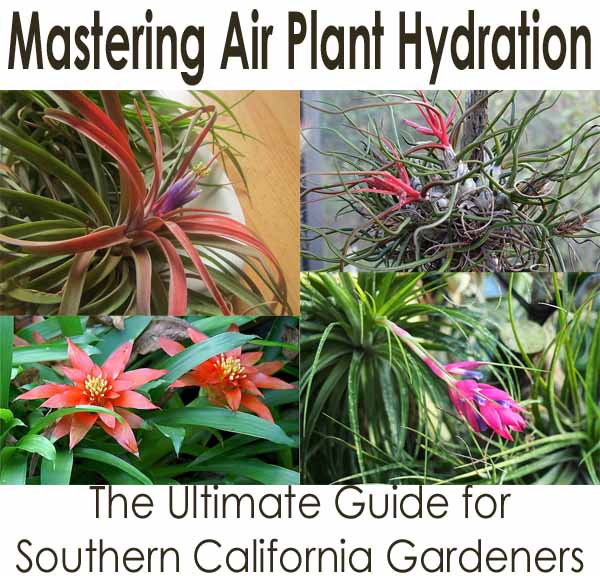
The simplest way to water an air plant is to soak it in water for about 20 to 30 minutes once a week, then shake off the excess and let it dry fully upside down in a spot with good air circulation. That drying step is the one most people skip, and it is the one that matters most: water left sitting in the center of the plant is the most common cause of rot and the number-one way air plants die.
Quick answer: Water air plants (Tillandsia) by soaking the whole plant in water for about 20 to 30 minutes once a week. Afterward, shake off the excess and set the plant upside down somewhere with good air circulation so it dries within a few hours. Drying is as important as watering, because water trapped in the center causes rot. Rainwater is the best choice, water more often in hot, dry weather, and treat misting as a supplement, not a replacement for soaking.
| Step | What to do |
|---|---|
| Soak | Submerge the whole plant for about 20 to 30 minutes, roughly once a week |
| Shake | Gently shake off water trapped in the center |
| Dry | Set it upside down in good airflow; let it dry within a few hours |
| Adjust | Water more often in hot, dry air; less in cool, humid weather |
How to Water Air Plants: The Soak Method
Air plants are watered by soaking, not by watering soil, because they have no need for potting mix. Once a week, submerge the whole plant in water for 20 to 30 minutes.[1] A longer soak, up to about an hour, is fine, especially for thirsty plants or dry conditions; the key is a thorough weekly soak rather than a quick splash.[2] Use room-temperature water deep enough to cover the plant completely.
Dry Them Out: The Step Most People Skip
Drying is where air plants are won or lost. After soaking, gently shake the plant to knock water out of the center, then set it upside down so the water drains out of the crown rather than pooling in it.[1] Let it dry in a spot with good air circulation, and aim for it to be dry within about four hours; never leave an air plant sitting soggy or in a puddle, because all air plants will rot if they stay too wet.[3] Rot shows up as a browning or blackening center and usually comes from water collecting in the crown combined with poor air circulation, so draining and airflow are your best prevention.[4]
Misting vs Soaking
Misting has its place, but it is a supplement, not a substitute. A light misting between soaks can help a plant cope with warm, dry air, but it does not provide enough moisture on its own and should not replace a real soak.[4] In Southern California’s dry climate, lean on weekly soaking as your main method and treat misting as an occasional boost for humidity.[3]
What Water to Use
Rainwater is the best water for air plants.[4] Hard tap water is the main thing to watch: its dissolved minerals can build up on the leaves and clog the trichomes (the tiny scales the plant uses to absorb water), so in hard-water areas use rainwater or let tap water sit before using it.[4] It is also wise to avoid artificially softened water, which is high in salt.
How Often, and Signs to Watch
Weekly is a good baseline, but adjust to your conditions: warm temperatures and low humidity dry a plant out faster, so water more often in hot, dry spells and less when it is cool and humid.[4] Let the plant tell you what it needs. If it is thirsty, the leaves curl or roll, the color dulls, and the tips turn brown.[1] If it is staying too wet, you will see the opposite problem: a soft, browning or blackening center and crown, which is rot setting in.[3]
Light and Air Circulation
Watering is only half the picture; air plants also need the right light and airflow. Give them bright, filtered (indirect) light and keep them out of harsh direct sun.[1] Despite the name, air plants do not live on air alone: they are epiphytes whose roots only anchor them, while the leaves absorb water and nutrients through their trichomes.[2] Good air movement is what lets them dry out between waterings, which is exactly why airflow is so important to keeping them healthy. For more, see our guide to air plant care and ideas for displaying air plants.
Want healthy, easy air plants for your home? Visit any Green Thumb Nursery location for Tillandsia, display ideas, and advice tailored to your space. You might also like our guides to the best indoor plants for every room and six easy houseplants to grow.
Watering Air Plants FAQ
How do you water air plants?
Soak the whole plant in water for about 20 to 30 minutes once a week, then shake off the excess and set it upside down in good air circulation to dry. Soaking is the main method; misting is only a supplement.[1]
How often should you water air plants?
About once a week as a baseline, more often in hot, dry air and less when it is cool and humid. If the leaves curl and the tips brown, the plant needs water more often.[4]
Can you just mist air plants?
No. Misting helps with humidity between soaks but does not provide enough moisture on its own, especially in a dry climate, so it should not replace a weekly soak.[4]
Why is my air plant rotting or dying?
Almost always from staying too wet. If water sits in the center of the plant, especially with poor air circulation, the crown rots and turns brown or black. Always shake off excess water and dry the plant upside down within a few hours of soaking.[3]
How long should you soak air plants?
About 20 to 30 minutes is the standard soak, and up to an hour is fine for thirsty plants or very dry conditions. What matters is a thorough weekly soak followed by proper drying.[2]
Sources
- [1] Clemson Cooperative Extension HGIC, Air Plants: hgic.clemson.edu
- [2] Penn State Extension, Tillandsias as Houseplants: extension.psu.edu
- [3] New York Botanical Garden, How Should I Water My Air Plant (Tillandsia)?: libanswers.nybg.org
- [4] Royal Horticultural Society, Air Plants: rhs.org.uk
Sign up for the Green Thumb Nursery newsletter for seasonal Southern California gardening tips.