

Newsletter Articles
Easy Houseplants to Grow in Southern California
Written by David S.
Houseplants are an excellent way to add dimension and living energy to your home. Some are exotic, others are common, but all uplift your living space by adding an aesthetic touch. This guide covers the easiest houseplants to grow in Southern California, the kind that forgive a missed watering and still look beautiful, along with simple light, water, and pet-safety notes for each one.
Short answer: The easiest houseplants to grow are the spider plant, pothos, peace lily, rubber plant, moth orchid, and trailing succulents like string of pearls and burro’s tail. They tolerate ordinary indoor light, bounce back from irregular watering, and ask for very little, which makes them ideal first houseplants. If your only goal is keeping something green alive, start with a spider plant or pothos.
What Makes a Houseplant Easy to Grow?
An easy houseplant shares three traits: it tolerates a range of light (including the dimmer light found away from a window), it forgives inconsistent watering, and it shrugs off most common pests. Southern California growers have an edge here, because our mild, bright climate lets many of these plants spend part of the year on a shaded patio. Once you have chosen your plants, our guide to keeping houseplants alive and thriving walks through the day-to-day care, and if pests ever appear, here is how to keep indoor plants bug free.
Easy Houseplants at a Glance
| Plant | Light | Water | Pet safe? (ASPCA) | Why it is easy |
|---|---|---|---|---|
| Spider plant | Bright indirect, tolerates lower light | Let soil dry slightly between waterings | Yes, non-toxic | Fast, forgiving, and it grows baby plantlets you can replant |
| Pothos | Low to bright indirect | Let the top inch dry out | No, toxic if chewed | Nearly indestructible, trails or climbs anywhere |
| Peace lily | Low to medium indirect, no direct sun | Keep evenly moist, it droops when thirsty | No, toxic if chewed | Tells you when it needs water by wilting, then perks right back up |
| Rubber plant | Bright indirect (east window) | Let soil dry slightly between waterings | No, toxic if chewed | Bold foliage with very little fuss |
| Moth orchid | Bright indirect, filtered light | About once a week | Yes, non-toxic | Long-lasting blooms and few real needs |
| String of pearls | Bright light | Let it dry out fully, water sparingly | No, toxic if chewed | A striking trailer that prefers to be left alone |
| Burro’s tail | Bright light | Infrequent, dry out between waterings | Yes, non-toxic | Drought-tolerant with plump, trailing foliage |
| Assorted succulents | Bright light | Infrequent, dry out between waterings | Varies by type | Slow-growing, drought-tolerant, and easy to mix in one pot |
Pet-safety ratings above come from the ASPCA toxic and non-toxic plant database. When a plant is toxic, it generally causes mouth irritation or an upset stomach if a pet chews it, so place those out of reach rather than skipping them entirely.
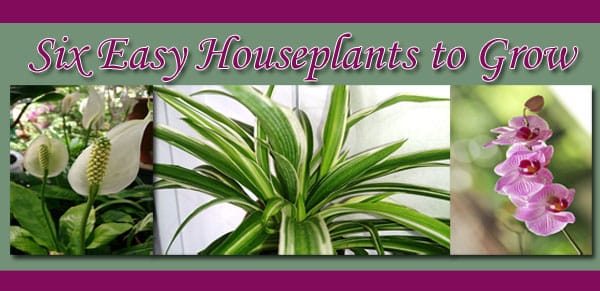
Spider Plant (Chlorophytum comosum)
These are relatively common but beautiful. They come in two looks, solid green and a white and green striped variety. Spider plants were part of NASA’s well-known 1989 air study, though that work was done in sealed chambers. Later research from Drexel University found you would need 100 to 1,000 plants per square meter to match the air exchange of simply opening a window, so enjoy a spider plant for its looks rather than as an air purifier.
Choose a pot or a hanging basket, since these plants send out weeping tendrils on which their small, star-like white flowers appear. The plant is aptly named for those spidery, arching tendrils, and it is not fragrant, which makes it a good choice for anyone sensitive to perfumes or strong scents. According to Clemson Cooperative Extension, spider plants grow best in bright, indirect light and tolerate some direct sun, though harsh midday light can scorch the leaves. They are originally understory plants, so dappled shade suits them well, and they adjust to growing almost anywhere.
Spider plants like well-drained soil with some organic matter. Let the soil dry slightly between waterings. A light covering of mulch, even indoors, helps the soil hold moisture, and sphagnum moss works well as an indoor topdressing. Spider plants also grow outdoors with regular watering, where bark or chips make a good mulch. Best of all, they are non-toxic to cats and dogs per the ASPCA, and they do beautifully alone or in mixed pots where you want a mosaic of living color and texture.
Pothos (Epipremnum aureum)
If there is a houseplant that is nearly impossible to kill, it is pothos. Its heart-shaped leaves trail gracefully from a shelf or climb a small trellis, and it is one of the plants Clemson Cooperative Extension recommends to beginners. Pothos grows in everything from low light to bright indirect light, though variegated types keep their markings best in a brighter spot. Let the top inch of soil dry out between waterings, and trim any leggy vines to keep the plant full. One caution: pothos is toxic to cats and dogs if chewed, per the ASPCA, so train the vines up and out of a curious pet’s reach.
Peace Lily (Spathiphyllum)
Beautiful in a pot, the peace lily is deep green with unique, spade-like white flowers that seem to appear overnight. It is a fairly common plant for good reason. It is easy to grow and makes an excellent small to medium plant for accenting a room. You can grow it in a hanging basket, but it looks most at home in a one to two gallon decorative pot.
If there is one quirk to growing peace lilies, it is their dislike of additives in water such as chlorine, so filtered or distilled water is a safe bet. These plants also love humidity, which makes them a natural fit for a bright bathroom. Contrary to a common belief, peace lilies do not want full sun. Clemson Cooperative Extension notes they tolerate low light, grow best in bright indirect light, and should be kept out of direct sun, which scorches the foliage. Keep the soil evenly moist but not soggy, and let it dry only slightly between waterings. A helpful trait for beginners: a thirsty peace lily droops noticeably, then recovers soon after a drink. One caution for pet owners, the peace lily is toxic to cats and dogs if chewed, so set it where pets cannot reach it.
Rubber Plant (Ficus elastica)
A medium to large plant, the rubber plant (also called the rubber tree fig) can reach 8 feet or more, though most stay in the 3 to 4 foot range indoors. Rubber plants offer broad, glossy leaves that are either deep green or a reddish purple, and they add real drama to a room’s design.
Give a rubber plant a medium pot with soil that is well-drained but holds some moisture. According to Clemson Cooperative Extension, rubber plants prefer bright light and do best with the gentle morning light of an east-facing window, so skip a spot in hot, direct afternoon sun. Let the soil dry slightly to the touch between waterings, since rubber plants dislike both drying out completely and sitting wet. Choose a potting mix rich in organic matter. Like many ficus, the rubber plant is toxic to pets if chewed, so keep it away from cats and dogs.
Moth Orchid (Phalaenopsis)
Of all the plants on this list, the moth orchid is probably the most particular, and even then it is reasonably easy. The main thing it loves is humidity, which you can provide with a quick misting of plain water. Clemson Cooperative Extension describes moth orchids as low-light plants that grow best in indirect light, ideally in an east-facing window, which makes them perfect for bathrooms or quiet corners.
Moth orchids are pet-friendly and non-toxic to cats and dogs per the ASPCA, and they have few needs. They take much of their moisture from humid air, so they want only a modest drink. For a bark mix, watering about once a week is usually enough. Use orchid potting mix, which stays lightly moist without becoming waterlogged.
Burro’s Tail and String of Pearls
These two trailing succulents grow and behave much alike. Burro’s tail (Sedum morganianum), also called donkey tail, produces thick, textured runners in a lovely pale green. String of pearls (Senecio rowleyanus) sends out long, narrow strands of pearl-like orbs. Either one makes a wonderful hanging plant, and string of pearls gives you a bit more movement than burro’s tail.
Both love bright light and well-drained soil that is evenly moist but never wet. A succulent potting mix topped with a layer of sphagnum moss handles that nicely, since the moss slows evaporation. The University of Wisconsin-Madison Horticulture program recommends letting the potting mix dry out completely between waterings for string of pearls, and notes that root rot from overwatering is the most common way these plants fail. Burro’s tail blooms in red, white, or yellow, while string of pearls produces a small, frilly white flower. One difference that matters for pet owners: burro’s tail is non-toxic to cats and dogs per the ASPCA, but string of pearls can cause vomiting and lethargy if eaten, so hang it well out of reach.
More Easy Succulents
There is a vast variety of succulents that make wonderful indoor plants. Most are low growing, with occasional spikes of flowers, and their slow growth makes them perfect for shallow pots. They mix beautifully, so you can easily build a kaleidoscope of color and shape in a single dish. Succulents need only well-drained soil that holds a little moisture without staying soggy, and indoors a sphagnum moss topdressing helps. Pet safety varies by type, so check the species before bringing one home to a household with curious cats or dogs. For more easy, hands-off options, our air plant care guide covers another soil-free favorite.
Green Thumb Nursery carries a wide range of houseplants across all five of our Southern California locations, and you can browse our indoor plants online. Inventories change quickly since these plants are popular, so it is worth a call ahead if you are after something specific. Stop by any of our garden center locations, where our nursery experts are happy to answer your questions and help you find the plants, products, and advice you need to grow your own green thumb.
Do you like what you see? Sign up for our weekly newsletter to get content like this every week.
Sign up for the Green Thumb newsletter
Easy Houseplant FAQ
What is the easiest houseplant to grow?
The spider plant and pothos are the easiest houseplants to grow. Both tolerate low to bright indirect light, recover quickly from a missed watering, and resist most pests, which is why extension horticulturists often recommend them to first-time plant owners.
What houseplants do well in low light?
Pothos, peace lily, and moth orchid all do well in low to medium indirect light. Keep them out of direct sun, which can scorch the leaves, and set them near an east-facing or filtered window for the best results.
How often should I water indoor houseplants?
For most easy houseplants, let the top inch of soil dry out before watering again, usually about once a week. Succulents and string of pearls need far less and should dry out completely. Peace lilies prefer to stay evenly moist and will droop when they are thirsty.
Which houseplants are safe for cats and dogs?
Spider plants, moth orchids, and burro’s tail are non-toxic to cats and dogs according to the ASPCA. Peace lily, pothos, rubber plant, and string of pearls are toxic if chewed, so keep those out of reach of curious pets.
Do houseplants clean the air?
Not in any meaningful way at home. The famous 1989 NASA study was run in sealed chambers, and later research from Drexel University found you would need 100 to 1,000 plants per square meter to match the air exchange of ordinary ventilation. Grow houseplants because you enjoy them, not as air purifiers.
Sources:
- Clemson Cooperative Extension, Home and Garden Information Center
- ASPCA Toxic and Non-Toxic Plants database
- University of Wisconsin-Madison Horticulture
- Drexel University, indoor air quality research