

Newsletter Articles
What Plants Should You Trim in the Fall in Southern California
Written by Kelsey W.
Each season brings new opportunities for making your gardens, yard, and home beautiful with plants, and autumn represents a time of the year when many plants are winding down and getting ready to enter a dormant period.
While some plants continue to produce flowers and grow in every season, the fall does start to see a slowing of growth and a general calmness for many plants. The months of October and November tend to represent the ideal time for cleaning up your garden, especially before the winter rains.
Even though Southern California doesn’t always experience a significant wet season in the winter, trimming plants in the autumn does get them ready when the rain arrives. You’ll just want to avoid cutting certain plants that shouldn’t see your cutting shears until the spring.
Let’s discuss some of the plants that should see a healthy trim or pruning session this fall, as well as some of the plants you’ll want to leave alone until the spring.
Autumn Pruning for California Native Plants
Take a look around your yard. If you have any perennials that stopped blooming in the late summer, you can safely trim those plants back, cutting away their faded blooms and thinning out any dead foliage. Lavender is a popular SoCal plant that blooms in the summer, and you can safely prune the plant once its blooms have faded.
Bougainvillea
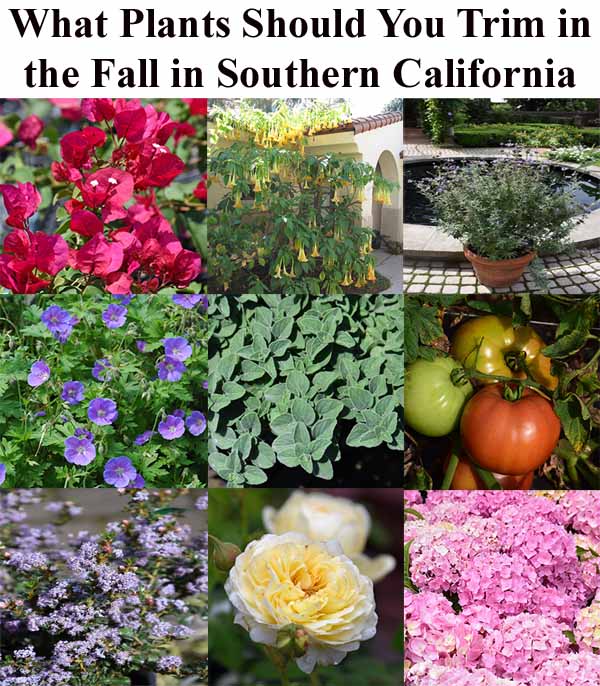
A big, beautiful bougainvillea plant can grow wildly out of control, but fall isn’t the time to make huge cuts to this plant, even if your bougainvillea is getting a little crazy. Instead, the fall is when you should cut back any long stems that are getting away from the plant. You can also make some targeted cuts to thin the plant out a little. You’ll get some beautiful flowers in the spring as long as you’re not too severe with your bougainvillea pruning in the fall.
Angel’s Trumpets
Another popular plant you’ll see around Southern California is the angel’s trumpet, and these swiftly growing plants are a popular choice because they have a really long blooming season that goes all the way from spring to fall. However, once they’re no longer blooming in the fall, you’ll want to take quick action to cut them back.
California Sages
Sage can grow into an unwieldy monster if you fail to cut it back on time, and October is the ideal month to ensure your California sages, like your Cleveland sage and white sage, are brought in check. You can cut about a third of the overall plant to encourage it to grow more densely rather than in a spread-out manner.
Ornamental Grasses
You can often leave ornamental grasses alone to do their thing without doing much in the way of pruning, but the fall is an ideal time to take a close look at your grasses and remove any dead patches. Some ornamental grasses can actually get a little leggy, so giving them a trim in the autumn can keep them from getting soggy and limp when it rains in the winter.
Tomato Plants
You can usually score a second harvest from your tomato plants if you care for them well into the fall, but your plants might actually try to grow too many fruit too late in the season, which can mean you actually get fewer fruit that achieve ripeness before the end of the season.
Look through your tomato plants and cut back any branches that don’t already have fruit growing on them and only have flowers. You’ll ensure all the fruit ripens and grows healthily without the plant also spending energy on new fruit that will never actually ripen before the winter.
Herb Garden Pruning
If you have oregano or thyme growing in your garden for use in your kitchen, fall is a great time to cut them back. These plants, as well as sage, can get unwieldy, and a nice fall trimming can keep them in check. Trimming will actually encourage them to continue producing their fragrant leaves throughout the fall and into the winter.
Berry Bushes
Growing blackberries and raspberries in Southern California does take some attention to detail, and at no time is that more evident than when you must cut away the spent canes in the fall. Look for the old canes that have already produced fruit and prune them away. The remaining newer canes will produce fruit for you next year and won’t lose any energy to the older canes that you removed, and that wouldn’t have produced fruit anyway.
You Can “Deadhead” Your Plants Without Harming Them
You don’t necessarily need to take serious cutting shears to your plants in the fall. Your plants will always benefit from the removal of dead leaves and spent flowers. If you haven’t paid significant attention to your garden over the summer, the cooler temperatures of the fall are an ideal time to conduct some simple cleanup of your plants.
You can look around all of your plants – inside your house and out – for dead leaves that you can remove with a quick cut with some cutting shears, and you can also cut away dead blooms from most plants. Some plants, like geraniums, enjoy getting their spent blooms removed on the regular, but removing the spent blooms at least once at the end of the growing season is a decent goal.
Few of your plants will grow with wild abandon over the colder months of the year, so cleaning them up in the fall usually means your garden will look clean and tidy for several months until things start growing and getting a little wild again.
Leaving Pruned Stalks for Native Birds and Animals
You may have the urge to immediately clean up all of the fallen branches and leaves from your recently pruned plants, but note that some of the smaller pieces of material are highly sought after by birds for their nests.
After cutting back your plants, you may want to leave the organic material in a pile somewhere in your yard for a few days, so the local birds can pick through it and use it for their nests and projects. After they’ve poked around the cuttings, you can toss the remnants in your green bin for pickup or add them to your compost pile for the next season.
Don’t Prune These Popular SoCal Plants
If you have a beautiful hydrangea bush in your yard, try to avoid cutting it in the fall. You’ll actually want to cut the blooms in the summer after each one fades. If you wait too long into the autumn to cut your hydrangeas, you’ll actually risk cutting the blooms away that are slated to come out next year! Cutting away dead blooms and withered stems is okay, but don’t cut away any green parts of your hydrangeas in the fall.
You’ll also want to only selectively prune roses in the fall, as it’s normally much better to prune roses in their dormant months of January or February. You can do almost anything you want to roses while they’re sleeping, and they’ll recover easily when the growing season begins again.
Yes, there are definitely roses out there that just seem to bloom with no regard for the season, but it’s usually best to do nothing more than a light cutting in August or September in order to encourage a few late-year blooms.
Also, put away your cutting shears in the fall if you have any shrubs that bloom in the spring. If you cut your lilacs back in the fall, you’ll probably end up cutting off all the new buds that are waiting to bloom after the winter! Instead, try to prune them right after they finish flowering in the spring, and then leave them alone.
If you happen to have any evergreen shrubs, bushes, or trees in your yard, you’ll also want to keep your cutting implements put away until the early spring. Boxwoods are a popular type of ornamental bush around homes in Southern California, but you shouldn’t normally prune them until the spring.
Help Your Plants Live Their Best Lives with Help from Green Thumb Nursery
You don’t need to be an expert to have a beautiful lawn, garden, or patch of flowers in Southern California. All it takes is a little advice from Green Thumb Nursery, your local Southern California garden center. We’re here to offer advice and information about any topic related to your beautiful home, and we’d love to help you keep your plants healthy and thriving this fall.
Do you like what you see? Sign up for our weekly newsletter to get content like this every week!