

Newsletter Articles
What Is a Tree Rose? A Guide to Rose Standards
By Richard Flowers, ACCNP-Green Thumb Nursery-Ventura
Quick answer: A tree rose, also called a rose standard, is a rose bush grafted onto a tall, upright stem so the blooms sit closer to eye level. Roses do not naturally grow as a single-trunk tree, so a tree rose is created by people, not grown that way in nature. The flowering top, the trunk, and the roots often come from different roses joined by grafting.
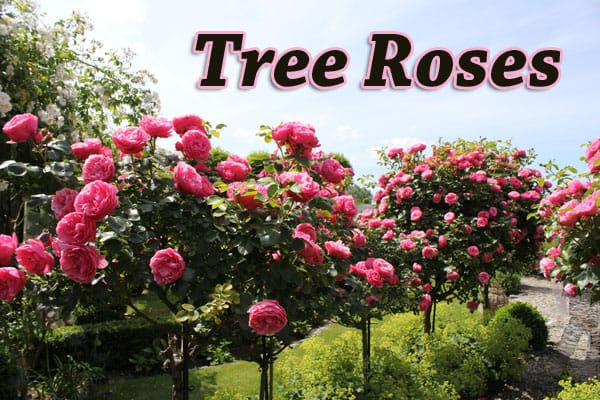
What is it about tree roses that make them so special, what is the story behind them, why are they tree roses? A tree rose is a rose bush that is essentially elevated on top of a “tree trunk” which puts the beauty closer to eye level. Tree roses give an old fashioned and classic feel to almost any garden. They add color, elegance, style, tradition, and a feeling of warmth to your outdoor room. Many varieties have a wonderful aroma and are in a multitude of colors. Normally roses do not grow naturally like a tree, they do not have a single stem with a network of branches arising on the top, instead they grow as a multi-branched shrub. Tree roses are indeed man-made, they have been modified to grow in the form of a tree. I will walk you through the process so you will have a better appreciation and an understanding of what a tree rose really is.
Is it a tree or is it a rose, maybe it is both or not really? Most people know a tree as something that grows really tall, has lots of leaves, long branches, and provides shade. A tree rose is not like a traditional tree but instead they are called standards. A standard is a shrub grafted or trained on an upright single stem in the form of a tree. Most people call them tree roses, but they are really known as rose standards. So here’s the skinny on tree roses.
What Is a Tree Rose? (Rose Standards Explained)
A tree rose is a rose bush that is essentially elevated on top of a “tree trunk” which puts the beauty closer to eye level. Tree roses give an old fashioned and classic feel to almost any garden. They add color, elegance, style, tradition, and a feeling of warmth to your outdoor room. Many varieties have a wonderful aroma and are in a multitude of colors. Tree roses are indeed man-made, they have been modified to grow in the form of a tree.
A tree rose is not like a traditional tree but instead they are called standards. A standard is a shrub grafted or trained on an upright single stem in the form of a tree. Most people call them tree roses, but they are really known as rose standards. As rose growers note, a tree rose is a standard rose rather than a true tree.
Is a Tree Rose Really a Tree?
Is it a tree or is it a rose, maybe it is both or not really? Most people know a tree as something that grows really tall, has lots of leaves, long branches, and provides shade. Normally roses do not grow naturally like a tree, they do not have a single stem with a network of branches arising on the top, instead they grow as a multi-branched shrub. A tree rose only looks tree-shaped because it has been modified to grow in the form of a tree.
Tree Rose vs. Rose Bush
| Feature | Rose Bush | Tree Rose (Standard) |
|---|---|---|
| Form | Natural multi-branched shrub, low to the ground | The same rose grafted onto a single upright trunk |
| Height | Varies by variety, often 2 to 5 feet | About 36 inches (3 feet) at the trunk, plus the flowering head on top |
| How it is made | Grows on its own roots or a single graft | A hardy rootstock (often Dr. Huey) is grown up as the trunk, then the variety is grafted on top |
| Best use | Beds, borders, and mass plantings | Formal focal points, containers, and eye-level blooms |
A rose bush is the rose in its natural form, a multi-branched shrub that grows low to the ground. Normally roses do not grow naturally like a tree, they do not have a single stem with a network of branches arising on the top, instead they grow as a multi-branched shrub. A tree rose is that same kind of rose grafted up onto a single upright trunk for height, formality, and eye-level blooms. If you are new to growing roses, the same care basics apply to both forms.
How Are Tree Roses Made? (Grafting and Rootstock)
A tree rose is created by grafting a long stem onto hardy rootstock then grafting a rose bush on top of the stem. Grafting is used to join parts from two or more plants so that they appear to grow as a single plant. Most types of roses can be used for this procedure. Below is a little background information about tree roses.
To create a tree rose a rootstock and stem are chosen. “Dr. Huey” is most commonly used on the West Coast. The selected rose bush is then chip grafted to the top of the stem. Chip bud grafting is a technique in which a bud is cut from the selected variety, placed in a cut on the stem and held there with paraffin or grafting tape until it starts growing. Basically, a bud-eye is taken from the desired rose plant and grafted to the stem of a growing rootstock plant, below the bottom set of leaves. After the bud-eye produces adequate growth, the top of the rootstock plant is cut away entirely, leaving the desired plant growing on the roots of the under-stock. A hardy rootstock such as Dr. Huey is trained up to provide the “tree trunk” for the tree rose. A rose bush of the desired variety is grafted to the top of the 3 foot cane stem. Professionals graft the rose on stems that have no foliage on them. The most popular 36-inch tree roses have four grafts at the top making for an awesome display. The University of Illinois Extension describes this bud-and-graft method for producing roses.
You may be wondering what is Dr. Huey. Dr. Huey is a hybrid Wichurana rambler, (climber) that was bred in 1914 by Captain George C Thomas (a botanist) and introduced to the public in 1920. This very vigorous rootstock does well in our alkaline soils, it propagates easily, it has a long budding season, the plants harden off and ship well, and is generally adaptable to a broad range of climates and soils. The Santa Clarita Valley Rose Society notes that Dr. Huey is the common West Coast rootstock, valued for its tolerance of alkaline soils.
Most Growers use a full-length cutting of Dr. Huey for a 36″ tree, the cutting is stuck in the ground, staked, and covered by a long, plastic sleeve (for protection while rooting). Then de-thorned and de-eyed by hand. Once the cutting is rooted and growing well, they perform 4 grafts of the desired variety at the very top. The plants are then grown out, shaped and dug for the nurseries at the end of two years, meaning that it takes two years before a tree rose is brought to market. (Please note that other growers may use different rootstocks instead of Dr. Huey.)
The History of Tree Roses
Tree roses were developed in the late 18th century in Europe, probably Germany or France. By the early 19th century there were several nurseries in Germany that specialized in providing the root and stem stock for standard roses. They were widely grown in the formal gardens of France at the same time. They gained popularity in Victorian England where they were common in the gardens of nobles. The name ‘rose standards’ became closely associated with that era, a name that later became standard roses.
How Big Do Tree Roses Get?
Most popular tree roses stand about 36 inches (3 feet) at the trunk, with a rounded head of blooms on top. A rose bush of the desired variety is grafted to the top of the 3 foot cane stem, and the most popular 36-inch tree roses have four grafts at the top making for an awesome display. Smaller patio and miniature tree roses run shorter, and the flowering head spreads wider as the plant matures.
How to Plant a Tree Rose
When planting a rose tree, it is wise to plant no deeper than the recommended depth and the hole should be wider than the root ball and slightly deeper. The bud union should be just above ground level when you have back-filled the hole with soil. As the plant settles, the bud union should end up level with the ground. Give your plant a good start by mixing some bone meal or organic rose food into the soil at the bottom of the hole. The Colorado State University Extension offers similar guidance on setting the bud union at the right depth at planting. Remember to never bury the graft when you set the plant in the ground.
Caring for a Tree Rose (Suckers and Staking)
As part of the routine care, It is always important to remove root stock growth (suckers) from the rose tree, failure to do so may result in decline or death of your beloved tree rose. A recommended way to remove suckers that arise from the soil is to use a trowel and scrape away the soil to expose the origin of the sucker, making sure the sucker arises from below the bud union (a bump where the cane meets the rootstock). Then pull the sucker out and refill the hole, gently firming the soil around the plant. If a sucker forms on the stem, simply snap it off (without damaging the tissue) or pare them cleanly with a sharp knife. The New Mexico State University Extension likewise advises removing suckers that originate from below the bud union.
When you go to the nursery tree roses are always staked up because the placement of the graft makes tree roses top heavy. When the grower stakes up the tree rose they tie both the stem and the lower part of the shrub on top to the stake. I recommend re-attaching the stakes that came with the tree. There needs to be a buffer between the stem and the stake. The stake should never rub up against the stem, tie the stake in a figure eight pattern with a flexible tie with one loop around the stake and the other around the cane.
Where to Buy Tree Roses
We have a variety of tree roses that are starting to leaf out for you to choose from at your favorite Green Thumb Nursery. You can browse our outdoor plants for more options, and if you are working with a patio or balcony, see our ideas for fruit trees and roses in small spaces.
Frequently Asked Questions
What is a tree rose?
A tree rose, also called a rose standard, is a rose bush grafted onto a tall, upright stem so the blooms sit near eye level. It is made by joining a flowering rose variety to the top of a hardy trunk and rootstock, so it looks like a small flowering tree.
Do roses grow on trees?
No, roses do not grow on trees, and a rose is not naturally a tree. A tree rose only looks tree-shaped because growers graft a rose bush onto an upright stem; in nature a rose grows as a multi-branched shrub.
What is the difference between a tree rose and a rose bush?
A rose bush is the rose in its natural form, a multi-branched shrub that grows low to the ground. A tree rose is that same kind of rose grafted up onto a single upright trunk for height, formality, and eye-level blooms.
How big do tree roses get?
Most popular tree roses stand about 36 inches (3 feet) tall at the trunk, with a rounded head of blooms on top. Smaller patio and miniature tree roses run shorter, and the flowering head can spread wider as the plant matures.
How are tree roses made?
Tree roses are made by grafting. A hardy rootstock such as Dr. Huey is grown up to form the trunk, then a bud from the desired rose variety is chip-bud grafted near the top. The most popular 36-inch tree roses carry about four grafts at the top, and the plant is grown out for roughly two years before it reaches the nursery.
How do you care for a tree rose?
Care for a tree rose by removing any rootstock suckers that come from below the bud union, and by keeping it staked, since the top-heavy head needs support. Plant it with the bud union at or just above ground level, and tie the trunk to the stake in a loose figure-eight so the stake never rubs the stem.
Are tree roses evergreen?
No, tree roses are not evergreen in most climates, they are deciduous and drop their leaves in winter like other roses. They leaf out and bloom again in spring, which is when nurseries bring in fresh stock.
Sources:
- University of Illinois Extension, Planting Roses (bud union)
- Colorado State University Extension, Selecting and Planting Roses
- New Mexico State University Extension, Growing Roses (H-165)
- Santa Clarita Valley Rose Society, Rootstock (Dr. Huey)
- LoveToKnow, Rose Tree (standard rose)
Do you like what you see? Sign up for our weekly newsletter to get content like this every week!