

Newsletter Articles
Special Tips for Taking Care of Variegated Plants
Written by Kelsey W., who writes about houseplant care and gardening for Green Thumb Nursery’s Southern California garden blog.
Do you own any variegated plants? You might have no idea what this word refers to or know if you actually have any variegated plants in your home, as it’s not a term that gets used very often outside of the gardening world.
However, if you own a variegated plant, you should be aware of some special care recommendations that will keep these plants happy in your home and around your house.
Variegated leaves create a very interesting look for the plant, and they’re often the result of random genetic mutations. Variegated plants are also frequently more valuable or more expensive to purchase than their non-variegated relatives, so taking care of them becomes even more important when you decide to bring one home.
Variegated plants aren’t particularly difficult to care for, but you’ll have a much easier time encouraging them to thrive in your home when you follow these simple recommendations for care.
Quick answer: Variegated plants are slightly harder to care for than their all-green relatives, but only slightly. The pale parts of their leaves make little or no food, so these plants want brighter indirect light, a lighter hand with fertilizer, and quick pruning of any all-green shoots so the pattern doesn’t get crowded out. Get those three things right and a variegated pothos or philodendron is no more work than any other houseplant.
Variegated plant care at a glance:
| Care factor | What variegated plants need |
|---|---|
| Light | Bright indirect light; pale leaf sections scorch in hot direct sun |
| Water | Check the soil and water when the top inch or two is dry; slower growth means the soil stays moist longer |
| Feeding | Balanced fertilizer at half strength in spring and summer; little to none in winter |
| Keeping the pattern | Prune all-green (reverted) shoots back to a variegated node as soon as you see them |
| Propagation | Stem cuttings or division from well-variegated growth; seeds rarely keep the pattern |
What Is a Variegated Plant?
A variegated plant is simply a plant whose leaves, and sometimes stems, show two or more colors, most often green patterned with white, cream, yellow, or pink. In most of the popular houseplant varieties, that patterning is genetic: the plant is a chimera, meaning it carries two different types of tissue in its growing tips, one that produces chlorophyll and one that does not, according to the University of Florida IFAS. The pale zones are the tissue without chlorophyll, which is why those areas can’t make food for the plant.
Can You Make a Plant Variegated?
No. You can’t turn an ordinary green plant into a stably variegated one with special lights, fertilizers, stress tricks, or variegation boosters, no matter what you may have seen online. Stable variegation is a genetic trait that shows up as a rare chimeral mutation or is passed along in the plant’s tissue when it is propagated, so a plant either has it or it doesn’t, as the University of Florida IFAS explains. A few color patterns in the plant world are caused by viruses, but that isn’t the mechanism behind the variegated pothos, philodendron, and monstera cultivars you see at the nursery.
The practical route to a variegated collection is to buy plants that are already variegated and protect the pattern you paid for: give them the right light, feed them gently, and prune away all-green growth before it takes over.
Do Variegated Plants Need Special Watering?
In most cases, you’ll need to water a variegated plant slightly less often than a similar plant without variegated leaves. Since a variegated plant will have less chlorophyll in its leaves, it will grow more slowly, and it won’t usually need as much water.
In practice, you don’t need a totally different watering routine for a variegated plant. Because the plant grows more slowly, its soil simply stays moist a little longer between drinks, so check the top inch or two of soil with your finger and water when it has dried out rather than following a fixed schedule.
It’s important to watch out for soggy soil with your variegated plants. They’re slightly more vulnerable to root rot than their solid cousins, so make sure their soil drains well and that the water you give the plant doesn’t flood the area for too long. For more on reading soil moisture before you water, see Clemson Cooperative Extension’s guide to watering indoor plants.
Different Lighting Needs of Variegated Plants
A variegated plant is best placed in an area with bright indirect light so the green parts of the plant’s leaves get a healthy level of sunlight, but the lighter areas aren’t burned by direct sunlight. A variegated plant generally needs brighter light than an all-green version of the same plant because only the green tissue can photosynthesize, a point the University of Minnesota Extension makes about houseplant lighting. If you’re not sure whether yours is getting enough, check these signs your houseplant needs more or less sunlight.
One of the difficulties in finding the right spot for a variegated plant is that it’s important to give it enough light because it has fewer areas of green where it can make food, but the light it’s given can’t be too bright because the lighter spots on the plant are vulnerable.
Not only can too much light cause the plant stress because the light portions of the leaves have no innate protection against sunlight, but giving the plant too little light can also cause the plant to turn completely green and lose its variegated leaves because the plant is so focused on efficiency and making food.
Proper Feeding Strategies for Variegated Plants
A variegated plant has different fertilizing needs than a non-variegated plant, just like it has different sunlight requirements. One of the most important parts of keeping a variegated plant happy is making sure it has enough food but also making sure not to overwhelm it with too much nitrogen.
The reason to go easy isn’t that fertilizer erases the pattern directly. Variegation is genetic, so feeding can’t change what a leaf has already grown. What heavy feeding does is push a flush of fast new growth, and all-green shoots grow fastest of all, so they can quickly outnumber the variegated ones. You certainly don’t want to starve your plant of fertilizer, but you have to go easy with it each time you feed it.
The simplest way to fertilize a variegated plant is to dilute the fertilizer solution to half-strength, which matches the University of Minnesota Extension’s general advice to feed houseplants at half strength every two to four weeks during the growing season. The plant will still get its nutrients, but you won’t have any issues dealing with unexpected variegation loss. You can also purchase a low-nitrogen fertilizer from your garden supply shop.
In the winter, you can often stop fertilizing your variegated plants entirely as their feeding needs will plummet. Some plants may even enter a stage of dormancy where they don’t grow at all until the spring. You don’t need to break out the fertilizer again until well into the springtime.
Keeping Your Plant Variegated
One interesting thing that can happen to your variegated plants is that they can eventually lose their variegated appearance if too many non-variegated leaves grow in and start to replace the variegated leaves. Even if a plant is entirely variegated, it may grow some non-variegated leaves over time.
With enough growth, a variegated plant can become wholly solid, which isn’t necessarily a bad thing unless you’re interested in maintaining the neat appearance of the variegated plant. In such cases, you’ll want to have your pruning shears at the ready to cut back growth whenever you see a leaf that’s particularly solid.
You don’t need to cut back everything on the plant so there’s nothing growing on it; you simply need to keep an eye on the plant and make quick cuts whenever you see a small leaf growing in that’s lacking the variegated pattern.
This switch back to plain green has a name: reversion. Fully green shoots carry chlorophyll in every cell, so they make more food and grow faster than variegated ones, and they’ll gradually take over the plant if they’re left in place, according to the University of Florida IFAS. Only growth from variegated tissue will carry the pattern forward, so act as soon as you spot a reverted stem:
- Follow the all-green stem back to a node that still shows the variegated pattern.
- Prune the stem back to that variegated node.
- Give the plant brighter indirect light and keep removing any new all-green shoots.
Tip: Reversion isn’t the only way a variegated plant can change. A stressed plant can also fade in the other direction, losing healthy green tissue, and that’s the more dangerous change: green tissue holds the chlorophyll that powers photosynthesis, the process that turns sunlight, water, and carbon dioxide into food for the plant.
If your plant starts losing more green than you think is healthy, it might need a little extra sunlight, so you might want to move it a little closer to a window while still keeping it out of direct sunlight to protect the light-colored leaves.
Which Plants Come in Variegated Varieties?
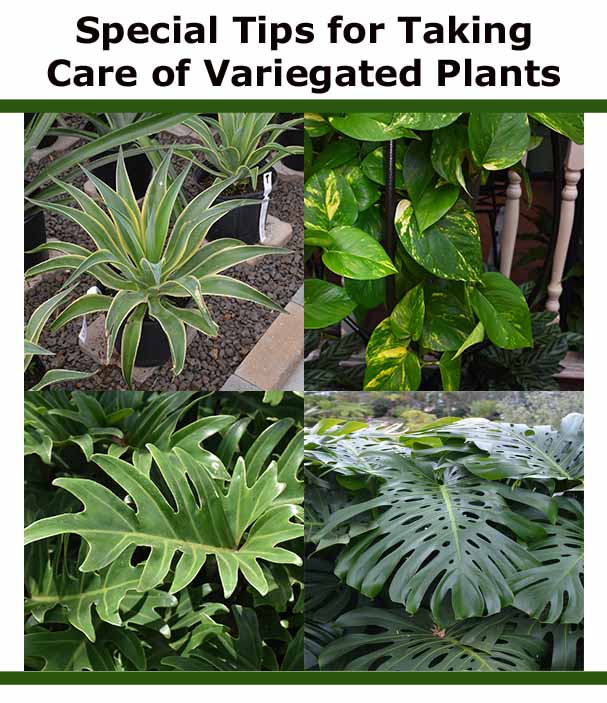
A few of the most common types of plants that you’ll see variegated include pothos and philodendron (often mistaken for one another as their leaves are quite similar), monstera plants, arrowhead plants, and Chinese evergreens. All of these plants are easily grown inside in Southern California as houseplants, so you can fully control their environment and ensure their variegation remains intact. Since they’ll live indoors, it also helps to know how to keep your indoor potted plants bug free.
If you’re looking for garden plants with variegated leaves, you can usually find variegated hostas, but these plants are shade-loving, so you need to have some shade on your lawn to support them. Even in the shade, give the variegated kinds the brightest spot you can.
It’s Tough to Propagate Variegated Plants
One difficult part of growing variegated plants is that it’s difficult to take a cutting from a variegated plant and grow another plant that looks exactly the same. You never know when all the new leaves that start growing on a new plant will just come in fully green, and you’ll lose the variegation.
If you want to try, your best odds come from vegetative propagation. Take stem cuttings or divisions from strongly variegated growth, because both tissue types have to travel with the cutting for the pattern to persist, as the University of Florida IFAS notes about chimeras. Seeds are usually a dead end: chimeral variegation lives in the plant’s tissue layers, not in its seeds, so seedlings almost always come up plain green.
Don’t Be Afraid of Trying a Variegated Plant
While it’s true that variegated plants need some special care to grow well and thrive, it’s not so much that their care is difficult as much as it’s different from plants that don’t have variegated leaves. If you see a beautiful variegated plant at your garden center and think it would look beautiful in your home, don’t shy away from bringing it home because you’re concerned about keeping it alive.
At the very worst, you might not get the sunlight or feeding exactly right, and you might lose some of the variegation. However, it’s actually possible to bring back and maintain the variegation as long as it doesn’t go away entirely; the University of Florida IFAS notes that chimeral reversion can be managed by pruning as long as variegated tissue remains. A leaf or two that’s not variegated doesn’t spell absolute doom for your plant.
If you’re at all interested in growing a variegated plant, start with something small and easy, like a pothos, which won’t mind at all if you occasionally pluck off one of its leaves when it grows in plain.
Frequently Asked Questions About Variegated Plants
Are variegated plants harder to care for?
Slightly, yes. Variegated plants need brighter light, a lighter hand with fertilizer, and occasional pruning of all-green shoots to keep their pattern, but none of those steps is difficult. Treat them as easy houseplants with three small adjustments rather than as fussy plants.
Do variegated plants need more or less light?
More. The white, cream, or yellow parts of a variegated leaf can’t photosynthesize, so the plant needs brighter light than an all-green version of the same species. Bright indirect light is the sweet spot, since harsh direct sun can scorch the pale sections.
What is a variegated plant?
A variegated plant has leaves with two or more colors, usually green patterned with white, cream, yellow, or pink. In most houseplants the pattern comes from a chimeral mutation, a genetic condition in which some of the leaf tissue lacks chlorophyll.
Can you make a plant variegated?
No. Stable variegation is genetic and can’t be created with light, fertilizer, or stress tricks. If you want a variegated plant, buy one that’s already variegated and care for it well so it keeps its pattern.
Why is my variegated plant turning green?
It’s reverting. All-green shoots make more food and grow faster than variegated ones, and too little light speeds the process up. Prune reverted stems back to a node that still shows variegation and move the plant somewhere brighter.
What fertilizer should you use for variegated plants?
A regular balanced houseplant fertilizer diluted to half strength works well. Feed during the spring and summer growing season, taper off in fall, and skip fertilizing in winter while the plant rests.
Sources
- University of Florida IFAS: Genetic Variegation
- University of Florida IFAS: Genetic Chimeras
- University of Florida IFAS: Chimeral Reversion
- UF IFAS Extension: Variegation Sensation
- University of Minnesota Extension: Lighting for Indoor Plants
- Clemson Cooperative Extension: Indoor Plants, Watering
- University of Minnesota Extension: Spring Houseplant Care
Get to Growing with a Visit to Green Thumb Nursery
Green Thumb Nursery has all the information you need about growing plants, especially when they’re an interesting, variegated kind that might need some special care in your home. If you have questions about a plant in your home and need some help with growing recommendations, or you’re looking for a unique variegated plant to add to your house, visit one of the Southern California locations of Green Thumb Nursery for some ideas.
Do you like what you see? Sign up for our weekly newsletter to get content like this every week!
Sign up for the Green Thumb Nursery weekly newsletter