
Newsletter Articles
Kelp Meal and Seaweed Extract: Benefits and How to Use
By Richard Flowers, ACCNP, Green Thumb Nursery, Ventura
Short answer: Kelp meal and liquid seaweed extract come from the same brown seaweed, but they are not the same thing, kelp meal is a dry, slow-release soil amendment, while seaweed extract is a liquid you spray or drench. Neither is a high-nitrogen fertilizer; think of them as biostimulants, rich in potassium, trace minerals, and natural plant-growth hormones that help with rooting and stress tolerance. They are a great supplement to your feeding program, not a replacement for it.
Many people around the world eat seaweed and seek out its health benefits. Today I want to familiarize you with a garden product that is easy to overlook when you are trying to keep your plants healthy and strong, kelp, in its two common garden forms.
What Are Kelp Meal and Seaweed Extract?
Kelp is a type of brown seaweed that grows in clean, cold, shallow saltwater along rocky coastlines. It is sustainable and abundant, typically hand-harvested, processed at low temperatures, dried, and finely milled. From that same raw material you get two different garden products: kelp meal, a dry powder worked into the soil, and seaweed (or kelp) extract, a concentrated liquid. They are related but used differently, as we will see. Both are natural, organic materials suitable for vegetables, herbs, flowers, trees, and perennials.
Kelp Meal vs. Seaweed Extract
The two forms do different jobs, so it helps to know which you are reaching for.
| Kelp Meal | Seaweed / Kelp Extract | |
|---|---|---|
| Form | Dry, milled powder | Liquid concentrate |
| How you apply it | Worked into soil or top-dressed | Diluted as a foliar spray or soil drench |
| Speed | Slow release over months | Faster, shorter-lived response |
| Best for | Building soil, long-season supply | Quick boost, transplant and stress recovery |
What’s Actually in It? (Hint: Not Much Nitrogen)
Here is where a lot of garden advice gets it wrong: kelp is not a high-nitrogen fertilizer. Kelp meal runs roughly 1-0.5-4 (and sometimes higher in potassium), and university labs rate its nutrients as slow to release (Penn State Extension; Oregon State Extension). What makes kelp special is not its N-P-K but everything else it carries: a good dose of potassium (potash), more than 60 trace minerals and micronutrients (calcium, magnesium, sulfur, manganese, copper, iron, and zinc among them), and natural plant-growth substances. Seaweed from Ascophyllum nodosum and related species contains measurable cytokinins, auxins, and gibberellins, the plant hormones that drive rooting and growth (Ertani et al., 2018). Cytokinins in particular help mobilize nutrients and support chlorophyll, which is part of why seaweed-treated plants often green up and root well.
The Real Benefits (and What the Research Actually Shows)
Research and field trials have shown benefits such as improved root development, more vigorous growth, better resistance to environmental stress, and reduced frost damage (Loconsole et al., 2024); one trial measured an 81% increase in root growth in treated corn (Ertani et al., 2018). I will be honest with you, though, and here is where I part ways with a lot of the hype: the results are real but variable. They depend on the specific product, the plant, and how you use it, and they are not guaranteed every time (UC ANR). So I treat kelp as a dependable supplement that supports strong roots and resilient plants, not a miracle potion that makes everything bigger and sweeter. One of my favorite pairings is kelp with fish emulsion: the fish supplies the nitrogen, the kelp supplies potassium, trace minerals, and growth hormones, so they complement each other nicely. I use fish emulsion every two weeks on my tomatoes and squash, they might smell like fish for a little while, but it is only temporary, and adding kelp rounds out what the fish feed is missing.
How to Use Kelp in Your Garden
Kelp is forgiving. Because it is organic and slow release, it rarely burns or damages plant tissue when used as directed, and you can use it several times a year. Here is how I use each form:
- Kelp meal (dry): work it into the soil or top-dress around plants; it breaks down and feeds slowly over months. Many potting mixes include kelp meal for exactly this reason, it adds trace minerals and helps hold a mix’s nutrition for about a year.
- Seaweed extract (liquid): dilute per the label and apply as a foliar spray or soil drench. Don’t spray in the heat of the day or in wind, which can scorch leaves, early morning or evening is best. More frequent, lighter applications (every 2 to 3 weeks) beat one strong dose.
- Kelp tea: soak 1 cup of kelp meal in 5 gallons of water for 1 to 2 days, stirring now and then, then use it as a soil drench or foliar spray up to once a week.
You can use kelp on just about anything, indoor and outdoor plants, houseplants, containers, raised beds, in-ground beds, trees, and flowers, at the rates on the product label. It is popular enough that you will even find it used on professional golf courses and sports fields. Always follow label directions for the specific product and situation.
Kelp and Peach Leaf Curl: An Important Clarification
You may have heard that kelp or seaweed helps peach and nectarine trees stand up to Peach Leaf Curl, the unsightly fungus that distorts their leaves. Here is the honest version: kelp may support a tree’s general vigor and stress tolerance, but it is not a cure, fungicide, preventative, or control for Peach Leaf Curl. The real control is a dormant copper (fungicide) spray applied in late fall and winter while the tree is leafless, that is the treatment that works, and kelp does not replace it. Use kelp, if you like, as a supplemental tonic in addition to your dormant spray program, never instead of it.
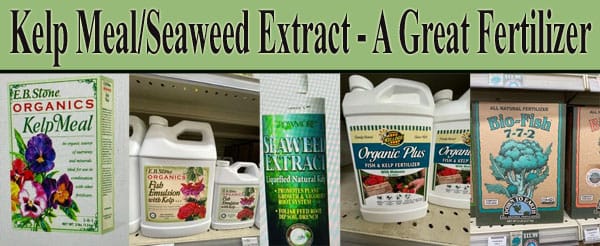
Green Thumb Nursery carries several organic fertilizers that contain kelp or seaweed extract, along with other great organic options to round out your garden program. If a plant is struggling from transplant shock or stress, kelp can help it recover, and here is our guide on how to revive a dying plant if you need it. Browse our outdoor plants and indoor plants, and our garden experts can point you to the right kelp product for what you are growing.
Sources:
Do you like what you see? Sign up for our weekly newsletter to get content like this every week!
Kelp & Seaweed Fertilizer FAQs
What is kelp meal?
Kelp meal is dried, ground seaweed, usually the brown kelp Ascophyllum nodosum, used as a soil amendment and natural fertilizer. It is low in the major nutrients (roughly 1-0.5-4 N-P-K) but rich in potassium, 60-plus trace minerals, and natural plant hormones, so it works more as a soil-and-plant biostimulant than as a stand-alone feed.
What does kelp meal do for plants?
Kelp works as a biostimulant rather than a heavy feed. Its natural hormones (cytokinins, auxins, and gibberellins) and 60-plus trace minerals can support rooting, stress tolerance, and overall vigor, and it feeds soil microbes. Results vary by product and soil, so use it to complement a balanced fertilizer program, not to replace it.
Is kelp high in nitrogen?
No. Kelp meal and seaweed extract are low in nitrogen, kelp meal runs only about 1% (roughly 1-0.5-4 N-P-K). Its real value is potassium, trace minerals, and plant hormones like cytokinins, not nitrogen. Use kelp alongside a nitrogen source such as fish emulsion or compost, not as your only fertilizer.
Is kelp meal a good fertilizer?
Kelp meal is better thought of as a biostimulant and soil amendment than a stand-alone fertilizer. It is low in nitrogen and phosphorus but a good source of potassium, trace minerals, and natural growth hormones, so it works best as a supplement alongside a nitrogen source rather than as your only feed.
What is the difference between kelp meal and seaweed extract?
They come from the same seaweed but are used differently. Kelp meal is a dry, slow-release powder you work into the soil, feeding over months. Seaweed extract is a liquid concentrate you dilute and apply as a foliar spray or soil drench for a faster, shorter-lived response.
Does kelp fertilizer really work?
Research shows real benefits, improved rooting, stronger stress and frost tolerance, and a supply of trace minerals, but the results vary by product, plant, and how it is applied, and are not guaranteed every time. Treat it as a dependable supplement for root and plant vigor, not a magic growth booster.
Does kelp prevent or cure peach leaf curl?
No. Peach leaf curl is controlled by a dormant copper or fungicide spray applied in late fall and winter. Kelp may support a tree’s general vigor, but it is not a treatment for the fungus and should never replace the dormant spray.
How do you use kelp meal?
Work the dry meal into the soil or top-dress around plants; it releases slowly over months. You can also brew a kelp tea (about 1 cup of meal per 5 gallons of water, soaked a day or two) and use it as a drench or foliar spray. Follow the product label for rates.