

Newsletter Articles
How to Grow Amaryllis Outdoors in Southern California
Written by Susan B.
Susan writes about gardening for Green Thumb Nursery in Southern California.
When someone mentions amaryllis bulbs, you probably picture the holiday gift kits that pair a big bulb with a pot and a bag of growing mix. That is a fair assumption, because amaryllis has become a fixture of holiday gift-giving among gardeners and plant lovers, right alongside poinsettias. What many people do not realize is that our mild Southern California climate is also ideal for growing amaryllis right in the ground, where it settles in as a long-lasting perennial. Whether you received a bulb as a gift, bought one for yourself, or want to give one to a plant lover, here is how to enjoy it indoors for the holidays and then out in the garden for years.
Can You Grow Amaryllis Outdoors in Southern California?
Yes. Amaryllis is hardy to about USDA zone 8, so it grows happily in the ground throughout Southern California (zones 9 to 10) rather than being treated as a one-time indoor novelty. Planted in the garden it behaves as a perennial: the bulb settles in, returns to bloom (usually in spring) in the seasons that follow, and slowly multiplies into a clump over the years. If you live in a colder inland pocket that sees hard frost, you can still grow amaryllis in a pot and move it to shelter when needed.
What Is an Amaryllis? (Hippeastrum vs. True Amaryllis)
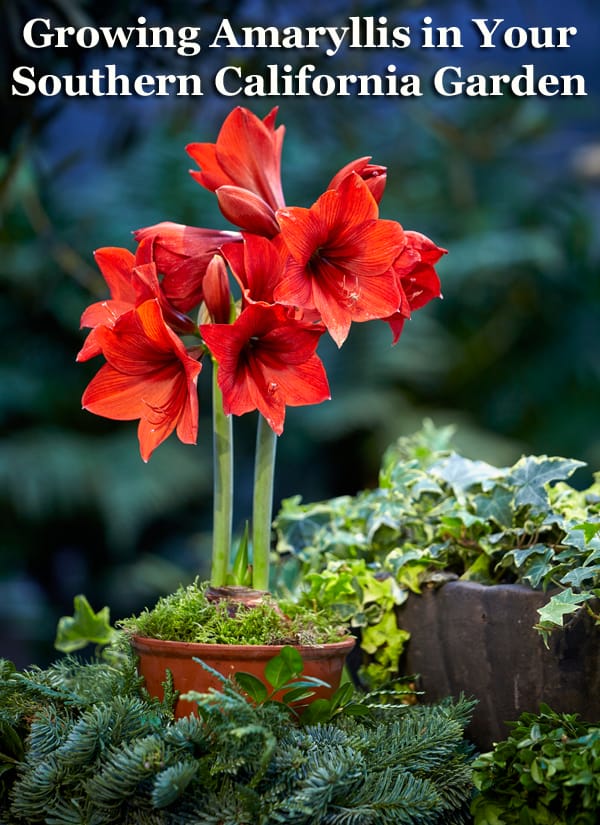
There is a small naming quirk worth knowing. The large, showy bulbs sold for the holidays are hybrids of the genus Hippeastrum, which is native to tropical and subtropical Central and South America. The name “Amaryllis,” in the strict botanical sense, actually belongs to Amaryllis belladonna, the South African bulb known as the belladonna lily or “naked lady.” Nurseries and gift-givers have called Hippeastrum “amaryllis” for so long that the common name has stuck, so when this article says amaryllis, it means the familiar holiday Hippeastrum. The flowers can be single or double and range from small 4-inch blooms to massive 10-inch ones. Red and white are still the classics, but newer cultivars come in apricot, deep burgundy, pink, rose, and salmon, plus bicolor and picotee patterns.
How to Plant Amaryllis in the Ground
In Southern California you can plant or transplant an amaryllis bulb in the ground from about September through January. Choose a spot with good drainage and sun with a little afternoon shade in the hottest inland gardens. Amend heavy soil with organic matter to improve drainage before you plant. The most important detail is planting depth: set the bulb so its neck and the top third sit above the soil line, with only the lower two-thirds buried. Keeping the neck high and dry this way also helps prevent the fungal problems that can start when the top of the bulb stays wet. Space bulbs several inches apart so each has room to grow and multiply. If you are moving a potted holiday amaryllis into the garden, wait until after the last flower fades, keep feeding it so the leaves grow, and set it at the same depth. A bulb that was forced indoors may take a season or two to store enough energy to bloom again outdoors, so be patient.
Caring for Amaryllis Outdoors
Amaryllis is easy once it is in the ground. Water regularly while it is actively growing and blooming, then ease off as the foliage begins to die back. Feed it with a balanced bulb fertilizer during the growing season to build next year’s flowers. The single most common question is when to cut back the leaves, and the answer is simple: leave them alone until they yellow and die back on their own. Those strappy green leaves are the solar panels that recharge the bulb, so cutting them while they are still green robs the plant of its next bloom. Only remove the foliage once it has dried and shriveled. Spent flower stalks can be cut once they fade.
Growing Amaryllis in a Pot for the Holidays
To force a bulb into holiday bloom indoors, start by trimming off any dried or dead roots, then soak the living roots in a shallow bowl of water for about an hour. Choose a heavy pot only slightly larger than the bulb, with about an inch of space around it, since amaryllis bloom best a little pot-bound; make sure it has good drainage holes so the bulb never sits in wet soil, which causes rot. Use a rich, free-draining mix (peat or coir with perlite or vermiculite helps air and water move through), and add some pebbles or sand in the bottom for ballast against the top-heavy stem. Plant the bulb with its lower two-thirds buried and the top third above the soil, water it in, and set it in a bright spot around 70 degrees F. Water sparingly until you see new growth, then water regularly and feed. Most bulbs bloom in about 6 to 8 weeks. Once the flowers open, move the pot out of direct sun into a cooler room near 65 degrees F with bright indirect light, which makes the blooms last noticeably longer.
How to Select a Healthy Amaryllis Bulb
Bigger is better with amaryllis. The largest bulbs produce the most stems and the largest flowers, so choose the biggest bulb you can find. Inspect it closely: the surface should be smooth, dry, and firm all over, with no soft spots, blemishes, mold, or dark decay. A heavy, rock-firm bulb is a healthy bulb.
Amaryllis Care at a Glance
| Need | What amaryllis wants |
|---|---|
| Light | Part to full sun outdoors (afternoon shade inland); bright indirect light indoors |
| Soil | Rich and well-draining; amend heavy soil before planting |
| Planting depth | Neck and top third of the bulb above the soil line |
| Water | Regular during growth and bloom; ease off as the leaves die back |
| Feed | A balanced bulb fertilizer during the growing season |
| Bloom | Reblooms year after year once established in the ground |
| When to cut leaves | Only after they yellow and die back; green leaves recharge the bulb |
| Hardiness | Hardy to about USDA zone 8; grows in the ground throughout SoCal (zones 9 to 10) |
| Safety | Bulbs and leaves are toxic to pets and people; keep away from dogs, cats, and children |
Is Amaryllis Toxic to Pets?
Yes, and it is worth knowing before you plant. Amaryllis (both Hippeastrum and true Amaryllis belladonna) is toxic to dogs, cats, and horses, and to people if eaten. The plants contain lycorine and related compounds, and the bulb is the most toxic part. Signs of poisoning in a pet can include vomiting, drooling, diarrhea, abdominal pain, loss of appetite, and lethargy. Plant bulbs where dogs will not dig them up, keep potted bulbs out of reach of curious cats, and if you think a pet or child has eaten any part of the plant, call your veterinarian or the ASPCA Animal Poison Control Center at (888) 426-4435 right away.
Frequently Asked Questions
Can you plant amaryllis outside in Southern California?
Yes. Our mild winters let amaryllis grow in the ground year-round as a perennial that returns to bloom in the seasons that follow. Plant it with the neck and top third of the bulb above the soil, in well-drained ground with part to full sun.
Where do amaryllis grow naturally?
The holiday “amaryllis” is really Hippeastrum, native to tropical Central and South America. The true Amaryllis, Amaryllis belladonna or belladonna lily, comes from South Africa. Both grow well in Southern California gardens.
Do amaryllis like full sun?
Outdoors they do best in part to full sun, with a little afternoon shade in hot inland areas. Grown indoors, give them bright, indirect light.
When should you cut back amaryllis leaves?
Only after the leaves have yellowed and died back on their own. The green leaves feed the bulb for the next bloom, so never cut them while they are still green.
How deep do you plant an amaryllis bulb?
Leave the neck and the top third of the bulb above the soil line, with only the lower two-thirds buried. This is the same whether you plant in a pot or in the ground, and it keeps the neck dry to prevent rot.
Do amaryllis like coffee grounds?
There is no good evidence that coffee grounds help amaryllis. Feed with a balanced bulb fertilizer during the growing season instead; used coffee grounds are better added to the compost pile.
Are amaryllis poisonous to dogs and cats?
Yes. Amaryllis is toxic to dogs, cats, and people, with the bulb being the most toxic part. Keep bulbs and plants away from pets and children, and contact your veterinarian or the ASPCA Animal Poison Control Center at (888) 426-4435 if any part is eaten.
Sources
- ASPCA Animal Poison Control, Amaryllis (toxicity)
- University of Wisconsin-Madison Extension, Amaryllis (Hippeastrum)
- Clemson Cooperative Extension, Amaryllis
- Iowa State University Extension, All About Amaryllis
- South Dakota State University Extension, Caring for Amaryllis
- University of California ANR, Amaryllis belladonna (Naked Lady)
If you would like an amaryllis bulb for yourself or as a gift, call us or stop by one of our Green Thumb Nursery locations, where our garden experts can help you pick a healthy bulb and the right mix to grow it in. You will find plenty of other holiday flowering plants there too.
Do you like what you see? Sign up for our weekly newsletter to get content like this every week!
Sign up for the Green Thumb Nursery newsletter