
Newsletter Articles
Fun & Unusual Vegetables for Your SoCal Veggie Garden
Written by Kelsey W.
Planting a vegetable garden is fun for so many reasons. For one thing, many vegetables are incredibly easy to grow, so it’s possible to have a beautifully green vegetable garden even if you don’t consider yourself a talented gardener.
But once you’ve got the hang of gardening and planting vegetables each year, you might want to start branching out from the classic tomato plants that just about everyone has in their yards. Maybe it’s time to look at a different pepper from the bell peppers you grow each year. Maybe you should consider a different leafy green besides the kale you plant every year.
There are dozens of neat vegetables out there that are quite unusual but that are just as easy and fun to grow as your classic tomatoes, carrots, and potatoes. Many of these plants also fare wonderfully in the bright California sun (though some do need a little more water than others).
Let’s take a look at some neat and unusual vegetables for your next Southern California vegetable garden.
Try Parsnips Instead of Carrots
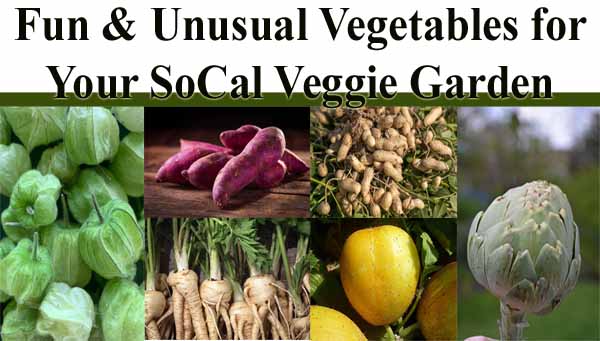
Carrots are a really easy plant to grow, and it’s quite fun to pull them out of the ground when they’re ready for harvesting to see just how big the carrot has grown. However, instead of planting carrots this year, you might want to think about planting parsnips instead, which look a lot like carrots when you pull them out of the ground.
Carrots have a really classic, familiar taste for most of us, but parsnips are a little different in that they’re sweeter than carrots and might even remind you of nutmeg when they’re cooked. Carrots are crisper while parsnips are very earthy and herbal. They taste absolutely delicious when caramelized and are also well paired with all sorts of herbs like thyme and sage.
Grow Lemon Cucumbers Instead of the Regular Kind
Something you might never see in a grocery store’s produce section is a lemon cucumber because they don’t last a long time once you harvest them. Despite the name, lemon cucumbers don’t actually taste like lemons, and they’re also not bitter like regular green cucumbers sometimes taste. Instead, lemon cucumbers are a little milder while still offering that satisfying crisp taste of the classic cucumber.
Another nice feature of lemon cucumbers is that they’re quite prolific, too, so you can enjoy several cucumbers throughout the season when you plant just a few of them. Lemon cucumbers do very well in Southern California because of our long growing season, which gives them many months to produce their fruit.
Grow Tomatillos Instead of Tomatoes
Why rely on store-bought salsa verde when you can grow your own tomatillos and make your own? Instead of planting four tomato plants this year, plant three and make the fourth a tomatillo plant. You can grow them just like you would a tomato plant, so you can grow them right in the same area as your tomatoes.
It’s important to note that tomatillos aren’t green tomatoes, and they don’t taste like green tomatoes either. Even though a tomatillo is a nightshade plant and it’s green, just like a green tomato, it’s a totally different plant and has a very different flavor. Tomatillos are very bright and citrusy versus the very mild taste of a classic green tomato.
Grow Purple Potatoes Instead of White or Yellow Potatoes
One of the reasons growing potatoes is so popular is that it’s almost impossible to mess up a potato in a garden as long as you put it in an area with lots of sun and water it regularly. But there’s another type of potato that’s a little less common and way cooler as far as its appearance goes: the purple potato. And yes, purple potatoes are actually purple. Not just a dusky shade of red, but actual purple.
And they taste a lot like regular potatoes, too. If you wanted to compare them to popular brands of potatoes you might find in the grocery store, they’d probably cook up closer to something like a Yukon Gold rather than the russet potatoes you might use for mashed potatoes. Purple potatoes are even a little healthier than white potatoes because they have more fiber and nutrients like potassium.
Try Your Hand at Growing Peanuts
Peanuts are a really common thing to see in food and in your cupboard as peanut butter, but have you ever considered actually growing peanuts? Also, did you know that to grow a peanut plant, all you have to do is bury a raw peanut in the ground? (You can bury it in its shell or without it. You’ll get peanuts growing on the resulting plant after something like 120 to 150 days.
The only drawback to peanuts is that you need quite a bit of space if you want a big load of peanuts during your harvest. However, if you’re just growing peanuts for fun or in a small backyard garden, they’re a particularly neat and visually interesting plant to grow, since it’s unusual to see peanuts in their native state on the plant before they end up in a jar or mashed up as peanut butter.
Try a Perennial Vegetable
One unusual step you might take in creating your vegetable garden is planting perennial vegetables, or vegetables that you don’t necessarily need to replant each year. A perennial is a plant that regrows for multiple years, coming back to a healthy growing season after some time spent hibernating or growing slowly (usually in the winter).
Instead of taking out all of your vegetables at the end of the growing season, you’ll continue to care for your perennial vegetables into the new year until they start producing again next year. Some perennial vegetables can last for several years, and they can even take a few years to get to the point of producing a harvest for you.
One of the best options is asparagus, which does take a few years before it starts producing edible stalks, but lasts up to twenty years when tended to properly. One of the convenient aspects of asparagus is that you can grow it in the ground or plant it in a container, which gives you a lot of freedom to create your vegetable garden, whether you live in a house with a yard or an apartment with a balcony.
Another unusual vegetable that grows back for a few years is the globe artichoke, which actually grows into a rather impressively sized plant, so you need a big container (something at least 3 feet wide) or a big patch of ground to devote to the plant. You’ll get yields of “chokes” for at least three to five years, though they do need some extra water and some shady time in the hot California sun.
A final perennial vegetable that you don’t see very often, but that makes an excellent addition to soup recipes and salads is sorrel. Rather than planting another round of lettuce, kale, or chard (all fine vegetables, but they are quite common), make some room for a sorrel plant. You’ll enjoy nice harvests as long as you keep the plant’s soil moist. Sorrel also loves compost.
Always Check the Time of Year for Planting Unusual Plants
Remember that every plant out there isn’t a summer vegetable. For some plants, you’ll want to start preparing your garden in winter. For others, it’s the fall. For example, potatoes like getting started in the early spring, but parsnips – at least in Southern California – enjoy getting planted in the fall around late September or October more than getting into the ground in the spring.
Create an Amazing and Cool Garden With Green Thumb Nursery
Is it time to start pruning the bushes? Do you need to get some raking done? Are the flowers in desperate need of deadheading? If you’re in need of some implements, there’s no better place to find the perfect tools and gardening help than Green Thumb Nursery, your Southern California gardening experts. Drop by a SoCal location today to get started making your garden, yard, porch, and patio a beautiful place.
Do you like what you see? Sign up for our weekly newsletter to get content like this every week!
CLICK HERE TO SIGN UP!