

Newsletter Articles
Fruit Tree Rootstocks: How to Choose the Best One for Your Soil
By Richard Flowers, ACCNP, Green Thumb Nursery, Ventura
When you pick a fruit tree, you naturally think about the variety: the Apple, Apricot, Plum, Peach, Nectarine, or Cherry you want to eat. But the part that decides whether that tree thrives for decades is underground. It is the rootstock the variety is grafted onto. Choose the right rootstock for your soil and climate and your tree becomes a near-permanent fixture in the landscape. Choose the wrong one and even the tastiest variety will struggle.
Quick answer: The best rootstock depends on your soil. For heavy clay or wet, poorly drained ground, plant Apple on M-111, Cherry on Maxma 14, Peach, Plum, and Nectarine on Citation, and Apricot or Plum on Myrobalan 29C, and avoid Nemaguard, which needs sandy, well-drained soil. The rootstock is the root system your tree is grafted onto, and it controls how well the tree copes with your soil, how large it grows, how soon it bears, and which pests and diseases it resists, so match it to your site before you settle on a variety. The number one reason backyard fruit trees die is water-saturated soil, so in clay, plant on a raised mound and never overwater.
What Is a Rootstock?
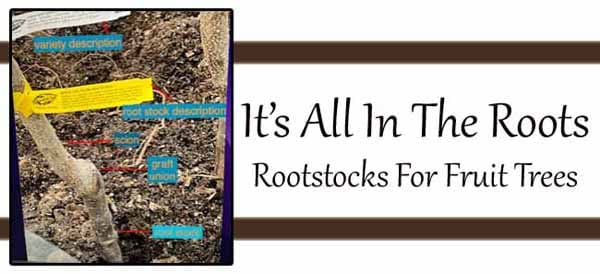
A fruit tree is really two plants in one. The top, called the scion, is the variety you chose for its fruit. The bottom, called the rootstock, is a separate plant that supplies the root system. The two are joined at the graft union, the swollen joint you can usually see just above the soil. Growers graft the two together because the rootstock does far more than hold the tree up. As Penn State Extension explains, the vigor of a grafted tree is set by the rootstock it grows on, and rootstocks are chosen to add resistance or tolerance to soil-borne pests and diseases (Penn State Extension). In other words, the roots your tree grows on are the most important part of the whole tree.
Why the Rootstock Matters More Than the Variety
When you select a fruit tree, there are four things the rootstock decides for you:
- How well it fits your soil and climate. This is the big one, and it is where most backyard trees are won or lost.
- Which pests and diseases it resists. The right rootstock shrugs off soil problems that would weaken or kill the tree.
- How soon it bears fruit. Some rootstocks are precocious, meaning they fruit at a young age.
- How firmly the roots anchor the tree. Good anchorage means a stronger tree that will not lean or blow over.
If the rootstock is not suited to your conditions, nothing else matters. That craved Peach or Plum variety is of no value if the tree underneath it cannot cope with the ground it is planted in. And the single most common reason people lose fruit trees is water-saturated soil. UC puts it plainly: cherries, peaches, and nectarines cannot tolerate soils without drainage, whether the problem is a hardpan, a claypan, or saturated conditions (UC IPM). The remedies are simple: make sure the site drains, do not overwater, and choose a rootstock that tolerates wet feet.
Best Rootstock for Clay or Wet Soil
Clay and poorly drained soils are the most common challenge in Southern California yards, so start here. Match your fruit to a rootstock that can handle wet ground:
- Apple: choose M-111. It tolerates wet, dry, or poor soil and withstands drought, and WSU lists it as well anchored and widely adapted to most soil conditions (WSU Tree Fruit).
- Cherry: choose Maxma 14, which has good tolerance of wet soils and performs well even in calcareous ground.
- Peach, Plum, and Nectarine: choose Citation, a rootstock that is very tolerant of wet soil and bears at a young age.
- Apricot and Plum: choose Myrobalan 29C, which tolerates wet, heavy soils and is immune to root-knot nematodes (Dave Wilson Nursery).
Just as important is what to avoid. Do not plant on Nemaguard in clay or wet ground, because it needs sandy, well-drained soil. If Nemaguard is your only option for a wet site, plant it on a mound. In fact, mounding helps any fruit tree in heavy soil. UC recommends planting on a ridge or mound of soil several inches high and several feet across wherever drainage is poor, and never planting in low spots that flood (UC IPM).
Fruit Tree Rootstock Comparison Chart
Here is how the rootstocks we carry compare at a glance. Sizes are for unpruned trees, and almost any of them can be held to a pickable height with summer pruning.
| Rootstock | Fruit | Mature size (unpruned) | Best soil and drainage | Key strengths | Bears young? |
|---|---|---|---|---|---|
| M-111 | Apple | 15 to 25 ft (80 to 90% of standard) | Wet, dry, or poor; drought-tolerant | Strongest and most common; resists woolly apple aphid and collar rot | Yes |
| M-7 | Apple | 12 to 18 ft | Widely adapted; good where winters have hard freezes | Resists fire blight and powdery mildew; good anchorage; suckers heavily | Yes |
| Geneva 969 | Apple | Semi-dwarf | Well-drained; also good in containers | Resists woolly apple aphid, fire blight, and crown rot; freestanding; few suckers | Yes, very |
| Maxma 14 | Cherry | 10 to 12 ft (about 2/3 of standard) | Tolerates clay, wet, and calcareous soils | Well anchored; very little suckering | Not especially |
| Mazzard | Cherry | Standard (full size) | More tolerant of wet soils | Vigorous; resists root-knot nematode and oak-root fungus | No |
| Citation | Peach, Plum, Nectarine | About 15 ft (semi-dwarf) | Clay and poorly drained soils | Dependable; often large fruit | Yes |
| Nemaguard | Peach, Plum, Nectarine | Large (standard) | Sandy, well-drained; not for clay or wet | Vigorous; resists root-knot nematode; strong anchorage; low suckering | Yes |
| Lovell | Peach, Nectarine | Large (standard) | Tolerates wetter, heavier soil than Nemaguard | Very drought and cold tolerant; dependable | Not especially |
| Myrobalan 29C | Apricot, Plum | Vigorous | Wet, heavy, waterlogging-prone soils | Immune to root-knot nematode; some oak-root-fungus resistance; good anchorage | Not especially |
Apple Rootstocks: M-111, M-7, and Geneva 969
Apple rootstocks are some of the best studied in the world. Many are bred specifically for size control, early bearing, and resistance to problems like crown rot, fire blight, and woolly apple aphid (University of Illinois Extension). Here are the three semi-dwarf rootstocks we rely on.
M-111, the all-rounder
If you want an Apple that tolerates wet, dry, or poor soil and withstands drought, M-111 is the answer. It is the most common Apple rootstock because it is overall the strongest. It resists woolly apple aphid, an insect that can kill young trees and weaken older ones, and collar rot, a damaging Phytophthora root-rot disease, and it bears fruit at a young age. WSU lists it as well anchored, drought tolerant, and widely adapted to most soils (WSU Tree Fruit). It is a semi-dwarf, reaching about 80 to 90 percent of a standard tree, or roughly 15 to 25 feet if left alone, but it can be held to any height you like with summer pruning.
M-7, good anchorage and cold hardy
M-7 is another semi-dwarf Apple rootstock. It bears early and heavily and offers resistance to fire blight, a disease that can kill a tree, and to powdery mildew, and it is moderately resistant to collar rot. It gives good anchorage and is a strong choice for areas that get hard winter freezes. The trade-offs are that it tends to sucker a lot and is less common than M-111. Like other dwarfing rootstocks, trees on M-7 may lean in rocky, shallow, or steep ground and can need staking, though they stand freely in deep, well-drained soil (University of Illinois Extension). Unpruned, M-7 trees reach 12 to 18 feet, and again you can hold them to any height with summer pruning.
Geneva 969, freestanding and disease resistant
Geneva 969 is a newer semi-dwarf Apple rootstock from the Cornell breeding program. It bears even younger than M-7, resists woolly apple aphid, fire blight, and crown rot, produces very few suckers, and is freestanding, so it does not need permanent staking (eXtension Apples). It is also a good choice for growing in a container if planting in the ground is not an option.
Cherry Rootstocks: Maxma 14 and Mazzard
Cherries are the fussiest of the stone fruits about drainage. They need exceptionally well-drained soil, so if you must plant in clay or heavy ground, build a mound to improve air flow, drainage, and water penetration.
Maxma 14, for heavier soils
If a Cherry has struggled for you because the ground stays too wet, especially in clay, Maxma 14 may be the fix. It has good tolerance of wet soils and performs well even in calcareous soils, though good drainage still helps (Dave Wilson Nursery). It dwarfs Cherries to about two-thirds of standard, roughly 10 to 12 feet, though you can expect less dwarfing in rich, loamy soil. Trees are well anchored and sucker very little, and you can prune them lower to suit your space.
Mazzard, the vigorous standard
Mazzard is a standard, full-size rootstock for sweet Cherries. It is vigorous, more tolerant of wet soils than the old Mahaleb rootstock (though good drainage is still a must), and resistant to root-knot nematodes and oak-root fungus. It usually forms a husky, large root system with excellent anchorage and is very adaptable. Keep in mind that Cherries on Mazzard are not precocious, so they take longer to come into bearing.
Peach, Plum, and Nectarine Rootstocks: Citation, Nemaguard, and Lovell
Peaches, Plums, and Nectarines are closely related and share the same group of rootstocks. Which one you want comes down to your soil.
Citation, best for clay and wet soil
If your planting site has clay soil or drains poorly, look for trees labeled Citation. It is very tolerant of wet soil, takes off quickly once planted, bears at a young age, and often produces large fruit (Dave Wilson Nursery). Even though it is considered semi-dwarf, it still grows to about 15 feet, which is large for a small yard, so plan to prune it down to a comfortable size.
Nemaguard, for sandy, well-drained soil
Nemaguard is a standard, full-size rootstock for Nectarines, Plums, and Peaches. It is very vigorous and strong growing, gives good anchorage, suckers little, bears young, and is ideal for sandy soil. It resists root-knot nematode, the most widespread soil pest of Peaches in California (UC IPM). Its weakness is wet ground: it is not tolerant of waterlogged or clay soils, and it is prone to oak-root fungus. If you must use it in clay, plant it on a mound.
Lovell, tolerates wetter soil
Lovell is a standard Peach and Nectarine rootstock that handles wetter, heavier soil better than Nemaguard. It is very drought tolerant, well anchored, cold hardy, and dependable (Dave Wilson Nursery). One trade-off to know: unlike Nemaguard, Lovell is susceptible to root-knot nematodes (UC IPM), so in sandy, nematode-prone soil Nemaguard is the safer pick. Trees reach a large size unless pruned.
Apricot and Plum Rootstocks: Myrobalan 29C
For Apricot and Plum lovers who need a rootstock that handles wet ground, Myrobalan 29C is the one to seek out. It tolerates wet, heavy soils and waterlogging, is immune to root-knot nematodes, has some resistance to oak-root fungus, and provides good anchorage (Dave Wilson Nursery). Its root system is shallow but vigorous, a little suckering is possible, and trees can be pruned to any height you like.
One last reassurance: whatever rootstock you choose, do not be alarmed if a young tree with a smaller caliper stem arrives with very few, shy roots. This is completely normal for a young grafted tree, and it will establish and thrive in your garden or orchard.
Frequently Asked Questions About Fruit Tree Rootstocks
What is a rootstock in plants?
A rootstock is the lower, root-forming part of a grafted plant. On a fruit tree, your chosen variety (the scion) is grafted onto a rootstock, and the rootstock supplies the roots that handle the soil, feed the tree, and largely set its size, hardiness, and how soon it bears.
What is Citation rootstock?
Citation is a semi-dwarfing peach and plum hybrid rootstock used for peaches, plums, and nectarines. It tolerates clay and poorly drained soil, bears fruit young, and is dependable, though it still reaches about 15 feet, so most backyard growers prune it shorter.
What rootstock is used for peach trees?
Peaches are grown on Citation (best for clay or wet soil), Nemaguard (vigorous, for sandy, well-drained soil and nematode resistance), or Lovell (tolerates heavier, wetter soil and cold better than Nemaguard). Pick the one that matches your soil.
What rootstock is used for plum trees?
Plums do well on Citation (clay and wet soil), Myrobalan 29C (wet, heavy soils and nematode resistance), or Nemaguard (sandy soil). Because plums, peaches, apricots, and nectarines are all closely related, they share many of the same rootstocks.
What is the best apple rootstock for clay or wet soil?
M-111. It tolerates wet, dry, or poor soil, withstands drought, resists woolly apple aphid and collar rot, and is the strongest and most common apple rootstock. It is semi-dwarf but can be held to any height with summer pruning.
Will a rootstock produce fruit?
A rootstock will grow and can produce fruit, but it will be the rootstock’s own fruit, which is usually small and poor, not the variety you bought. That is why suckers growing from below the graft union should be removed, and why the scion variety on top is what gives you good fruit.
Can you graft a peach onto a plum?
Yes. Peaches, plums, apricots, and nectarines are all stone fruit in the genus Prunus and are closely enough related to graft together. That compatibility is exactly why hybrid rootstocks like Citation can carry peaches, plums, and nectarines alike.
Sources
- Penn State Extension, To Graft or Not to Graft
- University of Illinois Extension, Apple (rootstocks and size control)
- WSU Tree Fruit, Rootstocks for Apple
- eXtension Apples, Apple Rootstock Info: G.969
- Dave Wilson Nursery, Rootstock Descriptions
- UC IPM, Cultural Tips for Growing Apple (drainage and mounding)
- UC IPM, Nematodes on Peach (rootstock resistance)
I hope this helps you choose the right rootstock for your next fruit tree. If you have questions or want help matching a tree to a specific spot in your yard, visit one of our five Southern California locations or browse our fruit tree selection, and our garden experts will point you to the right one. Once your trees are in the ground, you can also plan a harvest that runs across the year.
Do you like what you see? Sign up for our weekly gardening newsletter to get content like this every week.