

Newsletter Articles
The Succulent Handbook: Everything You Need to Know About Succulents to Keep Them Alive
Written by Susan B., contributing writer for Green Thumb Nursery.
Quick answer: Succulents are plants that store water in their thick, fleshy leaves and stems. All cacti are succulents, but not all succulents are cacti. Give them plenty of light, fast draining soil, and an occasional thorough drink and they will thrive in Southern California with minimal care.
Our moderate Southern California climate makes it possible to enjoy garden plants all year long. You may believe that it’s not possible to have a beautiful-looking landscape unless you devote every free minute to maintaining it. And while that may be the case with some plants, it’s not the case with all plants. With succulents, you can have your cake and eat it, too, because they’re adapted to thriving with minimal care.
What Are Succulents?
Succulents are plants that have thick leaves or stems that they use to store water. That stored water, held in the leaves, stems, and even the roots, is what gives succulents their plump, fleshy look and lets them shrug off dry spells that would wilt most other plants (West Virginia University Extension).
Is a Cactus a Succulent?
Yes, every cactus is a succulent, but not every succulent is a cactus. What sets true cacti apart is not their spines but their areoles, the small pad-like cushions on the stem that spines, branches, and flowers grow from (Cornell University). Plenty of other succulents carry sharp points too, like the teeth on an agave leaf, so spines alone never tell the whole story. If small spiny plants charm you, our guide to slow growing cactus plants for fairy gardens is a fun place to start.
What Do Succulents Need to Survive?
Succulents need three things above all: abundant light, fast draining soil, and water that arrives infrequently but thoroughly. Get those right and they ask for very little else.
- Light: most varieties want at least six hours of light a day (WVU Extension).
- Soil: a fast draining mix, because roots that sit in soggy soil quickly develop root rot (UF/IFAS Gardening Solutions).
- Water: let the soil dry out completely between thorough waterings (University of Minnesota Extension).
- Food: nutrient needs are low, so one light feeding at the start of the growing season is plenty.
Succulents to Grow in Southern California
These four classics earn their keep in Southern California yards. If you want a longer list, see our picks for the best California succulents for beginners.
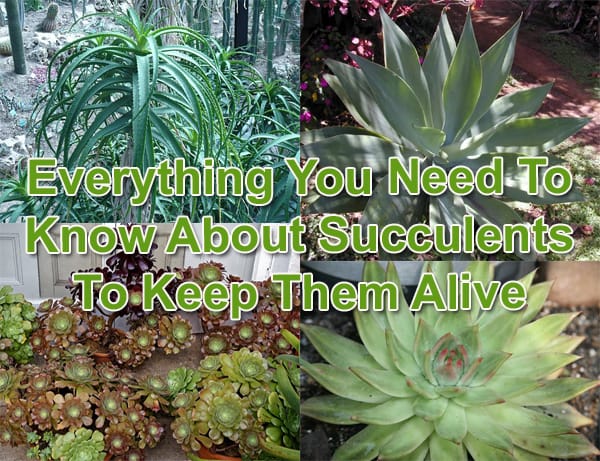
Aloe arborescens (Krantz Aloe)
Also called krantz aloe, this aloe grows as a multiheaded shrub that can eventually reach a height of 9 feet and forms a broad, spreading clump rather than a single rosette (SANBI PlantZAfrica). Planted close together, it makes an excellent and nearly impenetrable living fence. When grown near the coast, it can survive without water (other than rainwater). The color of the leaves varies with different levels of sun exposure, and in the cooler months the plant sends up large torch-like spikes of bright red flowers.
Agave attenuata
Agave is a popular succulent for Southern California gardens. This fast and prolific grower can spread to a six-foot-wide mass. Fortunately, they are easy to divide. So you can transplant the divisions elsewhere on your property. Agave is frost tender and can be damaged when temperatures drop below about 30 degrees. But they tolerate clay soil. You can grow agave in containers with occasional watering.
Aeonium arboreum
Dark-colored varieties like ‘Zwartkop’ (sometimes sold as ‘Schwarzkopf’) and ‘Atropurpureum’ are garden favorites (University of Wisconsin Horticulture). The plant’s spoon-shaped leaves form round rosettes that grow off of otherwise bare stems. It grows well in full sun or part shade. It likes deep but infrequent watering. This species reaches two to three feet in height and spreads about as wide.
Echeveria agavoides (Lipstick Echeveria)
Lipstick Echeveria gets its common name from the red leaf tips. This compact plant has rosettes that grow to about a foot wide. It produces offsets, small pups that cluster around the mother plant (UF/IFAS Gardening Solutions). It needs to grow in soil that drains well because it won’t tolerate being overwatered.
| Succulent | Size | Sun | Water | Standout Feature |
|---|---|---|---|---|
| Aloe arborescens | Up to 9 ft tall, wide clump | Full sun | Rainfall alone near the coast | Torch-like red winter blooms |
| Agave attenuata | Spreads to a 6 ft wide mass | Full sun to part shade | Occasional watering in containers | Easy to divide and transplant |
| Aeonium arboreum | 2 to 3 ft tall and wide | Full sun or part shade | Deep but infrequent | Dark rosettes like ‘Zwartkop’ |
| Echeveria agavoides | Rosettes to 1 ft wide | Full sun to light shade | Only when soil is fully dry | Red lipstick leaf tips |
Succulent Dos and Don’ts
Do Give Your Succulents Room to Breathe
Avoid planting succulents too close to one another. Doing so hinders airflow, but it also makes it hard to see insect or pest damage, or evidence of diseases.
Do Choose a Fast Draining Growing Medium
Succulents need fast-draining soil to prevent roots from sitting in water. For succulents grown in the ground, add sand and ground-up pumice to improve drainage. For container-grown plants, choose a cactus or succulent mix. If you prefer to make your own growing medium, add crushed lava, perlite, or pumice to ordinary potting soil.
Do Make Sure Containers Have Drainage Holes
If you’re growing succulents in containers, always choose pots that have drainage holes, unless you can add the holes before using them. Drainage holes are the key to ensuring that succulent roots won’t sit in water.
Don’t Overwater, and Don’t Skip Water Entirely
Overwatering is one of the most common ways to kill a succulent (WVU Extension), but drought tolerant does not mean no water at all. When the leaves flatten and droop, or the soil is dry as far as your finger can feel, give the plant a thorough drink. For timing by season and by container, follow our full guide on how to water succulents.
Do Feed Lightly Once a Season
Both container-grown succulents and plants that grow in the ground benefit from a once-yearly dose of fertilizer. Use an all-purpose organic fertilizer and use half of the recommended dosage, so the roots don’t get burned. The best time to feed your succulents is at the start of the growing season.
Don’t Propagate in Water, Let Cuttings Callus First
Most succulents root more reliably in soil than in water. To propagate a cutting:
- Let the broken off leaf or stem rest in a dry place for a few days so a callus forms over the wound. That callus seals the cutting and keeps it from rotting once planted (University of Minnesota Extension).
- Dip the leaf or stem in a rooting hormone.
- Plant it in a cactus and succulent mix.
We encourage you to think about adding succulents to your landscape plantings. You can also grow them in containers on your patio, deck, balcony, or porch. Come in and check out our selection of succulents. Our inventory is always changing, so if you want a particular plant, call to see if we have it in stock. Our garden experts are eager to help you fill your home and garden with flowering and green succulents. If you want ideas for showing them off, our post on the magic of succulents is full of arrangement inspiration.
Succulent FAQs
What makes a plant a succulent?
A plant counts as a succulent when it stores water in thick, fleshy leaves or stems. That built-in reservoir lets succulents thrive on minimal care, which makes them a natural fit for Southern California yards, patios, and containers.
What do succulents do?
Succulents store water in their fleshy leaves, stems, and roots so they can ride out long dry spells. In the garden they provide evergreen structure and color with very little water, care, or fertilizer.
What conditions do succulents like?
Succulents like abundant light (at least six hours a day), fast draining soil, and infrequent but thorough watering. One light feeding at the start of the growing season covers their nutrient needs.
Are succulents perennials?
Yes, most succulents are perennials. The varieties featured here (aloe, agave, aeonium, and echeveria) all grow as evergreen perennials in Southern California’s mild climate.
How often should you water succulents?
Water succulents only when the soil is fully dry. Stick your finger in the soil, and if it is dry as far as you can feel, water thoroughly. Hot weather calls for more frequent watering than winter. Our guide on how to water succulents covers the full schedule.
Sources
- University of Minnesota Extension: Cacti and Succulents
- UF/IFAS Gardening Solutions: Succulents
- West Virginia University Extension: Succulents 101
- University of Wisconsin Horticulture: Aeonium
- SANBI PlantZAfrica: Aloe arborescens
- Cornell University: Cactaceae
Do you like what you see? Sign up for our weekly newsletter to get content like this every week!
Sign up for the Green Thumb Nursery weekly newsletter