

Newsletter Articles
Six Plant Picks for Xeriscape
Written by David S.
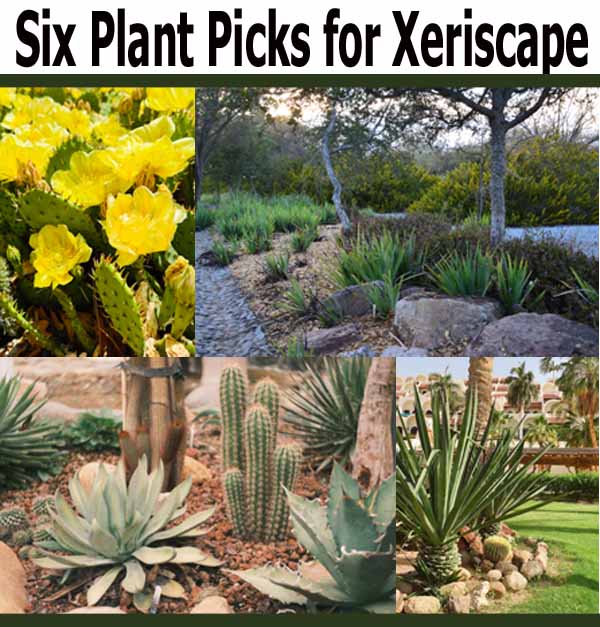
Xeriscaping is the art of creating landscaping that uses plants that require little to no watering. Water usage is a significant consideration for many gardeners in California, especially where the annual rainfall is quite slim and water rates are high. While Xeriscaping and drought-tolerant seem like the same concept, they are somewhat different. Xeriscaping implies the removal of landscaping that requires a lot of water, such as a lawn. Instead, you are replacing that with one that requires little water. In this blog, we discuss plants that do well in a Xeriscape landscape.
Getting Started with Xeriscape
It is very doable to create beautiful landscaping that requires little water and little care. The art of achieving this landscape design is to choose your plants carefully.
Soil Conditions for Xeriscape
Most Xeriscape plants prefer silty soil — Fine grains with smaller bits of organic matter. The goal is to allow water to drain but also to hold water. Sandy soil is too porous, and water runs right through it. Clay soil is too dense, and the water pools can damage plant roots. Silty soil is in between sandy and clay soils.
With Xeriscape, you want the plants to have access to water when they need it, but not so much water that root rot is a problem. So we also want to discuss drought-tolerant and what that means.
Drought-tolerant refers to extreme environments and the plants and animals that live there. These plants can live while enduring long dry spells and little rain. However, if you want drought-tolerant plants to look amazing, they need water. Every plant is different, as are the growing conditions, so experiment with how much water is suitable for each type of plant you grow. Ultimately you want to find that balance where the plant looks fantastic with the least amount of water.
To Mulch or Not to Mulch
Xeriscape plants need mulch. What mulch does is keep the soil cooler, which also means less evaporation, which is a good mix. The soil keeps the water it holds until the plants need it. Without mulch, the soil dries out much faster, and you may have to water more often. Mulch also helps to control weeds.
Now that we have set up the landscape for Xeriscape plants, let’s look at some ideal plants for this type of landscaping.
1. Juniper Trees
One of the best species for Xeriscape is Juniperus californica or the California Juniper. The height of this beautiful tree depends on the amount of water it receives. They can grow to 30-40 feet or remain small in the 3-4 foot range. These evergreen trees are ideal for creating a hedge or windbreak in a Xeriscape setting. These are hardy trees that can grow in a range of conditions, including zone 11 summers.
Once planted, water regularly for the first six months. Most junipers prefer transplanting in winter when they are semi-dormant. Once they are established, and their roots are deep, they make a perfect Xeriscape plant. Junipers tend to grow slowly, so give them time to establish themselves.
2. Cornuta Holly
Like the California Juniper, how tall the Cornuta holly tree gets depends on how much water it receives. So keep them small — three-ten feet— or let them grow to 25 feet; either way, once established, these beautiful trees are excellent as part of a Xeriscape.
There are many species of holly, but make sure to buy a Cornuta holly as they are self-pollinating. Other species are male or female, and you will need one of each to produce those beautiful red holiday berries. That is one of the reasons we love the Cornuta holly — You only need one. Holly trees are one of the few trees that produce an excellent fall and winter place of color. In this case, the red berries against that beautiful green foliage.
3. Claremont Western Redbud
A proven winner for zone 9, the Claremont Western Redbug offers something thrilling for every season. In spring, these lovelies erupt in a purple/pink flush of color. They are in the pea family, so blossoms are like those of sweet peas. In the summer, the foliage shows off a mix of blue, green, and sometimes purple. Finally, they display beautifully rich yellow leaves and these fantastic and exciting thick, long pods in the fall. Redbuds can get to 15 feet tall and make beautiful small shrubs.
4. Artichoke Agave
Another lovely plant for zone 9 is the artichoke agave. These beautifully blue/gray plants can reach four feet in diameter. They offer fantastic color and texture, and when mature, like other agave species, they send up a 20′ tall spike with flowers. Once established, these are gorgeous in a Xeriscape setting. They pair nicely with ornamental grasses, cacti, and flowering herbs such as thyme.
5. Thyme
If you want a drought-tolerant plant but one that will also thrive with a bit of water, thyme plants are a good choice. Not only do the small leaves make beautiful textures, but they bloom in profusion, which the bees and hummingbirds love. In addition, thyme plants make excellent ground covers, and they add dimension to a landscape as taller plants seem to rise from this sea of beautiful color.
6. Bauer’s Dracaena Palm
A beautiful short palm with a 4-5 foot crown, the Bauer’s Dracaena Palm is an excellent choice for Xeriscape with its rich, olive-green leaves show off a splash of purple and a lovely backdrop of texture from the sword-like leaves. These are lovely for zones 9-11. In extreme heat, water more often.
The shortlist of plants that we discuss here are just a few of the many options available for Xeriscape projects. As mentioned, the key to successfully moving to a Xeriscape environment is soil preparation. It is also essential to understand that drought-tolerant plants need to become established before you reduce their daily water routine.
If your soil is not ideal for Xeriscape, stop by and talk with our plant experts about products that can help amend the soil. For sandy soil, you will need compost and water-saving aggregates such as coconut coir or perlite. If your soil is too heavy, you may need to add aggregates such as sand, perlite, coconut coir, or one of the many products that we carry.
Do you like what you see? Sign up for our newsletter to get content like this every week!
CLICK HERE TO SIGN UP!