
Newsletter Articles
Renewing Your SoCal Garden When Your Plants Get Old and Tired
Written by Kelsey W.
You spent all those hours creating an awesome garden a few years ago, the plants you put into the ground looked terrific, and you loved what you saw every time you came home from work. Unfortunately, some of those plants have started to look a little weird, and you’re wondering why, since you’re still taking care of them.
Even though we might take all the steps necessary to keep our plants healthy, sometimes they just get tired. In other cases, a plant might simply not have the right amount of sunlight each day, which might not allow it to grow to its full potential despite your constant care.
And, of course, if we forget about our plants and don’t take care of them, they can certainly look a little worse for wear, especially after a hot Southern California summer or some dark, chilly, and rainy nights in January.
Is it possible to renew your garden without ripping everything out of the ground and just starting over? There’s a good chance that even if you haven’t been particularly attentive to your plants recently, some of them simply need a little extra attention, and they’ll bounce right back.
For other plants, we might be talking about replacement, which might become necessary if the plant is too old or if it’s simply grown into an odd shape or way for too long. Let’s learn about some of the issues your plants might face as they age and how to renew or refresh them to keep your garden looking and feeling its best.
Do Plants have Firm Lifespans?
Plants are just like any other living creature in that they have a general lifespan that’s tough to live beyond, even if you provide daily care for them. Further, some plants are actually classified as annuals, which means they’re only really supposed to stick around for a single year.
The problem many Southern Californians experience is that they take annuals and plant them and then see them grow for a few years instead of the traditional single year, because our weather is just so nice for the plants. Unfortunately, the nice weather can lead you to believe that your annual will last forever.
In many cases, the tired flowers that just aren’t blooming anymore, or the plants that seem overly leggy despite having enough light (leggy plants are often a sign of inadequate light) might just be old.. You may be trying to treat annuals like perennials, thinking that you can get a decade of growth out of something that’s only supposed to last a year or two.
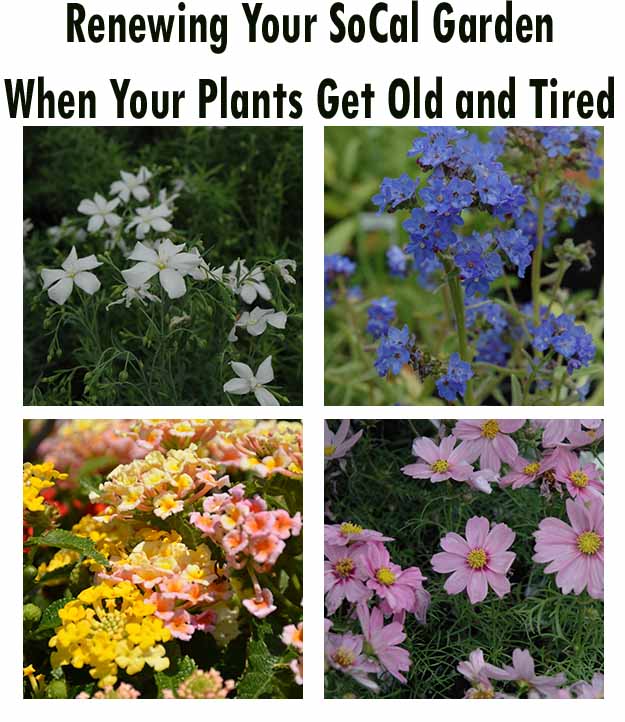
Flowers that are technically annuals but that you might mistake in SoCal for being perennials include California poppies, cosmos, and lantana. If you live in an area where the temperature never dips low enough to create a frost, these flowers will often bloom for more than a year. But they’ll run out of steam and start to bloom less over time.
In such cases, it’s often best to get some new seeds or seedlings ready to plant when your “perennial annuals” are starting to feel their age. It’s really tough and usually not worth the effort to continue growing these plants more than a few years unless you’re truly not concerned about their lack of blooming.
For other plants, like perennials and larger things like trees and bushes, you can usually expect anywhere from 30 to more than 100 years of life from them when they’re well cared for, but even grand and majestic trees will reach their end point eventually.
If you live in a house with an ancient tree in the front, there is a point where the tree may naturally start to die, and that’s just a part of its natural lifecycle. You’ll frequently see this with older citrus trees, which usually live around 50 to 100 years, but have been in the front yard of your 100-year-old house since the 1930s and are reaching their twilight.
Putting New Life into Your Old Plants
If you’ve done your research and you’re relatively certain your plants should have some years of life left in their lifespan, there are some things you can do to bring them back to life. For example, if you’ve only had your verbena for one year and you know it’s supposed to last about four years (they’re a short-lived perennial), you may want to pay it some extra attention to revive it.
Some of the basic, first steps you can take to revive your tired or stunted plants include trimming dead foliage, ensuring they’re getting the right amount of moisture, and examining the amount of sun they get each day. If you’re certain they’re getting enough water, it might be a matter of moving the plants so they get more or less sun, according to their needs.
Another way to refresh your plants is to put them in new soil. For potted plants, this usually means taking the plant out of the soil, carefully removing most of the soil from the roots, and putting the plant in an entirely new batch of healthy soil. You can also take the opportunity to increase the pot size, which is important if the plant has become “pot-bound” with the roots getting too crowded.
You may also want to give the plant a jolt of liquid fertilizer – this goes for indoor and outdoor plants – if they haven’t been growing many leaves or have been looking a little stressed. If you’re conducting your plant refresh during the spring, it’s an optimal time to add some extra fertilizer, but you can also add a little bit in other seasons, too, just to give the plant a little boost.
Signs It’s Time for a New Plant
Sometimes, it’s time to accept that a plant has reached the end of the road, and it would fare best as compost and food for the next generation of plants. Occasionally, the struggle is just too much, especially for an older plant that’s running out of steam.
Here are a few solid signs your plant is geriatric:
- Most of its stems are woody, and it’s not growing new green stems
- The plant doesn’t create as many flowers each year as it once did
- If fruit-bearing, the plant no longer produces fruit
- It’s tough to prevent diseases from recurring despite constant care
- The overall look of the plant is bent or drooping
Yes, we can certainly get attached to our plants, but it’s helpful to know that our plants today will always become part of the next generation of plants after they make their way back into the ground. If you’re absolutely loath to let your plant go, even though it’s struggling, you can always try to make a cutting out of one of its stronger stems and try to get another few years out of it.
But if part of your garden has reached a point where the perennials are no longer producing flowers each spring, it might be time to try something new. Bringing new plants into your home or yard means getting to try something different, as well as having the opportunity to choose native plants if you haven’t already.
Signs Your Plant Needs Different Care
Maybe you’ve only had your plants for a few years, and you’d rather go the extra mile to bring them back from the brink. Perhaps you only planted your rock roses (Pavonia lasiopetala) last year, so you’re certain they shouldn’t look so poor.
Here are a few changes you can make to your plant care to try to improve their happiness:
- Move the plant to a sunnier or shadier spot, depending on need
- Make sure there aren’t any dead branches or leaves on the plant
- Repot the plant or refresh the soil if the soil is hard and compacted
- Change the watering schedule to more or less frequently if warranted
- Try adding fertilizer to your routine to build plant strength
The idea that “if it’s green, it’s alive” is certainly true, but it’s important to keep an eye on the actual condition of the plant and not just whether it has any green on it. If you make a change to your plant care but it doesn’t respond, keep trying. You might need to try a few solutions before something works.
Renew and Refresh Your Garden at Green Thumb Nursery
Visit Green Thumb Nursery today, whether you’re looking to renew the tired plants in your garden or you’re searching for some options to change things around a bit in your yard. Green Thumb Nursery has all the plants and advice you need to turn your garden from old and faded to new and vibrant. Drop by a nearby Southern California location today for some ideas and inspiration.
Do you like what you see? Sign up for our weekly newsletter to get content like this every week!