

Newsletter Articles
Peach Leaf Curl: Symptoms, Treatment, and When to Spray
By Richard Flowers, ACCNP, Green Thumb Nursery, Ventura
If the new leaves on your peach or nectarine tree look puckered, thickened, reddened, and strangely curled, you are almost certainly looking at peach leaf curl. It is one of the most common and recognizable diseases of backyard stone fruit, and it shows up most after a cool, wet spring. The good news is that it is very preventable once you understand how it works. Here is what peach leaf curl is, what it looks like, and exactly how and when to treat it.
Quick answer: Peach leaf curl is a fungal disease (Taphrina deformans) that makes peach and nectarine leaves pucker, thicken, redden, and curl in spring. You cannot cure it once the leaves are infected, so control is all about prevention: spray the bare, dormant tree with a fixed copper fungicide, from leaf fall in late fall through just before the buds swell in late winter. Raking up fallen leaves is good garden hygiene, but the dormant copper spray is what actually controls the disease. A healthy, well-fed tree usually survives and pushes out a normal second set of leaves.
What Is Peach Leaf Curl?
Peach leaf curl is a fungal disease caused by Taphrina deformans. It affects the leaves, shoots, blossoms, and fruit of peaches, ornamental flowering peaches, and nectarines (UC IPM). The disease tends to be far more prevalent after a wet, cold, and cloudy winter and early spring, because those are exactly the conditions the fungus needs to infect emerging leaves. If you have a peach or nectarine and the spring leaves suddenly look wrong, puckered, bulging, and discolored, this fungus is almost always the cause.
What Does Peach Leaf Curl Look Like?
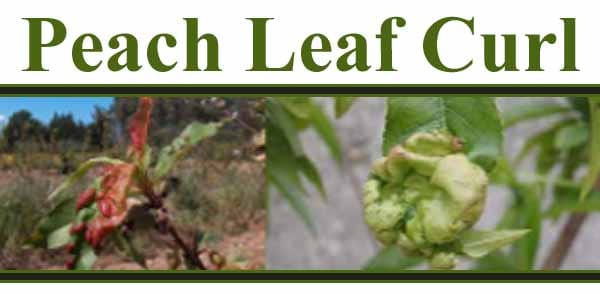
The first sign is new leaves that are distorted and bulging, thickening and puckering as they expand, often with a reddish or purplish color. As the infection matures, a grayish white, powdery or velvety bloom of spores develops on the leaf surface. After that, affected leaves turn yellow or brown and commonly drop from the tree, which then puts out a second set of more normal leaves (UC IPM). Because the disease also affects shoots, blossoms, and fruit, a badly infected tree can lose vigor and produce less fruit for the season.
The Peach Leaf Curl Life Cycle
Understanding the life cycle is the key to timing your control correctly. Leaf symptoms appear about 2 weeks after the leaves emerge from the buds. The fungus grows between the leaf cells and stimulates them to divide and grow larger than normal, which causes the swelling and distortion, and red plant pigments gather in the deformed tissue. Cells of the fungus then break through the leaf surface and produce sac-like structures that release spores, giving the leaf that grayish white, velvety look (UC IPM).
The fungus survives the hot, dry summer as spores resting on the tree’s bark and buds. When the weather turns cool and wet in fall, those spores germinate and multiply until a film of spores covers the tree’s surface. In spring, splashing water from rain or irrigation moves the spores onto the newly opening leaves, and the cycle begins again. Infection needs leaf wetness for more than 12.5 hours at a temperature below 61 degrees F, and the most infection happens when trees stay wet for two or more days (Pacific Northwest Plant Disease Handbook). Development slows in cool weather and stops once the weather turns dry and warm, roughly 79 to 87 degrees F, which is why the second set of leaves usually comes in clean.
How to Treat Peach Leaf Curl
Here is the single most important thing to know: once the leaves are infected in spring, there is no fungicide that will cure them that season. Control is entirely preventive, and it is done while the tree is dormant and leafless. The standard, research-backed treatment is a fixed copper fungicide applied to the bare tree, which works best when you add about 1 percent horticultural spray oil to the mix (UC IPM). Before you spray, it is always worth bringing a sample in a sealed bag to one of our nursery professionals at Green Thumb Nursery for a correct diagnosis, since a few other problems can mimic leaf curl. And as with any garden chemical, always read, understand, and follow the product label.
When to Spray: a Peach Leaf Curl Spray Schedule
Timing is everything, because you are protecting the tree before the fungus can infect it. In much of Southern California, a single well-timed dormant copper spray is generally effective; in wetter areas or during an especially rainy winter, a second application improves control (UC IPM). The spray just before the buds swell is the most important one of all.
| When | What to apply | Why it matters |
|---|---|---|
| At or just after leaf fall (late fall, around Thanksgiving) | Fixed copper fungicide, with about 1 percent horticultural oil | Coats the bare tree before winter rains start splashing spores onto the buds |
| Midwinter (optional, for wet winters) | Fixed copper fungicide | Keeps protection up through a long, rainy dormant season |
| Late winter, just before the buds swell and break | Fixed copper fungicide | The most important spray: protects the buds and new leaves as they emerge |
A few rules keep the program safe and effective: reapply if rain falls within about 48 hours of spraying, do not apply at less than 7-day intervals, and do not apply after the tree is in full bloom. A false spring, where warm weather coaxes the tree toward breaking dormancy and is then followed by more cool, wet weather, may call for an extra application (Clemson Cooperative Extension).
How to Prevent Peach Leaf Curl (and Resistant Varieties)
Prevention comes down to that dormant copper program plus a couple of supporting habits. Raking up and discarding fallen leaves is good garden hygiene and reduces the spore load around the tree (Oregon State University Extension). Keep those leaves out of the compost pile, since the spores can persist. One honest caveat, though: UC research has found that removing diseased leaves and shoots alone has not been shown to control the disease, so treat leaf cleanup as a helpful supplement to the dormant spray, not a replacement for it (UC IPM).
If you are planting a new tree, choosing a resistant variety makes life much easier. UC lists several resistant peaches, including Frost, Indian Free, Muir, and Q-1-8, and the nectarine Kreibich; Redhaven and most peaches derived from it are considered tolerant rather than fully resistant (UC IPM). Note that resistant varieties still benefit from good care, and a young Frost peach in particular should be sprayed for its first couple of years until it toughens up.
Caring for an Infected Tree
If your tree is already showing leaf curl this season, do not panic, and do not start spraying fungicide now, because it will not help the infected leaves. Instead, your job is to keep the tree strong and vigorous so it can grow out of it. Feed it with a good organic fruit tree fertilizer, and consider adding kelp meal to help the new leaves come in stronger and thicker, along with some earthworm castings to build biological activity in the soil. Give a balanced dose of nitrogen by about mid-June.
Mulch around the tree to suppress weeds and cut water evaporation, and as it breaks down it will feed the soil. Thin the fruit to about 3 inches apart so the tree is not overloaded while it is recovering, water slowly and deeply but less often, and clean up dropped leaves, twigs, and fruit from around the base (in the trash, not the compost). If heavy leaf drop leaves the branches bare during a warm spell, protect the exposed bark from sunburn by painting the trunk and lower limbs with a white tree-trunk paint or a plant-guard product, covering all the exposed wood evenly.
Does Peach Leaf Curl Kill the Tree or Affect the Fruit?
A single season of leaf curl on an otherwise healthy tree is rarely fatal. The tree spends energy growing that second set of leaves, which can reduce its growth and fruit for the year, but a vigorous, well-fed tree generally shrugs it off. The real danger is repetition: defoliation by peach leaf curl in successive seasons drains the tree’s food reserves, weakens it, and over several uncontrolled years can kill it (Penn State Extension). That is why a yearly dormant spray is so worthwhile: it protects both this year’s crop and the long-term health of the tree.
Frequently Asked Questions
What is peach leaf curl?
Peach leaf curl is a fungal disease caused by Taphrina deformans that attacks peach, nectarine, and ornamental flowering peach trees. It distorts the new spring leaves, making them pucker, thicken, redden, and curl, and it can also affect the shoots, blossoms, and fruit.
What does peach leaf curl look like?
New leaves look distorted, bulging, thickened, and puckered, usually with a reddish color. As it progresses, a grayish white powdery bloom of spores appears on the surface, then the leaves turn yellow or brown and commonly drop, and the tree grows a second, more normal set.
What causes peach leaf curl?
The fungus overwinters as spores on the tree’s bark and buds and infects the new leaves in spring. Infection requires leaf wetness for more than 12.5 hours at temperatures below 61 degrees F, which is why cool, wet springs make the disease so much worse.
How do you treat peach leaf curl?
There is no cure once the leaves are infected, so you control it preventively: spray the bare, dormant tree with a fixed copper fungicide (with about 1 percent horticultural oil). Raking up fallen leaves helps as garden hygiene, but the dormant copper spray is what actually controls the disease.
When should you spray for peach leaf curl?
Spray during the dormant season, when the tree is leafless: once at or just after leaf fall in late fall, and again, most importantly, just before the buds swell in late winter. In drier areas a single well-timed dormant spray is often enough, while wet winters warrant both. Do not spray after full bloom, and reapply if it rains within about 48 hours.
Does peach leaf curl kill the tree?
Usually not from a single season; a healthy tree grows a second set of leaves and recovers. But repeated, uncontrolled infection over several seasons drains the tree’s reserves, weakens it, and can eventually kill it, so a yearly dormant spray is worth the effort.
Should I remove the curled leaves?
You can rake up and discard fallen and infected leaves as good garden hygiene, and keep them out of the compost pile. Just know that leaf removal on its own will not control the disease; it is a supplement to the dormant copper spray, not a replacement.
Sources
- UC IPM, Pest Notes: Peach Leaf Curl (Publication 7426)
- Pacific Northwest Plant Disease Management Handbook, Peach Leaf Curl
- Clemson Cooperative Extension, Peach Diseases
- Penn State Extension, Peach Leaf Curl
- Oregon State University Extension, November Garden Calendar
- UMass Extension, Peach Leaf Curl
Peach leaf curl is easy to beat once you get the timing right. Stop by your favorite Green Thumb Nursery location for fixed copper fungicide, horticultural oil, and tree-trunk paint, and bring a leaf sample if you want a hand with diagnosis. For more on getting your trees ready for the dormant season, see our guide to preparing fruit trees to go dormant, and our guide to rootstocks for fruit trees if you are choosing a new one.
Do you like what you see? Sign up for our weekly gardening newsletter to get content like this every week.