
Newsletter Articles
Never Leave Plants In A Hot Car
By Richard Flowers, ACCNP – Green Thumb Nursery, Ventura
Most people know that leaving your child, other humans, or dogs in a hot car for any length of time can have catastrophic consequences. You should not forget your plants; they can suffer from sunburn and heat damage as well.
It’s a beautiful Saturday, the sun is shining, and the temperature is warm. Since it’s a nice day, you feel the urge to pick up some pretty plants. You pop into your favorite Green Thumb Nursery. You select the plants you absolutely adore and can’t wait to get home and plant them. On the way home, you run a few errands and go shopping. You arrive home a few hours later, after all your chores, and to your surprise, the pants you purchased don’t look good anymore. They look horrible. What was once vibrant and healthy-looking is now wilted, burned, and withered; the flowers have faded, and leaves are dropping. The leaves are necrotic (dead/brown areas). You ask yourself, what happened?
Did you know that the inside of a car can heat up by 19°F in just 10 minutes? Cracking a window or parking in the shade doesn’t help much. A car parked when the outside temperature is 86°F can reach 124°F in 30 minutes with the windows closed. Heat accelerates water loss, causing petals to droop. Heat is the primary culprit: a car can heat up in less than an hour, and your plant wilting rapidly is inevitable.
Heat can have a significantly detrimental effect on plants. High temperatures can cause flowers, leaves, stems, and fruit to dehydrate rapidly, leading to wilting of leaves and stems and ultimately shortening the plant’s lifespan. The enclosed space of a car can quickly amplify temperatures, especially in direct sunlight, making it a harsh environment for any plant.
The temperature inside a parked car can rise dramatically within minutes, especially on sunny days. Studies have shown that the interior of a car can reach temperatures over 120°F, even when the outside temperature is only moderately warm. This rapid increase can be catastrophic for flowers, leaves, and delicate stems, particularly for houseplants and other plants with soft tissue.
Aside from the heat, inadequate humidity and airflow inside a car can also further stress plants. A wide variety of flowers requires a certain level of humidity to stay vibrant and fresh. Cars, particularly when the air conditioning is off, do not generally provide a humid environment. Stagnant air can encourage bacterial growth around the stems, further shortening your plants’ lifespan.
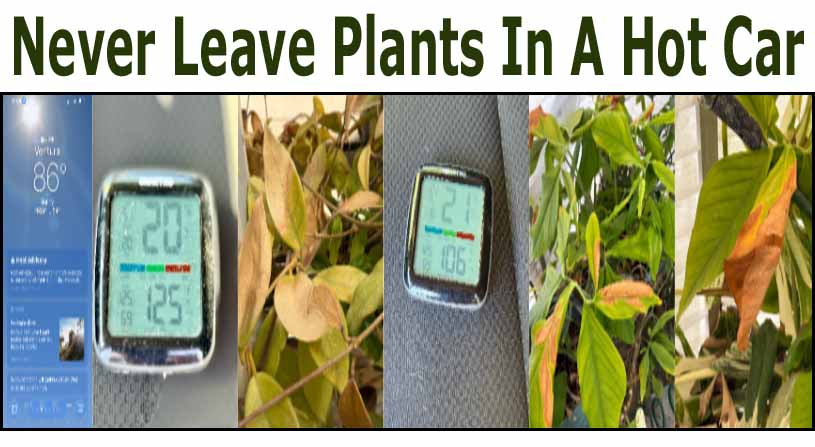
I have taken some pictures (seen above) documenting the effects of heat on plant material firsthand. A strong heat wave occurred in March 2026. The temperature outside was 86°F. The temperature inside the car was a whopping 120°F with 20% humidity. The car was in the sun. I moved the car into the shade and, a little while later, recorded the temperature. It was 106°F and 21% humidity, still too hot for plants in an enclosed car with the windows up. The glass windows heat up, acting like a magnifying glass and intensifying the heat. The car’s dark color absorbs more heat; the heat is trapped inside the car with nowhere to go; thus, the plant suffers the consequences. This microclimate inside the car really did a number on the tropical plants.
The pictures reveal what can happen when plants are left in an enclosed car, windows up, on a hot, low-humidity day for one day. After that episode, I put them in the shade, protected from the heat and sun. I thoroughly watered them immediately. I trimmed off badly affected plant parts and assessed the plants for quality and health. Today, in early May, the tropical houseplants still look bad. The brown/scorched areas on the leaves will not turn green, but a little new growth is emerging at the top, indicating a slow recovery. Time will tell.
Heat waves are becoming increasingly common and can occur at any time of year. They can happen whenever the days are hot, and the temperature inside our cars can be even higher. What was once green and beautiful is now completely scorched after a quick stop on the way home from the plant shop. Any time in a hot car, regardless of the time of year, is too long for our plant friends!
You forgot your plant in the car. It happens. What can you do? Below are some suggestions to help reduce or mitigate the situation. Heat quickly depletes plants of moisture. Watering your plants before exposing them to intense heat is the best approach. A dry plant is more likely to succumb to heat stress than a well-hydrated one. If you are unable to do that, water the plant immediately after exposure to car heat-induced injury to help it begin to recover.
If transporting plant material in a hot car is unavoidable, use several strategies to minimize harm and protect your plants. Try to park in shaded areas and use sunshades on your car windows to keep the interior temperature low.
Maintain a cool environment by running the air conditioning for a few minutes before placing the flowers in the vehicle.
Keep travel time to a minimum. Plan your route and schedule to avoid leaving plants in the car longer than necessary. If other errands, pit stops, shopping, or meetings are on the agenda, try to do those first, then pick up your plants to reduce or eliminate the risk of heat damage to plants inside a car.
Flowers can survive a short stint in a hot car if proper precautions are taken. However, exposing delicate plants to extreme heat, even briefly, is generally not advisable. High temperatures can significantly affect a plant’s appearance and longevity. It is always best to plan ahead, take protective measures, and minimize heat exposure to keep your flowers fresh and beautiful. If damage occurs, you may need to trim away dead leaves and stems. After some time, assess which parts of the plant are damaged. This will help the plant focus its energy on new growth.
Wait. Only time will tell whether the plant will recover and push out new growth. It is important to understand that some plants respond better to recovery from heat-related issues. Some plants can regrow from their roots or stems, so not all may be lost. The plant goes into survival mode and wants to come back. But it all depends on the plant species and the severity. Other plants may not be as resilient, as each plant is different. From my own experience, most plants will come back; they just need some Time, Love, and Care.
I hope you find this information useful and that it helps you succeed in your gardening endeavors. Feel free to stop by your favorite Green Thumb Nursery. We are happy to advise you on how to help your garden thrive.
Do you like what you see? Sign up for our weekly newsletter to get content like this every week!