
Newsletter Articles
Hypoallergenic Houseplants Plants for Allergy Sufferers in Southern California
Written by Kelsey W.
Springtime in Southern California brings flowers, the reemergence of tree leaves after winter, and loads of pollen that has a habit of making it super rough for allergy sufferers across the region. While it’s pretty tough to find areas outside that aren’t inundated with sneeze-inducing plants, that doesn’t have to be the case inside your home.
In fact, some plants perform some amazing functions when it comes to the allergies that humans suffer. Not only do these plants not produce the traditional pollens that make us sneeze, but some even help clean the air, which is a great help to allergy sufferers who have problems with mold, dust, and airborne contaminants.
Houseplants are a wonderful way to bring life and happiness into your home, but they’re also a solid option for improving the air quality and making it just a bit easier to breathe during allergy season. Anyone can become a plant parent when they choose one of the following houseplants, which, as a bonus, are also usually easy to care for throughout the year.
Why Do We Have Allergies to Plants?
For most allergy sufferers, the reason we sneeze around some plants is because of the pollen they release at certain times of the year. While some plants can have some irritative properties, meaning they can make you itch if you touch them or are exposed to their sap, it’s generally the pollen that gives you a stuffy nose.
Some plants even have a habit of holding onto dust or attracting mold, which can become a problem if you have a dust allergy or you’re sensitive to mold. Plants that produce flowers frequently tend to be the biggest offenders here, but some plants just have a habit of releasing allergens into the air.
The key to finding houseplants you can tolerate when you have significant allergies is choosing ones that aren’t likely to shed a lot of material into the air. Helpfully, there are quite a few plants that meet this qualification, and some of them even clean the air for you, too!
The Versatile Areca Palm Plant
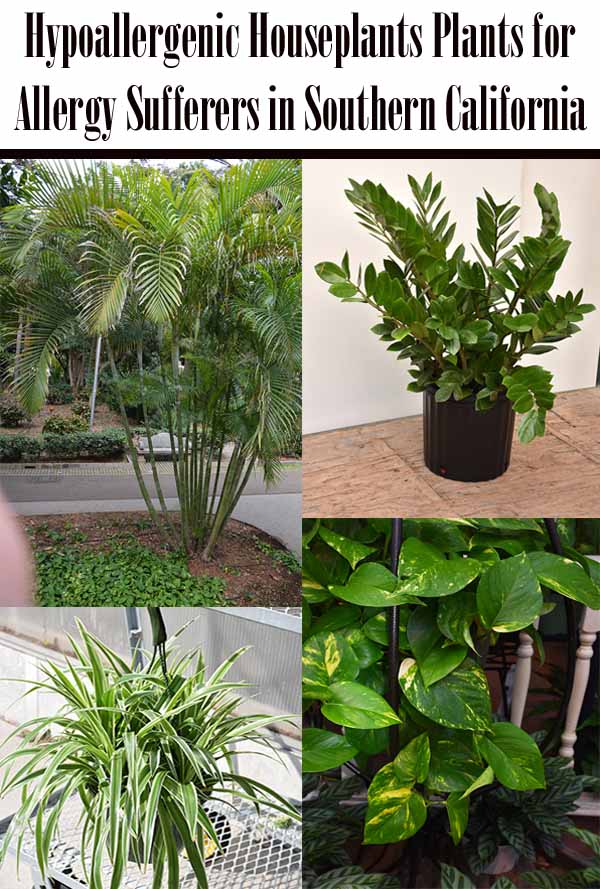
When you have a bright corner of your house just begging for a palm plant, there’s no better allergy-friendly plant than the areca palm, which just happens to live quite happily in Southern California environments.
One of the benefits of the areca palm is that it doesn’t let out a lot of pollen, so it shouldn’t make you sneeze. Another neat feature of this plant is that it apparently increases the relative humidity in your home, which can reduce the severity of how allergies make your nose feel.
Furthermore, the areca palm is fairly easy to grow, which means you don’t need to stick your face in its fronds every two seconds to trim it or care for it. Simply watering it whenever the top of the soil looks dry and feeding it once a month in the warmest months of the year is enough to keep it happy.
Tip: The majority of indoor palm plants are actually hypoallergenic, so if an indoor palm plant catches your eye, it’s very likely that it won’t cause you any allergy problems. Parlor palms, lady palms, and kentia palms are all great options in addition to areca palms.
The Tiny and Mighty Peperomia
Sometimes called radiator plants, peperomia plants are ideal for small spaces because they don’t grow fast when living indoors as a houseplant. If you have a spot on a desk or a small shelf where you’d like some greenery, the peperomia is a great little plant buddy for your space.
The peperomia plant is non-toxic, so it’s safe when you have pets, but it’s also safe during allergy season because it doesn’t produce flowers on the regular. If the plant does produce flowers, which happens occasionally, you can reduce the pollen output by clipping away the flowers, which won’t hurt the plant at all.
Since they’re drought-tolerant and grow slowly, they have a low likelihood of attracting or producing mold, which is excellent if you have a mold issue. They’re also easy to grow with their drought tolerance, requiring nothing more than a bright window and a consistent yet restrained watering schedule that won’t leave the soil soggy.
Brighten Your Home with a Spider Plant
The spider plant reigns as one of the easiest houseplants to grow, and it also has a reputation as a healthy plant for allergy sufferers, as it doesn’t produce a lot of pollen. Studies have even shown that this plant can clean the air by eliminating some toxic airborne contaminants like carbon monoxide.
There was actually a NASA study conducted a while back that examined the ability of various houseplants to remove contaminants from the air, and the spider plant was crowned as one of the best-performing air purifiers out of all the plants studied.
Spider plants are tolerant of low light conditions, so you can actually grow these plants in houses where you’re lacking big, bright windows. As long as you fertilize these plants in the spring and summer, you don’t necessarily need to give them bright, indirect light like most other houseplants on this list.
Forget Your Allergies with the ZZ Plant
The ZZ plant is wildly tolerant of inhospitable growing conditions, growing well even when you forget to water it and place it in a dark corner of your house. The plant actually releases no measurable pollen into the air, meaning it’s a terrific choice if you’re super sensitive to even the smallest amount of pollen.
One of the neat features of the ZZ plant is that you can keep it relatively small by simply keeping it in a small pot. They will grow very slowly unless you give them a new pot and fresh soil in which to move around. They also grow more slowly when they’re away from bright light.
You can almost forget to water this plant in the winter, and it will probably survive just fine because it stores water in its leaves. In the spring and summer, the plant will appreciate more water, and you can feed it if you want every few months when the water is warm (though fertilizer isn’t 100 percent required).
Go Classic Houseplant with Golden Pothos
You’ve probably seen a golden pothos plant before as they’re a super popular houseplant. They’re even a popular sight in businesses where greenery is needed, but the business owner doesn’t want a plant that requires a ton of upkeep. Pothos is easy to care for and also features hypoallergenic leaves.
Also known as devil’s ivy, the plant has a solid reputation for cleaning the air, which is a help when you live in a house somewhere in Southern California that’s unreasonably close to one of the large freeways that cross the region.
The only caveat with pothos is that they can irritate your skin when you trim them, so always use gardening gloves when doing anything with them that’s more intensive than watering or feeding them. They’re a fantastic option when you’re looking for a hanging plant or something to vine over a shelf.
Reduce Allergy Potential Even More with These Care Tips
If you’re particularly sensitive to things like dust, one of the actions you may want to take in caring for your plants is dusting them on occasion. Just take a cloth, wet it, and then dust the leaves to reduce the accumulation of dust.
If your main allergy is to mold, you can avoid significant mold issues by making sure that none of your plants is overwatered. A plant sitting in soggy soil is more likely to become a home for mold, and none of these houseplants require a ton of water anyway.
Green Thumb Nursery Can Help You Beautify Your Home with Plants
Would you like to bring home some new plant friends to brighten your home? Are you thinking about adding a few potted plants to your porch or patio? Does your bathroom need some greenery? Visit Green Thumb Nursery for all the houseplant advice you can handle. Green Thumb Nursery can help you create a plant paradise, whether you’re just adding a single happy houseplant to your office desk or you’re bringing home a whole new row of new plant friends.
Do you like what you see? Sign up for our weekly newsletter to get content like this every week!
CLICK HERE TO SIGN UP!