

Newsletter Articles
Best Plants for Privacy in Southern California
Written by Kara M.
The best plants for privacy in Southern California are fast-growing evergreen shrubs and small trees for screening (pittosporum, Carolina laurel cherry, Italian cypress), climbing vines on a trellis for fences and walls (star jasmine, evergreen clematis, Lady Banks rose), and container plants like clumping bamboo for patios and balconies. Choose evergreen plants so the screen works year-round, check a plant’s mature height and width before you plant, and steer clear of fast growers that are invasive in California, such as glossy privet and running bamboo.
Quick answer: For a tall screen, plant evergreen shrubs or small trees like pittosporum, Carolina laurel cherry, or columnar Italian cypress. To cover a fence or wall, grow a climbing vine such as star jasmine on a trellis. For a patio or balcony, use clumping bamboo or tall plants in large containers. Pick evergreens, match the mature size to your space, and avoid invasive plants like glossy privet and running bamboo.
| Privacy need | Good plant picks |
|---|---|
| Tall screen (shrubs and small trees) | Pittosporum, Carolina laurel cherry, Italian cypress, bottlebrush |
| Fences and walls (vines) | Star jasmine, evergreen clematis, Lady Banks rose |
| Patios and balconies (containers) | Clumping bamboo, tall plants in large pots |
| Avoid (invasive in California) | Glossy privet, running bamboo, Mexican fan palm |
Best Plants for Privacy in Southern California
A good privacy planting starts with two decisions. First, choose evergreen plants so your screen stays full through the year rather than going bare in winter. Second, learn a plant’s maximum height and width before you put it in the ground, since many gardeners plant a fast screen only to be overwhelmed by its size a decade later; for a typical 6-to-8-foot screen you have the most options, from vines on a trellis to shrubs and small trees.[1]
It is just as important to know what NOT to plant. Some popular fast-growing screens are invasive in California: glossy privet (Ligustrum lucidum) is listed on the California Invasive Plant Council inventory and has escaped and naturalized, so it is better replaced with a non-invasive evergreen.[2] Running bamboo, Mexican fan palm, and several acacias are also flagged in California, and state landscaping guidance encourages choosing non-invasive plants instead.[3] Every plant recommended below is a non-invasive alternative.
Evergreen Shrubs and Small Trees for Screening
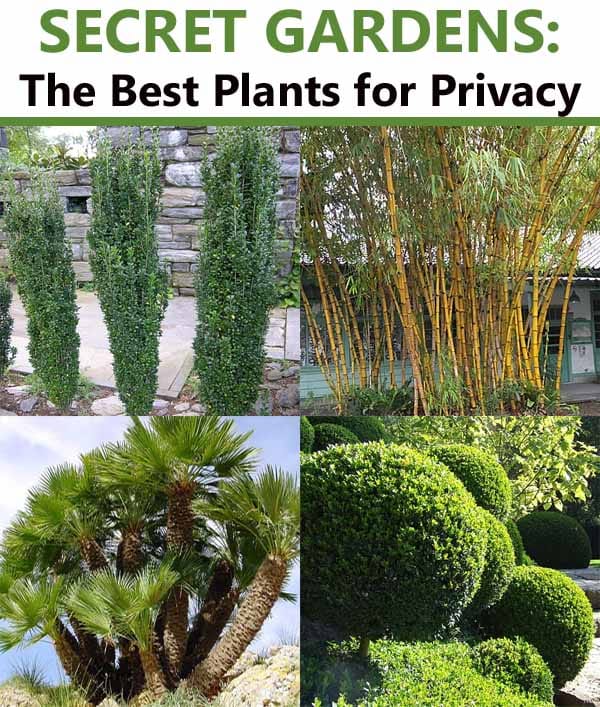
For a living wall of greenery, fast evergreen shrubs and small trees are the workhorses. Pittosporum (Pittosporum tobira) is a rapid-growing broadleaf evergreen that is routinely mass-planted as a screen, hedge, or barrier and stays in an easy 8-to-13-foot range.[4] Carolina laurel cherry (Prunus caroliniana) is another rapid evergreen, reaching about 35 feet but easily kept lower as a hedge, and it tolerates drought once established.[5] Where you need height but have little width, columnar Italian cypress (Cupressus sempervirens) is the classic answer: tall and narrow, drought tolerant, and recommended for planting in a row as a screen.[6] For a flowering option, bottlebrush (Callistemon) is an evergreen that can be grown as a clipped hedge or informal screen and takes full sun with low water once established.[7]
Hedges for a Living Privacy Wall
Several of these same evergreens make excellent formal hedges when sheared, including pittosporum[4] and Carolina laurel cherry.[5] If a clipped hedge is what you are after, our guide to green walls, hedgerows, and privacy plants goes deeper on choosing and spacing hedge plants for Southern California.
Climbing Vines for Fences and Walls
When you already have a fence or wall and just need to green it up, a climbing vine is the fastest path to privacy. Star jasmine (Trachelospermum jasminoides) is an evergreen twining vine to about 20 feet with fragrant spring flowers; its twining stems need a support such as a trellis or wires to climb.[8] Evergreen clematis (Clematis armandii) is another evergreen climber, twining its leaf stems around thin supports, so give it a lattice rather than a thick post.[9] For quick, large-scale coverage, Lady Banks rose (Rosa banksiae) is a vigorous, nearly thornless evergreen rambler that can reach around 40 feet on a sturdy support and is often used as a privacy screen.[10] Bougainvillea is a classic SoCal option too; note it does not twine or cling, so you tie its canes to a trellis or wall support, and it wants full sun.[11] For more flowering climbers, see our guide to vines that add beauty to your garden.
Privacy Plants for Patios and Balconies
You do not need a yard to get privacy. On a patio or balcony, the go-to is bamboo grown in large containers or as a clumping type. This matters because running bamboo spreads aggressively by underground rhizomes and can become an invasive weed, so the recommendation is to plant only clumping bamboo or to confine running types with a barrier.[12] Growing bamboo in a container is itself a recognized way to keep even the spreading kinds in check, which makes a big pot of bamboo a tidy, fast privacy screen for a deck or balcony.[13] Tall, upright plants and ornamental grasses in large pots work the same way, lined up to screen a seating area. For more compact-space ideas, see our guide to fast-growing plants for an instant garden.
Want help choosing the right privacy plants for your space? Visit any Green Thumb Nursery location and our team will match evergreen screens, vines, or container plants to your yard, patio, light, and the mature size you can accommodate.
Privacy Plants FAQ
What are the best plants for privacy?
Evergreen screening shrubs and small trees such as pittosporum, Carolina laurel cherry, and Italian cypress, plus climbing vines like star jasmine for fences and walls. Choose evergreens so the screen stays full all year.[4]
What are the best fast-growing privacy plants?
Pittosporum and Carolina laurel cherry are fast-growing evergreen screens, and Italian cypress grows tall quickly in a narrow footprint. Avoid fast growers that are invasive in California, like glossy privet.[2]
What plants give privacy on a patio or balcony?
Plants in large containers, especially clumping bamboo, give fast privacy without a yard. Growing bamboo in a pot keeps even the spreading kinds contained, and tall grasses or upright plants in big pots work too.[13]
What is the best evergreen privacy screen?
For a dense evergreen screen, pittosporum and Carolina laurel cherry are hard to beat, and columnar Italian cypress is best where you need height without width. All three stay green year-round and are not invasive in California.[6]
How do you create privacy without a fence?
Grow a living screen instead: a row of evergreen shrubs or small trees, a climbing vine on a trellis, or large containers of clumping bamboo on a patio. Match the plant’s mature height and width to the space you want to screen.[1]
Sources
- [1] UC Master Gardeners of Napa County, Privacy Hedges: ucanr.edu
- [2] California Invasive Plant Council, Ligustrum lucidum (Glossy Privet) Profile: cal-ipc.org
- [3] California Invasive Plant Council, Don’t Plant a Pest (Southern California): cal-ipc.org
- [4] NC State Extension, Pittosporum tobira: plants.ces.ncsu.edu
- [5] NC State Extension, Prunus caroliniana (Carolina Laurel Cherry): plants.ces.ncsu.edu
- [6] NC State Extension, Cupressus sempervirens (Italian Cypress): plants.ces.ncsu.edu
- [7] UC Statewide IPM Program, Bottlebrush: ipm.ucanr.edu
- [8] NC State Extension, Trachelospermum jasminoides (Star Jasmine): plants.ces.ncsu.edu
- [9] NC State Extension, Clematis armandii (Evergreen Clematis): plants.ces.ncsu.edu
- [10] NC State Extension, Rosa banksiae (Lady Banks Rose): plants.ces.ncsu.edu
- [11] NC State Extension, Bougainvillea: plants.ces.ncsu.edu
- [12] UC Statewide IPM Program, Bamboo: ipm.ucanr.edu
- [13] Missouri Botanical Garden, Controlling Bamboo: missouribotanicalgarden.org
Sign up for the Green Thumb Nursery newsletter for seasonal Southern California gardening tips.