
Newsletter Articles
When Is It Time to Plant Bulbs in Southern California
Written by Kelsey W.
Growing flowers from bulbs isn’t a particularly difficult process, but it’s one that requires some timing as far as when you place the bulbs in the ground. Many bulb plants are the first flowers you’ll see when spring rolls around, and some can’t wait to appear even before the official start of spring in Southern California.
As you may have guessed, Southern California is the perfect place for growing all sorts of plants, and residents are quite lucky here in that many all types of bulb plants grow happily in California’s mild environment.
One of the best parts of growing bulbs, too, is that it’s actually possible to plant them (at different times, of course) absolutely anywhere, from the mountains of Big Bear in San Bernardino to the Pacific coastline of Ventura to the deserts of Riverside.
Let’s learn about the peculiarities of bulb plants and how you can give them their best start in life by putting them in the ground in the ideal season. If you’re not quite sure what a bulb plant is, don’t worry, we’ll go over that, too.
What are Bulb Plants?
Bulb plants grow exactly as you’d expect, from a bulb that sits underground. The bulb is like a storage unit where the plant rests and waits for the right season to start producing leaves and pushing up above the soil level.
Unlike traditional seed plants that may germinate after just a month or two (or even faster), a bulb plant may rest in the ground for months or even over an entire year before it comes back for a visit above ground.
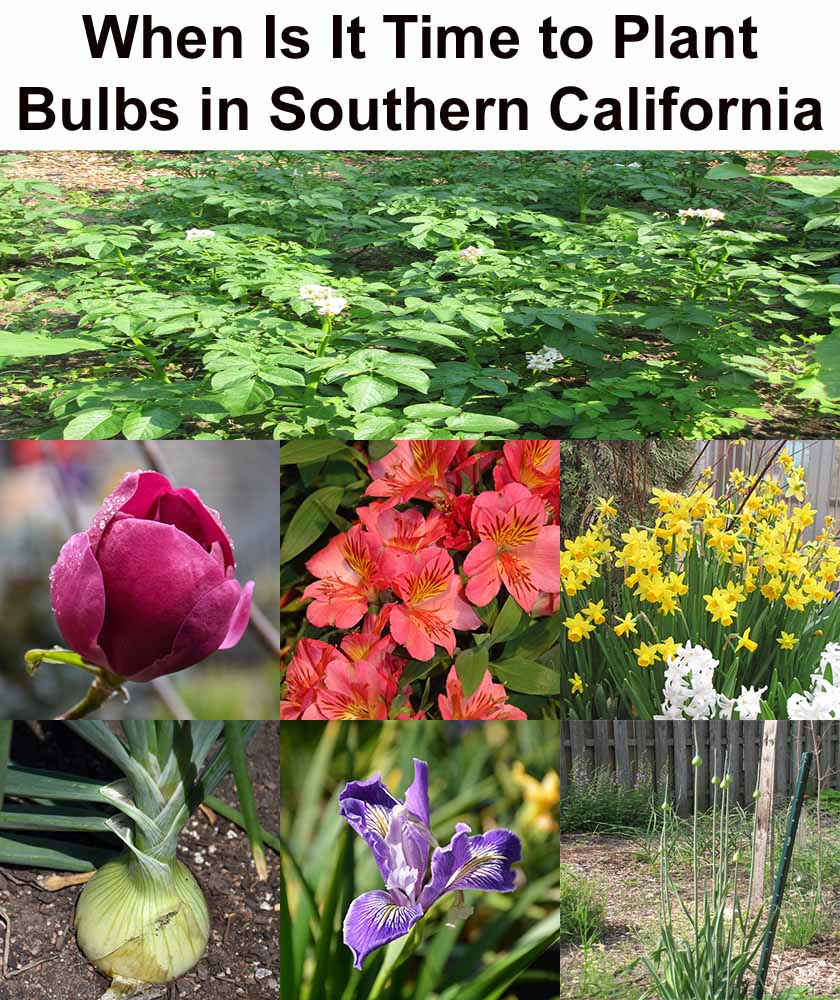
Technically, there are some different types of bulbs within the bulb world. The most traditional are also the most well-known and include lilies, tulips, and daffodils. If you like super early spring flowers, these are your go-to plants.
There are also other sorts of bulbs that don’t have a true enclosed bulb but a slightly different shape, like a “corm,” which is how gladiolus flowers start their lives. You can even consider plants like potatoes bulb plants although they definitely don’t have quite as strict planting requirements as true bulbs.
For the most part, bulbs tend to send up flowers in the spring or summer, and you’ll plant them a season before you expect them to rise up out of the ground. The hardiest bulbs get planted in the fall and early winter (In SoCal), and the less hardy bulbs go into the ground in the late winter.
Cold Weather Bulb Plants That Need Special Treatment in Southern California
Technically, you don’t really need to worry about selecting bulbs that can survive a freezing winter unless you’re in one of the mountainous, snowy parts of Southern California, but it’s still helpful to abide by traditional planting rules when it comes to timing your bulb planting.
The caveat of planting cold-weather bulbs like tulips in Southern California is that you need to take an extra step before planting if you’re living near the coast, where it’s super mild all winter long, and you’re not expected to see any winter weather.
Before you stick your tulip bulbs in the ground – ideally in December or January – you’ll want to put your bulbs in the refrigerator. Letting them sit in the fridge for a solid few months will make them think they’re in the ground in a frigid place.
You can also ask your Southern California garden center whether they have access to any hybrid varieties of bulbs that have been designed to tolerate warmer temperatures. In addition to tulips, other cold-weather bulbs you might want to toss in the refrigerator include crocuses and hyacinths.
When Should You Plant Cold-Weather Bulbs?
The best time to plant tulips, crocuses, and hyacinths is when the bulbs will get their coldest experience underground. That exact time might differ depending on where you live in SoCal (mountains, coast, or desert). Refrigerating your bulbs is the best way to take the guessing out of the weather game, allowing you to simply pick a date in December or January to plant, when the weather has turned cold.
Easy Bulbs That Don’t Mind Warm Winters in SoCal
If you miss the opportunity to place your cold-weather bulbs in the refrigerator, don’t worry! You have loads of options for other bulbs that are quite happy to go into he ground without any special treatment, faring just fine with the warmer SoCal winter temperatures.
Tip: Even though you might not need to refrigerate some bulbs, it’s still important to keep them cool while they’re in storage, so try to avoid letting them sit out in the sun. Wrap them up in paper bags and store them somewhere cool, perhaps in a dark cupboard.
Daffodils and irises are two excellent options for Southern California bulb growing. Calla lilies, which are technically corms, grow incredibly well in Southern California, too (and are also really easy to grow for beginners).
Don’t forget that you can also plant some of your vegetable garden with your other bulbs during late fall or early winter. Your garlic, onions, and shallots are all bulb-like plants that will hunker down over the winter and will act as wonderful additions to your summer tomatoes, peppers, and other vegetables.
When Should You Plant Late Spring-Blooming Bulbs?
You can plant bulbs that don’t absolutely require time in the refrigerator at any point when the weather has turned colder. The point at which everyone in Southern California starts wearing their winter clothing is the perfect time to get those bulbs into the ground. In some years, this might not be until January, but a chilly December can also work.
Should You Treat the Soil Before Planting Your Bulbs?
While your bulbs are resting in the soil, they will thrive when you mix in some bone meal and compost to enrich their environment. They also use a lot of nitrogen while strengthening their bulbs underground, so you may want to add some extra nitrogen at the time of planting to give them a good supply over the winter.
Note that you can even slightly influence the time your bulbs will bloom by choosing how deep to plant them. When you plant the bulbs in a shallow manner, they’ll bloom sooner because they’ll feel the warm air above the soil level sooner. Conversely, planting them deeper will encourage them to sleep longer.
After you’ve planted bulbs for a few years and have mastered the timing of your blooms, you can actually plant your bulbs at various depths to encourage them to bloom in successive weeks, ensuring you have a consistent stream of new blooms to enjoy throughout the season.
Also, remember that bulb plants love the sun, so you’ll want to choose a spot in your yard where the bulbs can bloom with the happiness and enjoyment of a full day of sun. Try to avoid creating a bulb garden on the north-facing side of your home, because they won’t get enough sun or warmth to bloom in the spring.
Sometimes, Bulbs Grow Randomly
The mild Southern California weather does encourage bulb plants to act strangely sometimes, and you never know when your bulbs might start growing particularly early. If you don’t remove them from the ground (and you don’t necessarily need to!), they might decide to grow at odd times.
For example, your hardy bulbs that sit in the ground year after year might eventually start sending their little shoots up out of the ground in November or December. If you don’t live in an area of Southern California where it normally snows or where you have the risk of a true freeze, there’s no really any reason to worry.
Sometimes, a stretch of particularly cool weather very early in fall can wake the bulbs up, especially when that cool spell is followed by some warmer weather. The bulbs might think it’s time to come out of the ground and that spring has arrived.
Don’t worry! It’s just your bulbs giving you some early blooms for the year. You can adjust your gardening schedule for the year to accommodate caring for them over the winter rather than the spring when you would expect them to arrive.
Learn How to Grow Beautiful Bulbs at Green Thumb Nursery
Will this year be the first time you’ve tried to grow bulbs at home? Would you like expert advice on growing tulips, daffodils, and shallots? Visit the experts at Green Thumb Nursery, where advice and knowledge on all things gardening is plentiful.
Do you like what you see? Sign up for our weekly newsletter to get content like this every week!