
Newsletter Articles
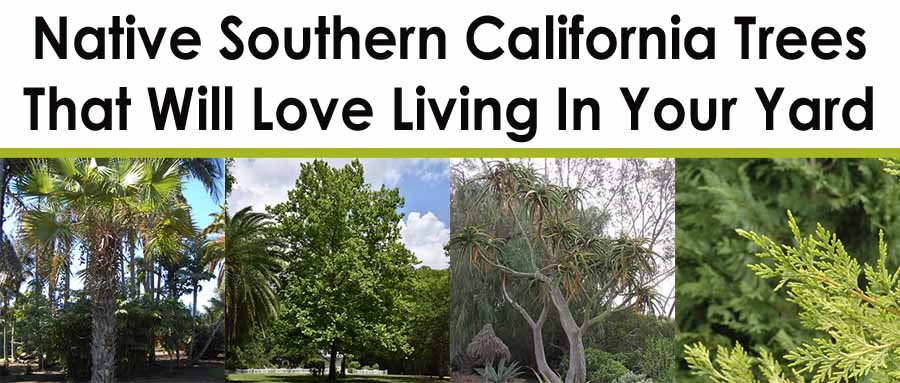
Native Southern California Trees That Will Love Living In Your Yard
Written by Kelsey W.
There’s nothing worse than planting a small tree that you hope will turn into a beautiful, large part of your yard, only to see it shrivel and fail to thrive despite your best efforts.
Often, it’s not actually the effort we put into our plants that makes it difficult to grow them, but the fact that we choose plants that aren’t native to our region.
Imagine visiting a different country than your own that has vastly different weather, while wearing completely inappropriate clothing, and finding it difficult to find anything you want to eat.
For trees and plants that aren’t native to Southern California, life can feel a little rough because those plants aren’t used to the environment here. In order to avoid stressing our plants and trees, choosing native plants makes life so much easier, both for our plants and our efforts to make those plants happy.
Let’s learn a little about some of the beautiful native trees of Southern California that might look beautiful in your lawn.
What are some Common Characteristics of Southern California Trees?
The weather in Southern California is fairly predictable as far as temperatures go, but the amount of water our environment gets is always a wild card. To sustain themselves in times of drought, many of the native trees of Southern California have become adept at surviving drought conditions.
Often, Southern California trees will have deep roots, which allow the trees to find water in the ground even when it’s not falling from the sky. If you’re planting one of these trees at home, it’s important to be aware of the potential depth of the roots, so you can plan accordingly for plumbing and sewer lines.
Other trees may grow very slowly because they don’t expect to receive much water and need to use the water they do get wisely. Some trees will store the water they get in their trunks or leaves, which helps them survive when no water is forthcoming.
Whatever a tree’s method for surviving Southern California’s fickle relationship with rain, having native trees in your yard almost always means enjoying an easier time growing the trees and keeping them happy, no matter the growing conditions.
The Classic Palm Tree Isn’t Actually Native to Southern California
As a resident of Southern California, you may assume that your best choice for a new tree is a palm tree, especially given that the famous Palm Springs is in the desert and all the palms that crowd the boulevards of Los Angeles.
However, the classic palm trees that we associate with the famous streets in Hollywood and Southern California aren’t actually native to the region. History suggests they were introduced by Spaniards who brought the plants to the area in the 18th century.
If you’re absolutely set on having a palm tree in your yard, you’ll want to choose carefully, so you get the “right” type of palm tree that will thrive naturally in our Southern California climate. The California fan palm, sometimes called the desert fan palm, is the only native palm for SoCal.
Desert fan palms can grow to an astounding 80 feet tall, but yours is more likely to grow to a maximum of 40 or 50 feet. When you bring your desert fan palm home, you can expect it to live anywhere from 80 to 250 years, which means it will be a generational tree for your family.
Choose the Tecate Cypress for Towering Beauty
The Tecate cypress tree feels unique in the Southern California landscape since it doesn’t tend to have the round shape like the similarly native coast live oak, but also doesn’t look as dense and pointed as an Italian cypress tree.
The Tecate cypress tree can grow to twenty-five feet tall and often grows in a column, just like an Italian cypress, but with branches that aren’t so tight. The Tecate cypress is a native of the San Diego and Baja California region, which makes it a better choice than the Italian cypress, which is a native of the Mediterranean in Europe and Western Asia.
One of the best features of the Tecate cypress is that it’s extremely drought-tolerant, so as long as you’re able to get the plant established, you’ll have no trouble keeping it happy for many years. The trees are somewhat sensitive to disturbances, however, so try to avoid digging around their root system once the tree is established.
Also, the Tecate cypress tree fares best in cooler weather conditions than you might find in the desert regions of Southern California, so you’ll want to choose this tree only if you live in an area where the temperatures don’t reach above 95 degrees Fahrenheit too often.
The California Buckeye is Great for a “Forever” Tree
If you’re searching for a tree that you can bring home and have in your yard for generations, the California buckeye, which is more commonly found in northern California but does grow natively in Southern California, too, is an excellent choice.
California buckeyes grow wonderfully in Mediterranean climates, which means Southern California suits them very well. They do need a fair amount of water to get established, but they’re fairly self-sufficient once they’re a few years old because they’re drought-tolerant.
In ideal conditions, the California buckeye can reach 36 feet, but they’re usually a little shorter than their maximum height, especially in Southern California. Sometimes, California buckeyes only grow to about 15 or 20 feet, which makes them a good choice, at least until they grow taller, for small yards.
One of the nice things about California buckeye trees is that they’re relatively easy to grow. If you’re nervous about bringing a tree home and worry about keeping it alive, a California buckeye is a beginner-friendly option that can survive drought and isn’t too picky about soil composition.
Bring Shade to Your Yard with a California Sycamore
Native California trees may or may not provide ample shade for your yard, but if your end goal is a shade tree for relaxation in your yard, you might try the California sycamore. This tree will often appear naturally near sources of water like streams and rivers.
You don’t have to have a stream or river running through your yard to grow a California sycamore and enjoy its shade, however. You simply need to make sure you place it in the right area in your lawn and give it a lot of water while it’s a young plant.
The best place to plant a California sycamore is where it will get a lot of sun. They don’t do well when a building or other tall structure blocks the sun for part of the day, so try to avoid planting them on the north side of anything tall.
They also grow incredibly large over their lifespan, so it’s essential that you place your tree somewhere that it will have lots of room to spread its branches and provide that amazing shade. The general rule of thumb is that you should plant them about 15 or even 20 feet away from any structures. The trees can get up to 70 feet wide at maturity, so take that into account when you’re choosing a spot in your yard.
Before You Plant Your Tree
Trees tend to have more substantial roots than bushes and small plants, which means it’s vitally important to carefully check the area where you’re going to plant your tree. Don’t put a tree that will have a vast root system right next to the sewer line that runs from your home to the city’s main line.
You can actually ask your local utility to tell you where any lines, like gas or power lines, are in your yard, so you don’t have to guess where those lines might be before you dig and place your tree.
Grow Your Garden and Beautify Your Yard at Green Thumb Nursery
Would you like to learn more about which trees would do well living in the yard at your home? Visit one of your local Green Thumb Nursery locations in Southern California for all the information you need on choosing a native tree for your yard. Let us help you choose a tree that will offer lasting beauty for your home for generations.
Do you like what you see? Sign up for our weekly newsletter to get content like this every week!
CLICK HERE TO SIGN UP!