
Uncategorized
Keeping Your Southern California Vegetable Garden Thriving During the Hottest Months of the Year
Written by Kelsey W.
When it comes to Southern California summers, the weather is often all over the map, but late summer almost always brings the highest temps of the year, which often march their way confidently into the fall months of September and October.
With many vegetable gardens still producing delicious yields into August and beyond, it’s essential to take note of the weather and understand how to ensure those vegetables are getting what they need in terms of protection from the sun and extras like increased food, fertilizer, and water.
It’s not just a matter of visiting your vegetable garden more frequently with the watering can. While extra watering can definitely help plants – particularly fruit-producing plants – continue growing their edible parts throughout the season, extra water is just part of the story.
Let’s go over some of the ways you can keep your vegetable garden happy no matter the temperature during the dog days of Southern California’s hot summer.
Watering: It’s Not Always Quantity but Timing Instead
One piece of wisdom that can have a dramatic effect on the health of your vegetable plants is the timing of your watering visits. You may assume that those dry, crispy leaves would benefit from some extra water in the middle of the day, but a midday watering visit might not offer as much benefit as you might think.
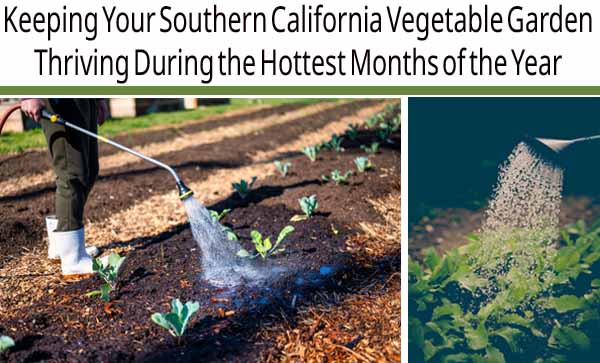
Instead, the best time to water your vegetables, particularly when it’s slated to reach super high temperatures during the day, is very early in the morning. If you normally water your plants in the evening, which is fine as a general habit, try switching your schedule to a deep watering in the early morning hours.
By watering your vegetables deeply in the morning, you’ll ensure the water reaches the roots and hydrates the plants throughout the day. Conversely, if you water the plants in the middle of the day, the water might actually evaporate from the surface of the soil before it has a chance to reach those vital roots to hydrate the plant.
Tip: For the most effective watering, remember to aim the water at the soil level at the base of the plant. Your plant drinks water through its roots rather than through its leaves.
Choose Plant Placement Carefully
Most vegetables love a ton of sun, and you can reasonably expect a huge yield from your tomato plants or pepper plants by putting them somewhere they’ll get at least six to eight hours of sunlight every day. However, even those hardy vegetable plants can get a little tired during the hottest weeks of the year.
You may assume that the only way to keep those tomatoes safe from too much sun in August and September is to put them somewhere that they’ll have some shade during the day, but then you’re reducing the amount of sun they get during the rest of the summer, which isn’t always the best course of action.
Instead, you can consider covering the plants with a lightweight sheet in the late part of the day after the vegetable plants have had enough sun and would likely start drooping if they were to experience continued exposure to the sun. Covering the plants with a sheet is as easy as making a simple tent over the plants with a few tall wooden stakes or poles and draping the sheet over the plants.
Before you put your plants in the ground, you can also choose to put your vegetables in movable containers that you can reposition throughout the summer. By using movable containers, you can put your vegetable plants in the sunniest spot in your garden when it’s early in the year and then move them to an area with a little shade as the summer wears on and the weather gets hotter.
Don’t Forget the Soil
It’s easy to forget just how important the soil is to plants when all we tend to focus on are the leaves and the edible parts growing for us to enjoy. You might dig around for your potatoes when they’re ready to come out of the ground and not even focus on whether the soil they’re sitting in is healthy.
When the weather heats up, it’s doubly important to keep an eye on the soil, as well as take some extra steps to keep the soil habitable and happy for your vegetables. If you’re starting any cool season crops like spinach, lettuce, broccoli, or carrots in the fall, it’s essential that you cool the soil off and keep it a comfortable temperature for those growing plants and your future winter garden.
And your summer vegetables don’t want to sit in the overly hot soil, either. Fortunately, it’s pretty easy to keep the soil around your vegetables cool even if the sun is beating down on them for a substantial portion of the day.
Try these steps to keep the soil cool around your vegetables:
- Avoid planting when temps are at their hottest to avoid putting seeds in hot soil.
- Add some mulch or wood chips to the top of the soil to insulate it from the sun.
- Try to keep leaves on the plants as long as possible before pruning to keep the ground shaded.
- Use a shade cloth over the vegetables in the hottest part of the day.
- Water early in the morning with cool water to keep the soil cool throughout the day.
You don’t need to employ all of these strategies; just using one or two will help keep the soil cool and give your plants the edge they need to survive the blistering heat and bright sun.
Rethink Your Vegetable Feeding Strategy
Summer vegetables like cucumbers, eggplants, zucchini, and tomatoes need a rather significant amount of fertilizer versus other types of vegetable plants, but it’s important to fertilize plants carefully in super-hot weather because of what can happen with hot-weather fertilizing.
Fertilizer is one of the best ways to encourage new growth, but a swiftly growing plant may become stressed with all of its new leaves and activity. Rather than spending its energy maintaining its current healthy growth, the plant may expend precious energy trying to grow new leaves and fruit, which may prove stressful.
Fertilizing during a hot spell can also mean wasted fertilizer because hot plants aren’t always the most efficient at consuming their nutrients. A plant may actually fall dormant in very hot weather, so fertilizing it might be a complete waste of time anyway.
If you must fertilize your plants when it’s hot, consider fertilizing them in the very early morning or even at night when the plant can spend some time using the nutrients when the sun isn’t so harsh. You can also use less fertilizer in very hot weather, so the plant gets some nutrients but isn’t overwhelmed.
Don’t Take Your Pruning Shears to Your Vegetables When They’re Heat Stressed
If you find that your vegetables aren’t faring too well because of the heat, you don’t necessarily need to take the cutting shears to the dead or dying leaves. While there is some wisdom that suggests cutting dead leaves off a plant helps the plant focus its energy on the leaves that are still thriving, those dead leaves are actually shading the plant in the hot sun, serving a purpose despite their death.
Cutting leaves is often a way to encourage new growth, which isn’t always something you want to do when the weather is at its hottest. The best time to prune is in between hot spells, so the plant isn’t encouraged to grow new leaves right when the weather is at its most difficult.
A good rule of thumb is that you should always leave the leaves alone when there’s at least a little green on them. The leaf is still working for the plant as long as it’s a little green. Wait until the leaf has turned completely brown and the weather has become a little more hospitable before doing any pruning.
Creating a Thriving Vegetable Garden in SoCal with Green Thumb Nursery
Growing big, juicy vegetables in Southern California is a delicious pastime, and it’s one you can master with help from Green Thumb Nursery. Despite the crazy summer temperatures Southern California often experiences, it’s possible to grow vegetables in just about any Southern California home. Drop by Green Thumb Nursery for help creating your next vegetable garden.
Do you like what you see? Sign up for our weekly newsletter to get content like this every week!